
Vandaag of morgen in huis

Kwaliteit gegarandeerd

Welkomstaanbiedingen ontgrendelen: GRATIS bezorging | Tot 80% korting | Gratis 30 dagen JoyPlus-proefperiode
Download de app
Choosing a bag for the gym, a bike ride or a camping holiday may seem straightforward. Yet many purchases end up unused in the cupboard after just a few months. The problem is often not the appearance, but an incorrect assessment of capacity, closure and carrying comfort.
In this guide from the Joybuy Product Recommendation Officer, you’ll learn what to look for in sports and outdoor bags. This will help you avoid buying a bag that is too small, offers insufficient protection from rain or proves awkward when you’re on the move.
A coating that keeps out light rain and splashes does not automatically make a bag suitable for submersion. Check whether the product information refers to water-repellent material, a waterproof construction or a specific protection rating. With a waterproof bag or dry bag, the closure is also important: a roll-top closure offers different protection from a standard zip.
So don’t use a bag with only a water-repellent coating to protect electronics during prolonged rain or water sports. In such cases, a separate waterproof cover may be a sensible choice.
A capacity of 30 litres does not tell you how efficiently the space can be used. A narrow bag with one large compartment may be less practical than a smaller bag with a separate zipped compartment, key pocket or easily accessible front pocket.
For a short walk or commute, a walking backpack of around 10 litres may be sufficient. For clothes, shoes and a towel, a gym bag or swim bag with more capacity is more practical. If you’re carrying camping equipment, you’re more likely to need a camping bag with wheels than a backpack.
The thin cords on a drawstring backpack are light and simple, but distribute a heavy load less evenly than padded shoulder straps. When choosing a backpack, look for adjustability, a chest strap and compression straps. With a waist bag, the belt length and stability when cycling or walking are important.
As well as the number of litres, look at the dimensions and the bag’s own weight. A 10-litre bag may be compact enough for everyday use, while a 110-litre model is primarily suitable for bulky camping equipment. Also check whether the bag can be folded away when empty. A foldable travel bag is useful as spare luggage, but usually has less structure than a fixed travel bag.
Practical guideline:
A roll-top closure with compression straps can keep the contents in place more effectively than an open drawstring. Zips provide quick access, but check whether the manufacturer only refers to water-repellent material. A mesh panel allows air to circulate and is practical for wet sportswear, but offers little protection from rain. A mesh sports bag is therefore particularly suitable for the gym, changing room or swimming pool.
Check whether the material is described as tear-resistant, abrasion-resistant or coated. These are verifiable product specifications, but they do not mean that a bag will remain undamaged in every situation. The seams, base and attachment points also deserve attention when you’re carrying heavy items.
Care affects the product’s lifespan. Many bags can be cleaned with a damp cloth and mild soap. Avoid harsh cleaning products and follow the product instructions. Allow a wet bag to dry completely in the open air before storing it.
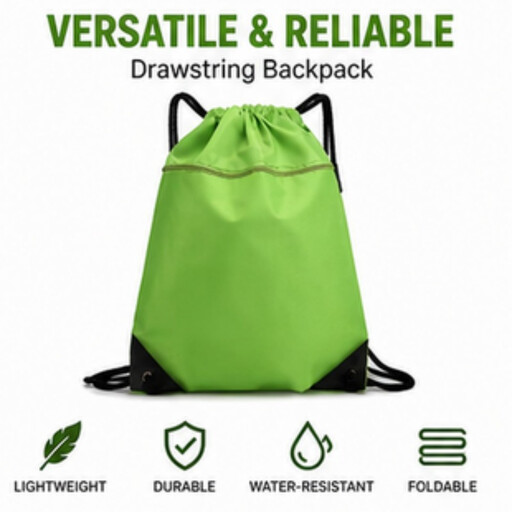
Why it suits this profile: This lightweight drawstring backpack is suitable for sportswear, a towel or swimming gear. It’s a good option for anyone looking for a simple gym bag with a zipped pocket for everyday use.
The separate zipped pocket helps keep small items apart from clothing. The simple layout makes it clear what the bag is designed for: a light everyday load, not heavy camping equipment.
Lightweight drawstring design with a separate zipped pocket, suitable for sport, fitness and swimming.
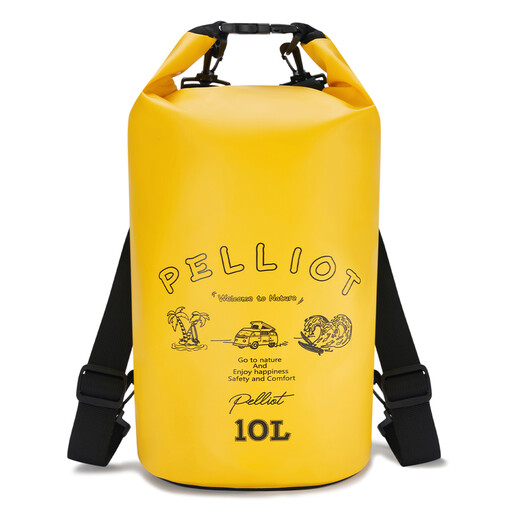
Why it suits this profile: The 10-litre bag combines a backpack shape with a roll-top closure. It’s a good fit for cyclists, walkers and commuters looking for a compact bag with compartments and adjustable space.
The product description refers to a high level of water resistance, not unlimited waterproofing. The roll-top closure and compression straps help seal and secure the contents.
Approximately 200 grams, 10-litre capacity, adjustable space, ergonomic shoulder straps and a foldable design.
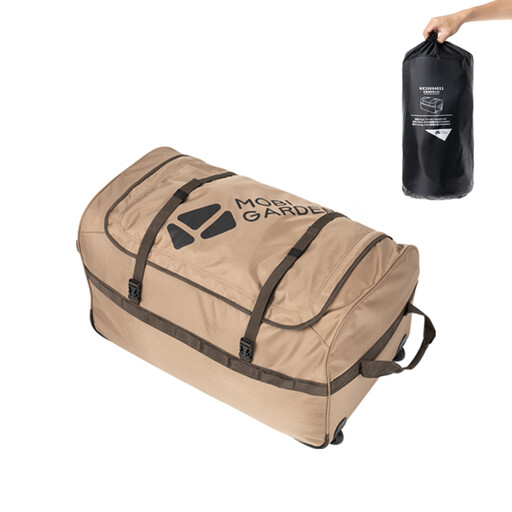
Why it suits this profile: This model is designed for campers, anglers and travellers carrying a lot of equipment. The wheels are particularly practical on flat surfaces.
The capacity and dimensions are clearly stated: 110 litres and 70 × 40 × 40 cm. The instructions also make it clear that carrying the bag may be necessary on stairs and steep slopes.
110-litre capacity, built-in wheels, an approximate empty weight of 1.75 kg and a folded size of approximately 42 × 21 cm.
If you only need to carry your phone, keys and a small power bank, a waist bag is more practical than a backpack. The PELLIOT Daily Waist Pack has an adjustable strap, several carrying options and a water-repellent coating for light rain. The product description also mentions YKK zips and a hidden inner pocket. View the PELLIOT Daily Waist Pack.
If you want wet clothing to air, consider a mesh sports bag with a zipped pocket. Meshes and WhereHike models are available in various colours and are designed for sports and fitness equipment. The mesh material keeps the contents visible and promotes ventilation, but it does not replace rain protection.
A bike bag requires different features, such as secure attachment to the bicycle and protection from splashes. Always check the attachment method and compatibility with your pannier rack; the models mentioned are not specifically described as bike bags.
We’ve put together a complete, up-to-date list of products that fully meet these strict selection criteria and the applicable European safety regulations.
A swim bag or drawstring backpack with a separate zipped pocket is usually sufficient for a towel, swimwear and flip-flops. For wet items, preferably choose a ventilated model, such as a mesh bag. If you want to protect the contents from rain, check that the material and closure are designed for this purpose.
The lifespan depends on the load, material, seams, moisture and care. A lightweight gym bag for clothing is used differently from a camping bag with wheels carrying heavy equipment. Clean the bag regularly, remove sand from the wheel components and store it somewhere dry. When checking for wear, pay particular attention to the zips, base and carrying straps.
First make a list of what you’ll actually be taking with you and measure any larger items. For everyday use, 10 to 20 litres is often easy to manage. More space is needed for a weekend away or sports equipment. Don’t automatically choose the largest bag: extra volume can result in unnecessary weight and a less stable load.
