
Vandaag of morgen in huis

Kwaliteit gegarandeerd

Welkomstaanbiedingen ontgrendelen: GRATIS bezorging | Tot 80% korting | Gratis 30 dagen JoyPlus-proefperiode
Download de app
A good pair of sports cycling sunglasses needs to do more than just look sporty. During a long ride in the UK, you’ll face low sun, wind, rain, flying debris and changing light conditions. A pair of glasses that slips down your nose or fogs up after a few miles will probably end up staying at home.
The biggest mistakes usually come down to three pitfalls:
Choose cycling sunglasses with UV400 protection where possible. According to the product information, this means the lenses filter UVA and UVB rays up to 400 nanometres. Do check that this claim is clearly stated on the product.
The visible light transmission, often referred to as VLT, helps you assess the lens colour more accurately. A lower VLT lets less light through and is best suited to sunny conditions. A higher VLT can be more practical in changeable weather. For example, Revoray states a VLT of around 15.2% for the Y1 lens, while the OutdoorMaster Hawk HD variant with RoseRed lens has a VLT of 48%.
Cycling sunglasses with polarised lenses can reduce annoying reflections from wet tarmac, water and metal surfaces. This is particularly useful for road cyclists on open roads and leisure riders along canals or lakes. Polarised lenses don’t automatically make a pair of glasses suitable for every situation. Also check the colour, VLT and contrast in cloudy conditions.
For mountain bikers, a wider lens with good peripheral vision can be useful. Cycling sunglasses with an integrated lens often offer a wide field of view, while models with interchangeable lenses give you more flexibility.
Lightweight cycling sunglasses prevent pressure on your nose and ears during longer rides. In the product specifications of the selected models, the weight ranges from around 25.5 to 33 grams. A TR90 cycling sunglasses frame combines flexibility with low weight, according to the product descriptions.
Also look out for:
Anti-slip cycling sunglasses won’t stay in place in every condition. Fit, perspiration, helmet combination and the shape of your face all play a part.
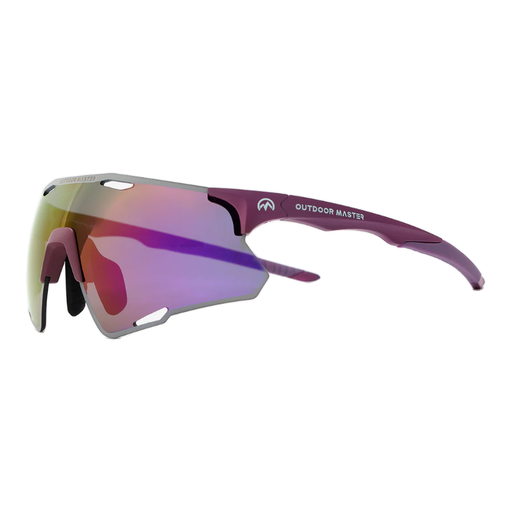
Why this fits the profile: This model combines a weight of around 25.5 grams with polarised lenses and adjustable nose pads. That makes it a practical starting point for leisure cyclists and anyone looking for one pair of glasses for multiple outdoor sports.
The product information mentions not only UV400 and polarised lenses, but also ventilation and an adjustable fit. That means you’re looking beyond just the lens colour.
25.5 g, TR90 frame, UV400 rating, ventilated lens and adjustable nose pads.
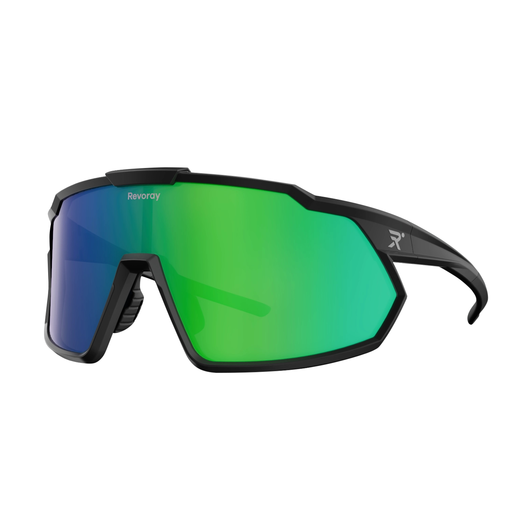
Why this fits the profile: According to the product information, these sports cycling glasses feature TAC polarised lenses, a TR90 frame weighing around 33 grams and a water- and oil-repellent coating.
The stated VLT of around 15.2% makes it clear that this lens is designed mainly for bright, sunny days. That helps you avoid choosing a dark lens that turns out to be unsuitable in lower light.
Approx. 33 g, UV400 rating, adjustable anti-slip nose pads and ANSI Z87.1 performance standard according to the product page.
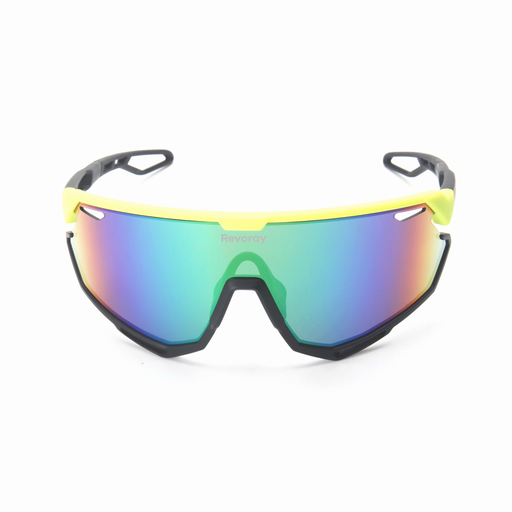
Why this fits the profile: The integrated PC lens, weight of around 30 grams and streamlined shape suit road cyclists and mountain bikers who often ride at high speed or on rougher terrain.
The product description specifically mentions PC, UV400, rubber nose pads and anti-slip temples. That gives you more certainty than a general claim about sporty use.
Approx. 30 g, integrated PC lens, TR90 frame, UV400 rating and rubber anti-slip parts.
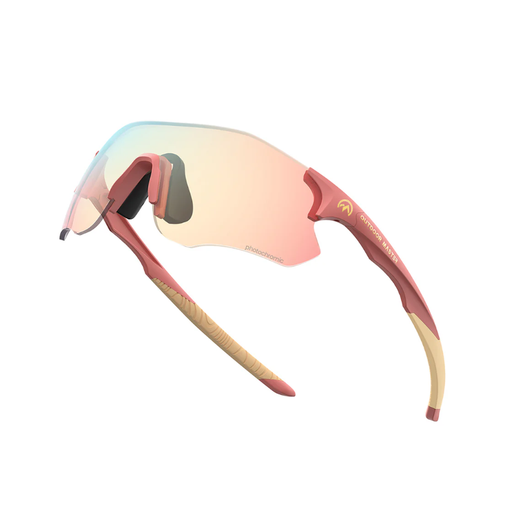
Why this fits the profile: According to the product information, the photochromic lenses switch from Cat.0 to Cat.3 based on UV exposure. That can be handy for cyclists who ride between open roads, woodland and cloudy stretches.
You don’t have to choose a very dark lens for a route with changing light. Do check how quickly and evenly the lens reacts in your environment of use.
Photochromic Cat.0–Cat.3 lens, TR90 frame, UV400 rating and anti-slip gel according to the product page.
We’ve put together a full, up-to-date list of products that fully meet these strict selection criteria and current European safety regulations.
They can be, especially in bright sunlight and with reflections from wet roads or water. Alongside polarisation, also check the VLT, fit and ventilation. For cycling in the dark or in very low light, a dark lens is less practical.
The lifespan depends on use, care and storage. Replace the glasses when the lens shows deep scratches, cracks or noticeable distortion. Rinse off dust with clean water first, then use a soft cloth. Store the glasses in a case and avoid alcohol or harsh cleaning products if the product information advises against them.
Not every model has room for that. A fit-over model, such as the Xiaomi Polarized Fitover Sunglasses, is specifically designed to be worn over prescription glasses. Always check the dimensions and the space around the temples before ordering.
