What should you look for when buying?
First, check that you can position the microphone close to your mouth and that all the connections are compatible. Then make a test recording to assess how much reverberation you can hear.
The percentages indicate which purchase considerations may be most important to consumers making this particular choice.
| Consideration |
What to look for |
Who is this important to? |
| Clarity in a reverberant space |
Keep the boom close to your mouth and make a test recording in the intended location. |
When I’m reporting in a reverberant space, I want my voice to remain clear without expecting a headset to fix the room’s acoustics. Around 36% of consumers put clarity first. |
| Compatibility with equipment |
Check the microphone input, headphone output and any cables or adapters you’ll need. |
If I already have a recorder or mixer, I want to know in advance whether I can connect both the microphone and headphones properly. Around 29% of consumers prioritise the complete recording chain. |
| Monitoring while recording |
Check that your recording device has a suitable monitoring output and that the headset can connect to it. |
I want to hear what I’m recording as I report, so I’ll choose a headset that works with my monitoring setup. This is the main consideration for around 21% of consumers. |
| Fit and maintenance |
Consider the fit, boom position and whether the cables or ear cushions can be replaced. |
For longer reports, I want a headset that stays comfortably in place and for which I know which parts can be replaced. Around 14% of consumers put fit and maintenance first. |
Headsets at Joybuy
This Joybuy selection includes headsets with microphones for voice communication, including gaming and call headsets. Check that each model’s connection and microphone suit your recording equipment. The product information does not automatically make them equivalent to a broadcast headset.
 No image available
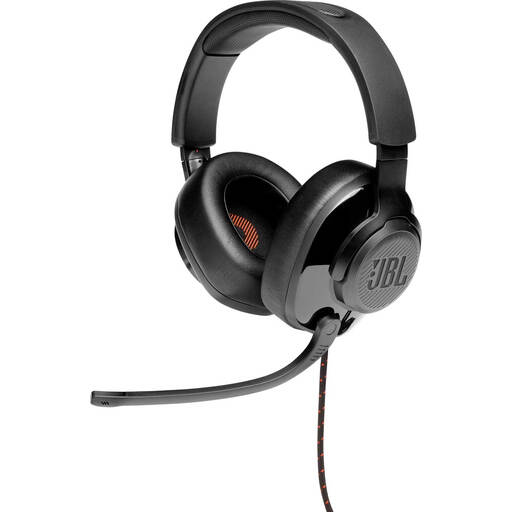
JBL Quantum 300
This wired over-ear gaming headset has a flip-up boom microphone, described in the product information as directional.
The description lists a 3,5mm connection and a USB audio adapter included in the box.
View at Joybuy
 No image available
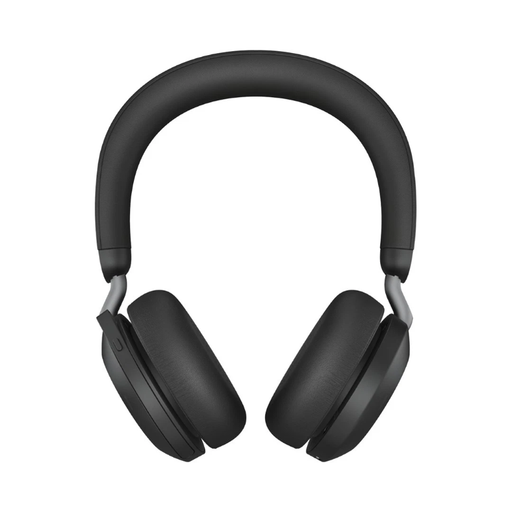
Jabra Evolve2 75
This headset is designed for voice communication. Check that its connection options work with your recording and monitoring equipment.
The product description lists Bluetooth 5.2, a USB-C cable, eight microphones and HD Voice for communication.
View at Joybuy
 No image available
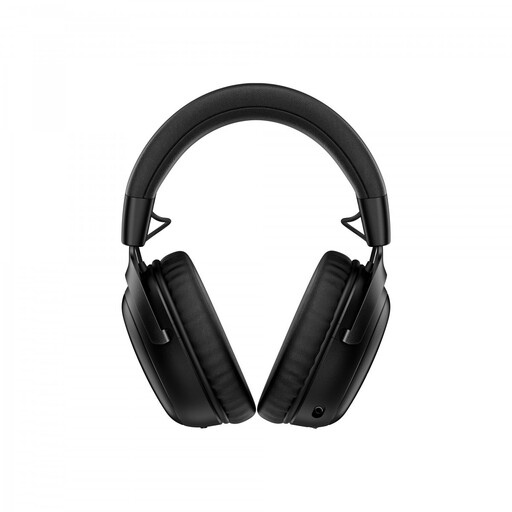
HyperX Cloud III S Wireless Gaming Headset
According to the product information, this headset has a detachable 10 mm boom microphone. Check that the wireless connection works with your recording setup.
The listed connection options are 2,4 GHz and Bluetooth. The product information lists USB-A and USB-C connections.
View at Joybuy
 No image available
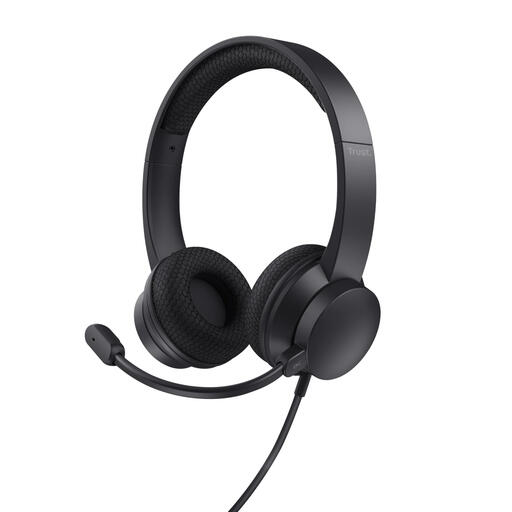
Trust Ayda wired headset
According to the product information, this wired headset is designed for calls and online meetings. Check that the microphone meets your recording needs.
The description lists USB-A and a USB-C adapter cable.
View at Joybuy
 No image available
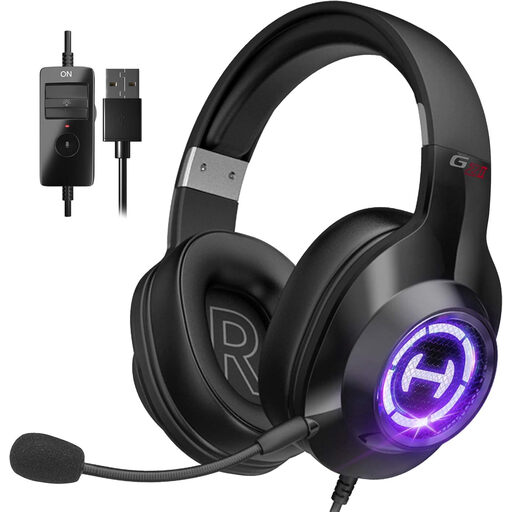
Edifier G2II
This USB gaming headset has a microphone. Check that the USB connection works with your recorder or computer.
The product description lists USB and 50 mm drivers.
View at Joybuy
Frequently asked questions
Will buying a directional headset microphone get rid of room reverberation?
No, there’s no guarantee of that. Keep the microphone close to your mouth and listen to a test recording made in the intended location. Shure explains that a microphone cannot completely separate direct speech from reflected speech or improve a room’s acoustics.
Can I connect the RØDE NTH-100M directly to an XLR microphone input?
Not with the TRRS cable alone. According to RØDE, connecting the microphone to an XLR input requires plug-in power via a suitable adapter. Also check how to connect the headphones to the monitor output.
What should I check before recording?
Keep the boom in a fixed position close to your mouth, set the recording level and listen to a short test recording. If you use loudspeakers while recording, they can feed sound back into the microphone. RØDE describes headphones as a way to avoid this separate issue. Headphones won’t remove room reverberation.
What rights do I have in the Netherlands when buying online or if a product is faulty?
For online consumer purchases, you generally have a statutory 14-day cancellation period after delivery, subject to exceptions. ACM ConsuWijzer also explains your right to receive a product that meets reasonable expectations; if it’s faulty, contact the seller. There is no single fixed statutory warranty period in the Netherlands for every headset model.
Can I publish recognisable voices of other people in a sports report?
That depends on the recording and its purpose; choosing a headset does not in itself give you permission. The Dutch Data Protection Authority states that publishing personal data requires an appropriate legal basis, and discusses exceptions for uses including private and journalistic purposes. Consider the rules for your specific report; consent is not the only possible legal basis in every situation.


