Who is this choice for?

Commentator working with crowd noise

You’re sitting close to supporters or other sources of noise while commentating, and want to record your voice while still hearing the programme. Compare the microphone’s directionality, earcups and connections. Audio-Technica and Sennheiser describe broadcast headsets with directional microphones and closed-back earcups.

Commentator using recording equipment

You already use a recorder, audio interface or mixer and want to make sure the microphone, power, cable and headphone monitoring all work together. Audio-Technica, RØDE and beyerdynamic describe different plug and cable requirements for each model.

Commentator recording at a computer

You’re recording at a quiet desk and want a straightforward connection and a test recording you can play back. Logitech describes the H540 as a USB computer headset; check how it records in your own space.

What should you look for?

Broadcast headset with separate connections

A good fit if: you’re recording with noticeable crowd noise and your recorder, mixer or interface has compatible microphone and headphone inputs.

Bear in mind: the microphone and headphone have separate plugs, so check the exact version and both inputs.

Broadcast headset with a choice of cables

A good fit if: you have a professional setup and want to match the cable to your equipment.

Bear in mind: the cable is not included with the Sennheiser HMD 26 and beyerdynamic DT 297 versions discussed here.

Headset with a TRRS connection

A good fit if: your recording device supports the required TRRS connection and you’re looking for a headset with a detachable microphone.

Bear in mind: according to RØDE, the included TRRS cable is required for the microphone; an XLR input needs additional compatible components.

Wired USB computer headset

A good fit if: you’re recording at a quiet desk and your computer has a compatible USB port.

Bear in mind: Logitech markets the H540 for computer use, not specifically for sports commentary. Assess the recording with your own test.

What to consider What should you check? Who should consider this?
Speech clarity amid background noise Compare the microphone’s directionality and earcup design; don’t assume background noise will always disappear. If crowd noise could compete with your voice, you’ll want to know how the headset sounds where you’ll be sitting. Around 36% of consumers put speech clarity amid background noise first.
Connection and monitoring Compare your equipment’s inputs with the exact headset version; check whether you need a cable, splitter or power adapter. If you use a recorder, mixer or computer, you’ll want to make sure both the microphone and headphones can actually be connected. Around 29% of consumers prioritise connection and monitoring.
Comfort during a longer commentary session Compare over-ear and on-ear designs, and check the fit and adjustability for yourself. If you’ll be presenting while seated for a long time, you’ll want a headset that feels comfortable on your head. Product descriptions can’t predict what will feel comfortable to you. Around 21% of consumers put wearing comfort first.
Simple computer recording Check the available connection and make a test recording of both normal speech and loud shouts. If you’re recording at a quiet computer desk, you’ll want to connect quickly and play back the result. Around 14% of consumers give a simple computer setup top priority.

Common buying pitfalls

  • Assuming a headphone connection is all you need to record

    The microphone and headphones may have different plugs or power requirements. Audio-Technica and RØDE describe models where these connections need to be checked separately.

    Note down your device’s microphone input and headphone output, then compare them with the exact headset version and the items supplied.

  • Assuming a directional microphone or noise cancellation is a guarantee

    Manufacturer descriptions don’t measure the acoustics of your recording space.

    Make a test recording where you plan to sit, then listen to your voice, the crowd noise and any distortion.

  • Testing only at normal speaking volume

    A loud shout can cause the recording to distort, even if normal speech sounds fine.

    Record your loudest expected passage too. The Audacity manual recommends lowering the recording level if the audio clips, then testing again.

Brands worth comparing

Audio-Technica

Audio-Technica describes the BPHS1 as a broadcast headset for applications including news and sports reporting.

  • According to Audio-Technica, the BPHS1 has closed-back over-ear earcups and a cardioid dynamic microphone.
  • The cable described has separate XLR and 6.3 mm plugs. The BPHS1-XF4 has a different intercom connection, so check the version.

Sennheiser

Sennheiser describes the HMD 26 as a wired broadcast headset for indoor and outdoor productions.

  • The version discussed has closed-back on-ear earcups, a supercardioid dynamic microphone and adjustable ActiveGard limiting.
  • The connection cable is not included with this version. Check which cable is compatible with your equipment.

RØDE

RØDE describes the NTH-100M as over-ear headphones with a detachable headset microphone, for applications including broadcast and recording.

  • The microphone can be detached; according to RØDE, the included TRRS cable is needed for the microphone to work.
  • For an XLR microphone input, RØDE describes a splitter and a compatible adapter that supplies plug-in power. A standard plug adapter may not be enough.

beyerdynamic

beyerdynamic describes the DT 297 PV MK II as a closed-back broadcast headset with a cardioid condenser microphone.

  • The manufacturer offers different headphone impedances and cable versions.
  • DT 297 versions are supplied without a connection cable. Choose a cable to match your equipment’s connections.

Logitech

Logitech markets the H540 as a USB computer headset for calls and other computer use.

  • The manufacturer lists USB-A, an adjustable microphone boom and mute controls.
  • The model is not presented specifically as a sports broadcast headset. Test the recording and background noise where you’ll be using it.

Headsets at Joybuy

The selection below includes headsets for computer and communication use, with a microphone and headphone playback. For each model, check that the connection and controls suit your recording equipment, and make a test recording before commentating.

JBL Quantum 300 wired over-ear gaming headset, black

JBL Quantum 300 wired over-ear gaming headset, black

Could suit a wired recording setup if the connection is compatible with your equipment and the test recording meets your needs.

JBL’s product description lists a directional microphone boom that flips up to mute, a 3.5 mm connection and a USB audio adapter supplied in the box.

View at Joybuy
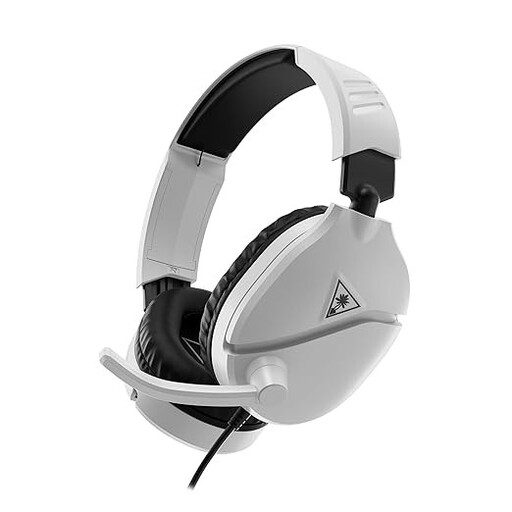
Turtle Beach Recon 70 PlayStation wired gaming headset, white

Turtle Beach Recon 70 PlayStation wired gaming headset, white

A possible option for a wired setup if the connection listed is compatible with your recording equipment; check the sound with your own test.

Turtle Beach’s product description lists a directional microphone boom that flips up to mute, a 3.5 mm connection and 40 mm speakers.

View at Joybuy

Jabra Evolve2 55 wireless stereo headset, black

Jabra Evolve2 55 wireless stereo headset, black

Could work with a computer setup if the supplied adapter is compatible with your computer; also check the microphone controls during a test recording.

The product information lists two microphones, a mute function, a flexible microphone boom and a USB Bluetooth adapter supplied in the box.

View at Joybuy

Jabra Evolve 30 II MS stereo headset

Jabra Evolve 30 II MS stereo headset

A wired option for speaking and listening; check that the connections work with your recording device.

The product information lists a 3.5 mm connection and a USB controller supplied in the box.

View at Joybuy

Trust Ayda wired USB headset with headband, black

Trust Ayda wired USB headset with headband, black

Could suit computer recording if the USB connection is compatible; play back a test recording to assess how the headset sounds in your space.

The product information lists an adjustable headband, a fold-up microphone, USB-A and a USB-C adapter cable.

View at Joybuy

Frequently asked questions

How do you set the microphone for quiet speech and loud shouts?

Make a short test recording at both speaking volumes and check the recording meter and waveform. The Audacity manual gives a peak of around −6 dB as a guide; lower the recording level and test again if the audio clips. This is recording advice, not a product specification.

Can you connect a headset with a headphone plug directly to your XLR mixer?

Check the microphone and headphone connections separately; having one compatible plug isn’t enough to connect both signals. The Audio-Technica BPHS1 has separate microphone and headphone plugs. For the RØDE NTH-100M connected to an XLR microphone input, RØDE describes a splitter and a compatible adapter that supplies plug-in power.

What should you check when maintaining a broadcast headset?

Check that the cable and microphone boom are secure, and consult the manual for the exact version before removing or replacing any parts. Audio-Technica lists replaceable cables and ear pads for the BPHS1; with the beyerdynamic DT 297, you’ll also need to choose a compatible connection cable.

What can you do if your headset develops a fault after buying it online in the Netherlands?

For your statutory rights, contact the seller. The Dutch government states that there is no fixed statutory guarantee period; what you can expect from a product depends, among other things, on the product itself and the information provided. Online purchases from a business also often come with a 14-day cooling-off period, subject to applicable exceptions.

Do you need a licence in the Netherlands for a wireless headset microphone?

It depends on the frequency band used and the conditions of use. The Dutch Authority for Digital Infrastructure publishes the frequencies that can be used without a licence; some other bands require one. Check the frequency of the specific wireless system before use.
