
Vandaag of morgen in huis

Kwaliteit gegarandeerd

Welkomstaanbiedingen ontgrendelen: GRATIS bezorging | Tot 80% korting | Gratis 30 dagen JoyPlus-proefperiode
Download de app
A sports backpack needs to do more than look athletic. You want space for clothes, shoes, books or a laptop without the bag becoming awkwardly heavy. Yet marketing claims and unclear product information regularly lead to disappointing purchases.
Pay particular attention to these three common pitfalls:
The right bag depends on how you plan to use it. A compact drawstring gym bag is handy for a short workout, while a larger backpack for everyday use is better suited to commuting, school or a weekend away.
If you only need to carry sportswear, a towel and a water bottle, a basic gym backpack may be sufficient. If you also take shoes, lunch, books or electronics with you, a model of around 20 to 24 litres is a better choice.
Don’t just look at the number of litres, but also consider the shape. A 45 cm-high backpack may be suitable for folders or clothing, while a deeper bag offers more room for sports shoes. Check the dimensions against the items you carry every day.
A backpack with multiple compartments helps you keep small accessories, keys and your wallet separate. A side pocket is useful for a bottle, but it does not always protect against leaks.
For regular use, adjustable shoulder straps are important. A padded back panel can improve carrying comfort, particularly when you cycle or travel by public transport for longer periods.
A lightweight backpack is not automatically comfortable. Consider the relationship between its own weight, its capacity and the way it closes. A simple drawstring bag is light, but distributes weight differently from a standard backpack with two shoulder straps and a shaped back panel.
Polyester is often used for sports bags because it is relatively lightweight and easy to clean. Some product descriptions mention water resistance; treat this as a manufacturer’s product specification rather than a guarantee that the bag is waterproof.
Do you need a laptop for school or work? Only choose a backpack with a laptop compartment when this compartment is clearly stated in the product information. A padded inner pocket can help protect against scratches, but does not automatically indicate impact resistance.
Also check the zips, seams and base. A double base or reinforced bottom is useful when the backpack is often placed on the floor of a changing room or train.
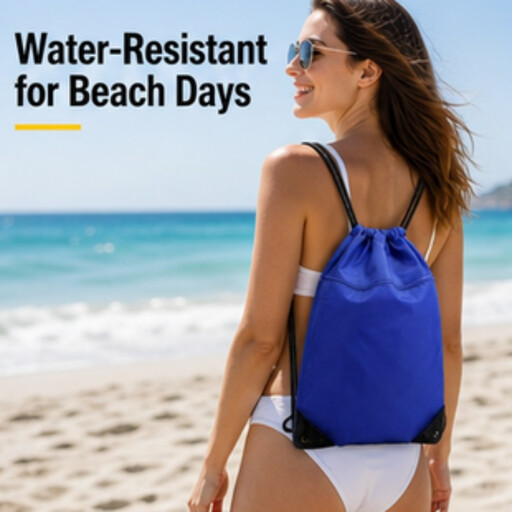
Why it suits this profile: This lightweight drawstring gym bag is suitable for anyone who mainly carries clothing, a towel and small sports accessories. The blue version is easy to pair with everyday clothing.
The design focuses on easy access and includes a zipped pocket for smaller items. The bag is less suitable if you want to carry lots of books or a laptop.
Drawstring closure, separate zipped pocket and low weight for short workouts or swimming lessons.
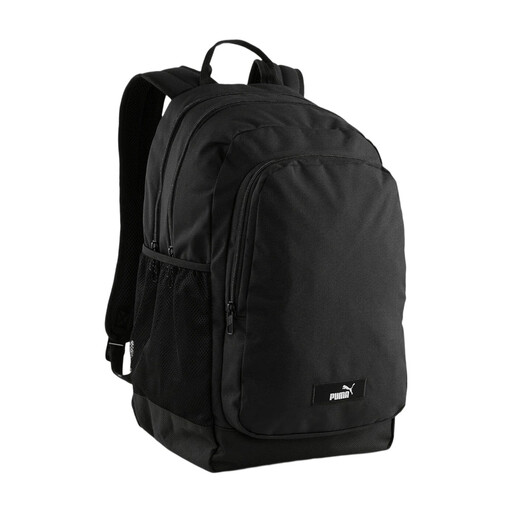
Why it suits this profile: This model combines a capacity of around 24 litres with several storage options. That makes it suitable for adults and older children looking for a backpack for school, work and the gym.
The main compartment and front pocket have two-way zips. Two side pockets and a padded internal compartment provide a more practical layout than a basic sports backpack.
Dimensions of 45 x 30 x 18 cm, approximately 24 litres of capacity, plus padded straps and back panel.
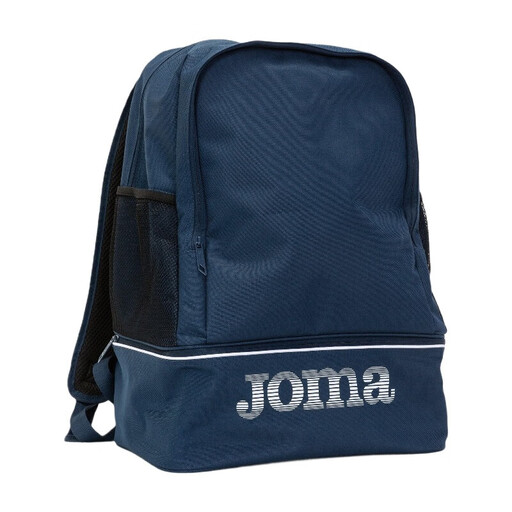
Why it suits this profile: With a stated capacity of 24.2 litres, this model is designed for training kit, clothing and everyday essentials. The navy colour is practical for frequent use.
The product information lists an inner pocket, front pocket and double base. This helps you separate your belongings and makes the bag more stable when put down.
Dimensions of 48 x 35 x 24 cm, 24.2 litres of capacity and padded shoulder straps according to the product description.
We’ve put together a complete, up-to-date list of products that fully meet these strict selection criteria and the applicable European safety regulations.
That depends on the layout. For everyday use, choose a model with sufficient capacity, a sturdy back panel and a separate pocket for smaller accessories. For a laptop, you need a clearly designated laptop compartment. A drawstring bag is mainly suitable for light luggage and is not a replacement for a fully organised school or work backpack.
For clothing, shoes, a towel and a water bottle, around 20 to 25 litres is often practical. If you also carry a laptop, books or lunch, consider the layout rather than just the volume. A large main compartment without inner pockets may be less organised in practice.
Always follow the manufacturer’s care instructions. Several models in this range are listed as suitable for wiping clean with a damp cloth. Don’t leave wet clothing in the bag for long periods, and regularly check the base, zips and seams. This helps keep your backpack usable without putting unnecessary strain on the material.
