
Vandaag of morgen in huis

Kwaliteit gegarandeerd

Welkomstaanbiedingen ontgrendelen: GRATIS bezorging | Tot 80% korting | Gratis 30 dagen JoyPlus-proefperiode
Download de app
A sports backpack needs to do more than just look the part. For school, work, the gym, cycling or a weekend walk, size, comfort and easy access to your belongings are what really matter. Yet many people buy a bag based solely on colour, brand or a promising product claim.
So watch out for these common pitfalls:
Don’t just look at the dimensions – also check the capacity in litres. A compact school backpack of around 20 to 22 litres can be suitable for books, a packed lunch and daily accessories. For sports kit, trainers and a towel, a separate main compartment or a larger model is more practical.
Also check the shape. A backpack measuring 44 × 30 × 14 cm might look roomy on paper, but the available space depends on the opening and the layout. A two-way zip often makes the main compartment easier to access. A backpack with zip pockets helps you keep keys, cards and a phone organised separately.
For just a phone, keys and energy gels, a sports backpack might be unnecessarily large. In that case, a running waist bag is a better fit for the activity.
Look for adjustable shoulder straps, a padded back and any ventilation panels. For daily use, a wide, evenly adjustable strap is usually more practical than a simple cord. For an intense hike or cycle ride, stability and the right back length matter more than just a low weight.
A lightweight backpack reduces the weight you have to carry, but also check the capacity and reinforcement. A very light bag may be less suitable for heavy books or lots of sports equipment if the back and straps offer little support.
For a trail or cycling backpack, body size is especially relevant. For models with an adjustable harness, measure your torso length according to the seller’s instructions. Don’t automatically choose a larger size: a stable fit prevents the bag from shifting around as you move.
Polyester is common for sports bags. The product specification can give extra information about the weave and coating. For example, the PUMA Phase Backpack mentions 150D polyester with polyurethane reinforcement. That’s verifiable material information, but it doesn’t automatically mean the bag is waterproof.
So check:
A drawstring backpack is simple and quick to open, but usually offers less protection and structure than a model with a zip. For swimwear or a light set of gym clothes, that can be enough. For a laptop, books or fragile accessories, a structured bag with zip pockets is usually more sensible.
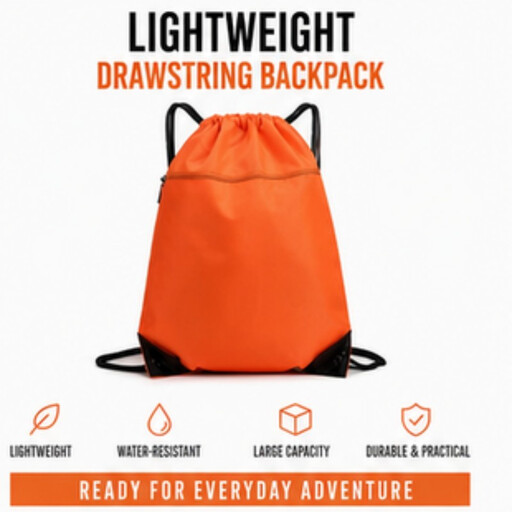
Why it fits this profile: This simple gym sackpack is ideal for anyone looking for a lightweight bag for trainers, swimwear or a towel without much extra structure.
The bag has a separate zip pocket alongside the drawcord, so small items don’t get lost among clothes or accessories.
Lightweight design, quick access and an extra zip pocket for smaller essentials.
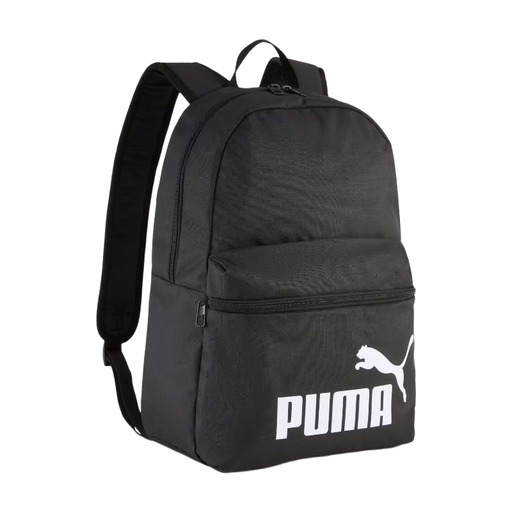
Why it fits this profile: A practical model for school, work, the gym and daily commuting when you want a fixed layout and a recognisable sporty look.
The bag combines a main compartment with a two-way zip, a front zip pocket and a mesh side pocket; the layout is easy to check before you order.
22-litre capacity, dimensions of 30 × 43 × 14 cm, padded back and a stated weight of 300 grams.
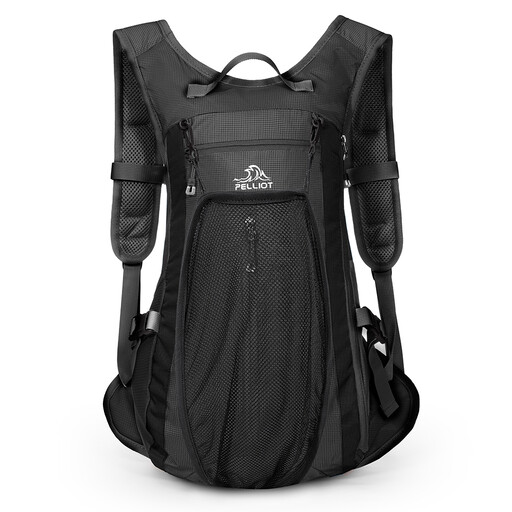
Why it fits this profile: Designed for running, cycling and hiking where a stable fit, quick access and low weight are key.
The adjustable harness and sizes based on torso length help you choose a model that fits better than a standard backpack.
10–20 litres depending on size, a durable grid polyester material and multiple pockets for sports accessories.
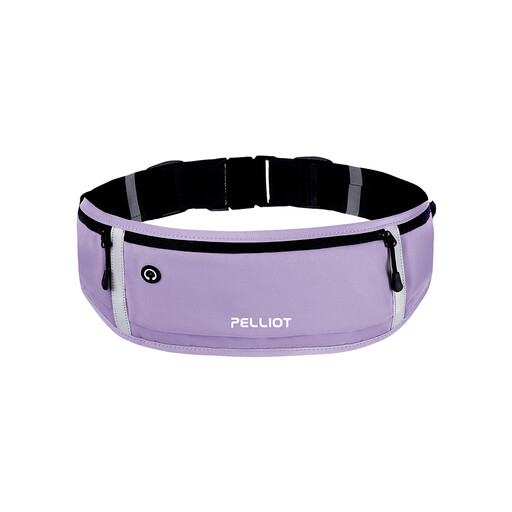
Why it fits this profile: For running, cycling or commuting with just a phone, keys, cards and small snacks.
The pockets close with zips and the elasticated waistband comes in two size ranges, so you don’t have to rely on a one-size-fits-all approach.
Main compartment, quick-access front pocket and hidden pocket; reflective strips and moisture-wicking mesh material according to the product description.
We’ve put together a full, up-to-date list of products that fully meet these strict selection criteria and current European safety regulations.
First, decide what you usually carry. For a school backpack, books, a laptop and a drinks bottle are the deciding factors. For the gym, ventilation, a roomy main compartment and quick access to clothes matter more. If you mainly cycle or hike, it’s better to focus on stability, torso length and pockets for on-the-go use.
Then compare the product specifications rather than just the product photos. A Reebok backpack, for example, can be appealing for school, work, the gym and short trips thanks to its spacious main compartment, extra pockets and adjustable shoulder straps. With this type of product, do check whether the dimensions and laptop space suit your own belongings.
With PUMA models, some versions state that at least 90% of the materials are recycled. This is a product specification from the brand; it doesn’t automatically tell you about the overall lifespan or environmental impact of the bag. So also look at the care instructions and daily use.
For school, work and light sport, around 20 to 22 litres is often practical. If you’re carrying trainers, clothes and a towel, you may need more space or a separate bag. Always check the dimensions alongside the litre capacity.
Yes, for light items like clothes, a towel and trainers, a drawstring backpack can be handy. For a laptop, heavy books or fragile accessories, a model with a padded back and zip pockets usually offers more structure.
Follow the instructions on the product label. For the PELLIOT models mentioned, wiping with a damp cloth and air drying is recommended; machine washing and tumble drying are not advised. Remove wet clothing from the bag promptly to prevent odours and moisture damage.
