Start with the connection: a wired USB headset can work directly with a computer that has the right USB port, while the RØDE NTH-100M requires a compatible 3.5mm TRRS connection or a suitable splitter. Call-quality specifications don’t prove how natural a diary recording will sound, so make a test recording and assess background noise at home as well as the fit.
Who records a spoken diary at home?
Anyone who wants to listen back to their own voice
You want to listen back to what you’ve recorded and pay attention to how your voice sounds. RØDE describes the NTH-100M as suitable for monitoring and recording; the Consumers’ Association lists recorded microphone sound as a separate test category.
Anyone recording in a busy home
You record at home, where there may be other sounds around you. Consider separately what you hear through the ear cups and what the microphone picks up in the recording. Logitech and Jabra describe different features, but a test recording in your own room is still important.
Anyone who dictates regularly
You want to get started without a complicated connection and wear the headset comfortably during regular sessions. Check the USB version or cable, the mute function and the fit; Logitech, EPOS and Trust offer different wired models.
What should you look for when choosing?
First check that the headset works with your recording device. Then make a test recording and assess the sound of your voice, the noise in the room and wearing comfort separately.
| What to consider |
What should you check? |
Who is this important for? |
| Clear voice recordings |
Record a short passage in your usual speaking voice, including p and b sounds, then listen back to the file. The Consumers’ Association assesses recorded microphone sound as a separate test category. |
If I want to enjoy listening back to my diary later, I first want to hear how my own voice sounds. Around 33% of consumers prioritise voice recording. |
| Noise at home |
Make a recording in the room and at the time you usually speak; also assess how much background noise you can hear yourself. |
If I record while there are other sounds at home, I want to know what makes it into my recording and what I can hear myself. Around 27% of consumers prioritise dealing with household noise. |
| Connection and input |
Compare USB-A, USB-C or 3.5mm TRRS with the ports on your device, then select the headset microphone in your recording app. |
If I want to get started without extra connection equipment, I check whether my device recognises the headset directly. Connection convenience matters most to around 20% of consumers. |
| Comfort during longer sessions |
Check the headband, ear cushions, fit with glasses and cable clearance during a session of your usual length. |
If I regularly record longer passages, I want a fit that remains comfortable for me. Around 20% of consumers prioritise wearing comfort. |
Common mistakes
-
Confusing noise isolation for your ears with less noise in the recording
Passive isolation describes what you hear yourself; it doesn’t prove that the microphone will keep background noise out of your diary recording.
Record a passage in your own room and listen back to it. Assess the recording separately from how much noise you can hear through the headset.
-
Assuming all versions with the same model name are interchangeable
The Trust Ayda is available with USB or a 3.5mm connection. Jabra documents different USB and mono/stereo versions; the full model variant determines which connection you get.
Before buying, compare the complete model variant with the ports on your recording device. The wrong connection may mean you need a different version or additional connection equipment.
-
Assuming a headset for calls is a proven studio microphone
Manufacturers describe the Logitech H390 and EPOS PC 8 USB as suitable for calls. That doesn’t replace testing them with your own voice and recording environment.
Test your usual speaking voice, background noise and playback before deciding whether the recording suits your diary.
Relevant headset microphone brands
RØDE
RØDE also positions the NTH-100M for podcasting and other recordings, making it an option if you want to record and listen at the same time.
- RØDE lists a detachable microphone and an included 3.5mm TRRS cable.
- This isn’t a USB headset. The XLR setup described by RØDE requires a suitable adapter and power for the microphone. Statements about voice reproduction are manufacturer claims, not an independent comparison.
Logitech
The H390 is a wired USB computer headset for recording on a compatible computer.
- Logitech describes a movable microphone boom and controls on the cable. The Dutch product description specifies USB-A; check the version you choose.
- The manufacturer describes the headset as suitable for calls. This doesn’t establish its recording quality for a spoken diary.
Jabra
The Evolve2 40 SE is an office headset for anyone considering passive isolation, a microphone boom and a specific USB version.
- Jabra describes passive isolation and muting via the microphone boom.
- Jabra’s technical documentation distinguishes between mono/stereo and USB versions, among others. It states that separate USB-A and USB-C SKUs will be replaced in 2025; check the complete version. Claims about call performance aren’t a comparative test of diary recordings.
EPOS
The PC 8 USB is a wired stereo headset with a microphone for a compatible PC or Mac.
- EPOS lists USB, mute and volume controls on the cable.
- EPOS describes the model as suitable for calls; this isn’t an independent comparison of diary recordings.
Trust
The Ayda USB is an on-ear version with controls on the ear cup.
- For the USB version, Trust describes an included USB-C-to-A adapter and a microphone that mutes when you flip it up.
- There’s also an Ayda with a 3.5mm connection; that’s a different version. Statements about comfort come from the manufacturer.
Joybuy products for recording at home
These wired headsets have a microphone for voice recording and offer either a 3.5mm or USB connection, depending on the version. Check which connection is compatible with your recording device.
 No image available
Trust GXT 498W Forta wired gaming headset, white
A wired headset with a detachable microphone may be suitable if your recording device supports a 3.5mm connection.
The product information lists a 3.5mm cable, a detachable microphone, and volume and mute controls on the ear cup. The product name specifies 50mm drivers and an over-ear design.
View at Joybuy
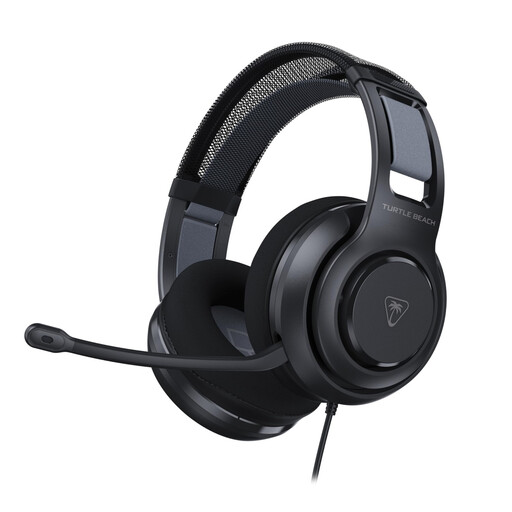 No image available
Turtle Beach Atlas 200 PC wired headset, black
This version may be suitable if you want to connect via 3.5mm; check that your recording device has this connection.
The product name specifies a 3.5mm connection. The product information lists a flip-to-mute microphone, an included USB adapter and memory foam ear cushions.
View at Joybuy
 No image available
Turtle Beach Airlite Fit wired headset, blue/red
The flip-up microphone and 3.5mm connection make this an option worth considering if your device supports that connection.
The product name lists compatibility with Nintendo Switch, Switch Lite, Switch OLED, PC and mobile devices. The product information specifies an adjustable frame and breathable mesh ear cups.
View at Joybuy
 No image available
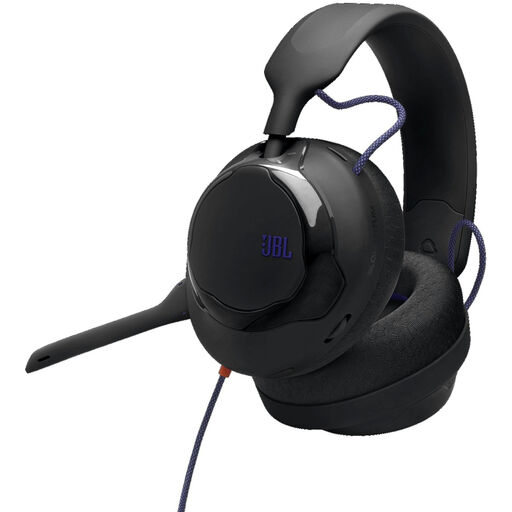
JBL Quantum 120 wired gaming headset, black
This headset may be suitable for recording on a device with a 3.5mm connection; make a test recording to assess how your voice sounds in your room.
The product name specifies a wired headset. The product information lists a detachable 6mm cardioid boom microphone and a 3.5mm audio cable.
View at Joybuy
 No image available
Logitech PC 960 USB wired headset
A USB headset can be a practical option if your computer supports the connection and you can select the headset as the recording input.
The product name specifies USB. The product information lists an adjustable microphone boom, volume control and mute controls on the cable.
View at Joybuy
Frequently asked questions
Why won’t my computer record through the headset microphone?
Check that the connection is compatible with your device and select the headset microphone as the input device in your operating system and recording app. RØDE states that the included TRRS cable is needed for the NTH-100M microphone to work correctly.
How do I care for a headset I wear regularly?
Follow the instructions for the specific model. RØDE explains how to remove the ear and headband cushions on the NTH-100M; don’t assume other models have the same design.
Do I need consent or a lawful basis under the GDPR to keep a personal spoken diary?
According to the Dutch Data Protection Authority, the GDPR doesn’t apply to processing carried out solely for personal or household use. This doesn’t automatically apply to publication or professional use, and it doesn’t in itself answer what rules apply if you record other people.
What if the headset breaks sooner than expected during normal use?
In the Netherlands, the retailer is responsible for the statutory guarantee if a product is faulty. ACM ConsuWijzer states that free repair, replacement or a refund may be available; the manufacturer’s guarantee period doesn’t automatically limit your statutory rights.


