
Soup maker with limited counter space
You already make spinach soup in a saucepan and mainly want an appliance you can put away after use. The Consumers’ Association (Consumentenbond) lists blending soup as one use for a hand blender.


If you usually make spinach soup in a saucepan, a hand blender is generally the most space-saving option: there’s no separate blender jug to store, and you can put the blender away after use. A compact blender is a better fit for small portions, provided the instructions for that specific model say it’s suitable; a soup maker is worth considering if you’d also like one appliance to cook the soup and have room to store the jug. Whichever you choose, check the guidance on hot ingredients and include any accessories when working out how much storage space you’ll need.
You already make spinach soup in a saucepan and mainly want an appliance you can put away after use. The Consumers’ Association (Consumentenbond) lists blending soup as one use for a hand blender.
You want to blend your soup after cooking, so you’ll need to check the temperature guidance for the specific appliance. Philips provides different instructions for different blender models.
You usually make one or a few portions and are weighing up whether a small blending cup or an appliance that also cooks soup better suits the way you cook. Tefal describes the Blend Up as suitable for cold soup; Philips describes the SoupMaker as an appliance with soup programmes.
Choose this option: if you already make soup in a saucepan and want an appliance you can put away afterwards.
Bear in mind: it’s operated by hand and can splash; extra attachments also need storage space.
Choose this option: if you mainly want to blend small quantities or cooled soup, and also make smoothies or cold sauces. Tefal describes the Blend Up BL19H4 as suitable for cold soup.
Bear in mind: the motor base, cup and blades also take up space; don’t assume it’s suitable for hot soup without checking.
Choose this option: if you want to cook soup in the appliance too and have somewhere separate to store it. Philips describes the refurbished HR2204/80R1 as having soup programmes and a 1.2-litre jug.
Bear in mind: the jug is still a separate appliance to store; also check the condition and terms of the version on offer.
| What to consider | What should you check? | Who should pay particular attention? |
|---|---|---|
| Counter and cupboard space | Check which parts are included and where you’ll store them after use. | If I have limited space, I’d rather blend directly in the saucepan I already own than have to find room for a separate jug and accessories. Around 36% of consumers prioritise saving space. |
| Hot soup | Read the temperature and filling instructions for the specific model; don’t assume the limit for another model applies. | I want to blend soup after cooking and need to know whether I should let it cool first. Around 29% of consumers prioritise blending hot soup in line with the model instructions. |
| Portion size and preparation method | Compare the capacity of the included cup or jug and the programmes with the quantities you usually make. | If I make small portions, I want to choose between a compact blending cup and an appliance that also cooks soup. Around 21% of consumers prioritise portion size and preparation method. |
| Cleaning and separate parts | Check which parts can be removed and which are dishwasher-safe according to the manual. | After cooking, I want to be able to clean the parts that come into contact with soup easily, without having to store lots of unnecessary separate pieces. Around 14% of consumers prioritise cleaning and separate parts. |
Temperature guidance varies by model. Philips says that certain blender models require cooked ingredients to be cooled first; Tefal describes the Blend Up BL19H4 as suitable for cold soup.
Check the manual for the specific model before putting cooked spinach in a jug or sealed cup.
Cooling the soup can take extra time or mean you need to use a different preparation method.
The parts included vary between versions, so a compact base doesn’t necessarily mean the whole set will take up little storage space.
Compare the complete set with the counter and cupboard space you have available.
A manufacturer’s guarantee doesn’t replace your statutory rights. ACM ConsuWijzer states that the seller is responsible if a product doesn’t do what you could reasonably expect when used normally.
Keep your proof of purchase and contact the seller if something goes wrong. Consider any paid-for extended guarantee separately.
The ErgoMixx MSM66110 is a straightforward hand blender for blending soup in a saucepan.
The MultiQuick 5 MQ50051M is a hand blender supplied with a whisk and measuring beaker, suited to anyone who wants extra accessories as well as a way to blend soup.
The Blend Up BL19H4 is a compact personal blender that Tefal describes as suitable for cold soup, among other things.
The Viva Collection SoupMaker HR2204/80R1 is another option if you want to cook and blend soup in one appliance.
These are hand blenders for blending soup in a saucepan; check the instructions for hot ingredients and the included parts for each model.
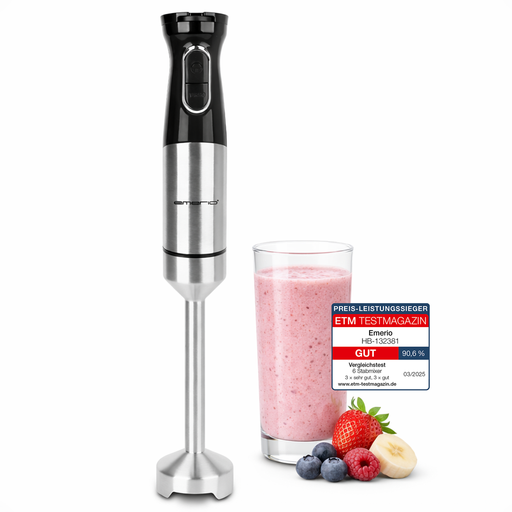 No image available
Suitable for blending in a saucepan; the product description mentions soup and hot ingredients.
The product name lists 1000 W, variable speed and a black and stainless steel finish. The blending shaft is removable, according to the product description.
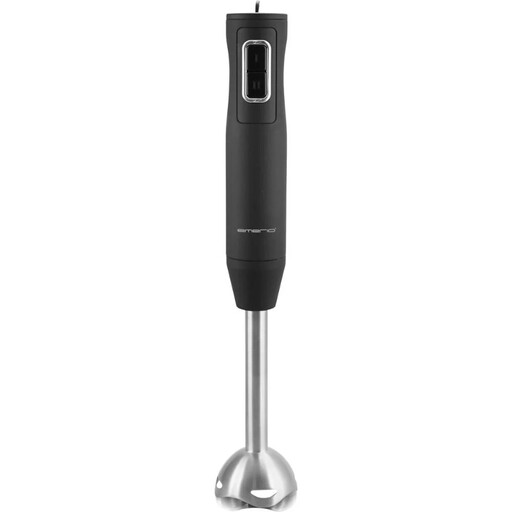 No image available
The product description lists smooth soups and sauces as suitable uses.
The description specifies a stainless steel shaft and two speeds.
 No image available
The product description lists blending soup as a suitable use, making it a good fit for use in a saucepan you already own.
The product name lists 800 W and stainless steel. The description mentions 20 speeds, a turbo setting and splash protection.
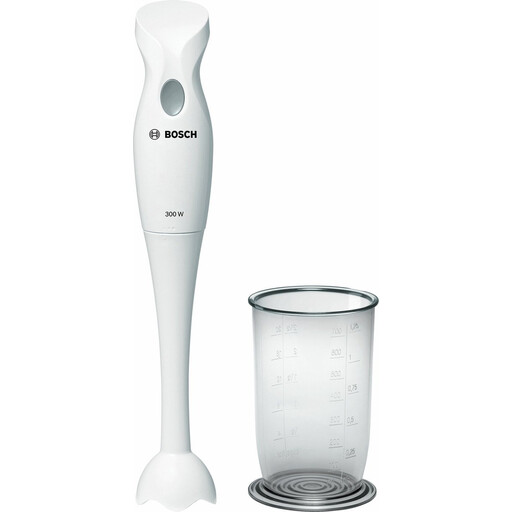 No image available
The product description lists soup as a suitable use for this hand blender.
The description mentions a measuring beaker and removable, dishwasher-safe parts.
 No image available
The product description lists soup as a suitable use for the hand blender.
According to the description, the set includes a 700 ml measuring beaker, a 500 ml chopper and a whisk; these parts need extra storage space. The description specifies a maximum of one minute’s continuous use, followed by one minute of rest.
No, don’t assume that you can. Philips says that cooked ingredients must first be cooled to below 60 °C for certain blender jugs; for other Philips models mentioned, the brand specifies cold or room-temperature ingredients only. Check the instructions for the specific model and don’t apply another model’s temperature limit.
The Consumers’ Association (Consumentenbond) advises switching the hand blender on only once the blending foot is in the saucepan or bowl. After use, unplug it, detach any accessories and check the manual to see which parts can go in the dishwasher.
Yes. According to the Netherlands Nutrition Centre (Voedingscentrum), spinach can be reheated. Cool leftovers quickly after cooking, store them at 4 °C and keep them in the fridge for no more than two days.
When you buy from a business online, you usually have a statutory 14-day cooling-off period after delivery, according to ACM ConsuWijzer. You’re also covered by statutory rights: if a product doesn’t do what you could reasonably expect when used normally, the seller is responsible for putting things right. A manufacturer’s guarantee doesn’t replace these rights.
Yes. The Dutch government states that electrical appliances placed on the market in the EU must carry a CE marking. Check the product information and marking on the item you’re considering; general product specifications don’t individually confirm that every item complies.