
Cooking with a large soup pan
You’re already cooking the soup in a pan and want to blend it for several guests without repeatedly transferring it.


If your spinach soup is already in a large pan, a hand blender is a practical choice: you can blend it without transferring it first. Choose a jug blender only if the instructions for that exact model say it can handle the soup’s temperature and its usable capacity suits the amount you’re making. A soup maker can take care of the cooking too, but Philips specifies a capacity of 1.2 litres for four portions, so you may need to make several batches for a larger group.
You’re already cooking the soup in a pan and want to blend it for several guests without repeatedly transferring it.
You want to use a jug blender, so it’s important to check the exact model’s usable capacity and permitted temperature.
You’re looking for an appliance that cooks the soup as well as blending it; the number of portions per batch determines how many rounds you’ll need.
Choose this option: if you’re cooking the soup in a large pan and want to blend it there.
Bear in mind: you’ll need to operate the blender yourself; keep the blending foot below the surface of the soup to help prevent splashes.
Choose this option: if you want to work in batches and the jug of the exact model is suitable for the soup’s temperature.
Bear in mind: transferring the soup and working in batches mean extra steps; temperature guidance varies by model.
Choose this option: if you want the appliance to cook or heat the soup as well.
Bear in mind: the usable batch capacity determines whether you’ll need several rounds to cater for all your guests.
| What to consider | What should you look for? | Who is this important for? |
|---|---|---|
| Blending in a large pan | Suitability for hot soup, blending foot and cord length. | If you’re making soup in a large pan and would rather not transfer it, being able to blend it straight in the pan will influence your choice. Around 36% of consumers say blending in the pan is their top priority. |
| Soup temperature | Read the temperature guidance for the exact model. | If you want to blend the soup straight after cooking, first check what temperature the jug can handle. Around 27% of consumers prioritise being able to blend hot soup. |
| Cooking soup in the appliance | Check whether it has a heating programme and compare the usable capacity. | If you want the appliance to take care of the cooking or heating, the amount it can make per batch will shape your plans. Around 19% of consumers prioritise automatic soup-making. |
| Cleaning and other uses | Check which accessories are included and which parts the instructions say are dishwasher-safe. | If you want to clean fewer parts after blending and use the appliance for other recipes too, focus on what you really need. Around 18% of consumers prioritise easy cleaning and versatile use. |
When using a jug blender, plan your batches around its usable capacity, not just the total jug capacity. For example, Tefal lists a usable capacity of 1.75 litres for the BL83SD30, with a total capacity of 2 litres.
For the Tefal BL83SD30, Tefal lists a total capacity of 2 litres and a usable capacity of 1.75 litres. The usable capacity can therefore determine how many batches you need to make.
Plan around the usable capacity of the exact model and don’t exceed the fill mark.
A smaller usable batch may mean extra rounds and more preparation time.
Philips’ temperature guidance varies by model: for some of the models listed, only cold or room-temperature liquids are permitted; for others, Philips specifies a limit of below 60 °C for ingredients added to the jug.
Read the instructions for the exact model before pouring soup into the jug.
Cooling the soup and reheating it later adds extra steps to the preparation.
Philips lists the refurbished SoupMaker HR2204/80R1 as having a capacity of 1.2 litres for four portions. You may need several rounds for a larger group.
Compare the stated batch capacity with the amount of soup you want to make for your guests.
According to the Dutch government, your statutory rights if a product is faulty are separate from a paid-for extended warranty.
Check what extra cover is actually provided and what it adds to your rights.
The MultiQuick 7 range is worth considering if you want to blend soup in the pan. Braun lists a metal blending foot and variable speed control for the MQ7000X.
The Triblade XL HBM40.002WH is a hand blender that Kenwood positions as suitable for larger quantities of soup.
The refurbished SoupMaker HR2204/80R1 is designed for anyone who wants to cook soup in the appliance, rather than simply blending soup from a pan.
The Perfectmix Cook BL83SD30 is a heated jug blender for hot and cold recipes.
The ErgoMaster MSM6M8X1 is a hand blender with attachments for anyone who also wants to chop, slice or whisk as well as make soup.
These hand blenders are selected for soup that you cook in a pan. CE marking is required for electrical appliances covered by the Dutch Commodities Act Decree on Electrical Equipment, according to the Netherlands Food and Consumer Product Safety Authority; check the applicable product information for the specific model.
 No image available
The product description mentions a detachable blending foot for puréeing soup, with a chopper and whisk for other recipes.
For hot ingredients, the product description specifies a heat-resistant bowl and small batches.
 No image available
The product description mentions the PowerBell VPlus blending foot for soup and liquids.
According to the product description, this model has 25 speeds, a turbo setting, a chopper and dishwasher-safe parts. The instructions warn against processing boiling liquids.
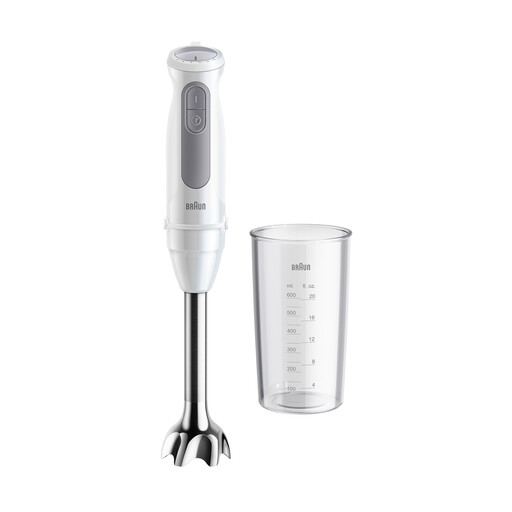 No image available
The product description mentions a blending foot for small portions and a hand-operated speed control.
The listed specifications are 21 speeds, a 1000 W motor and dishwasher-safe parts.
 No image available
The product description mentions blending soups and thick soups.
The listed specifications are 20 speeds and a turbo setting.
 No image available
The product title and description list soup and purée among its uses.
The title lists two speeds, a 500 ml chopper bowl and an 800 ml measuring beaker.
No. Check the instructions for the exact model. The Dutch Consumers’ Association points out that soup requires a heat-resistant jug. For the HR3756/00, HR3752/00 and HR3868/00 models, Philips specifies only cold or room-temperature liquids; for the HR2512/90, HR2511/90 and HR2510/90, Philips specifies a limit of below 60 °C for ingredients added to the jug. These instructions don’t automatically apply to other models.
Yes. Keep leftovers in the fridge at 4 °C for no more than two days. The Netherlands Nutrition Centre advises reheating leftovers until steaming hot all the way through, stirring them well as they heat.
According to the Dutch government, if a product is faulty you should contact the retailer. The Netherlands has no fixed statutory warranty period; a paid-for extended warranty doesn’t replace your statutory rights.
CE marking is required for electrical appliances covered by the Dutch Commodities Act Decree on Electrical Equipment, according to the Netherlands Food and Consumer Product Safety Authority. Check the applicable product information for the specific model.