
Cooking soup that’s ready to blend
You want to blend the soup straight in the pan just before your guests arrive, then tidy up quickly. The Consumentenbond identifies blending in the pan as a practical use for a hand blender.


If your spinach soup is already cooked and you want to blend it quickly, a hand blender is an obvious choice: you can blend it straight in the pan, so there’s less pouring. A blender jug is a better fit if you’re mainly looking for a smooth result and enough usable capacity per batch; a soup maker is designed for anyone who also wants to automate the heating. When blending hot soup, always check the temperature and filling instructions for the specific appliance. The Consumentenbond describes blending in the pan as a practical advantage of a hand blender.
You want to blend the soup straight in the pan just before your guests arrive, then tidy up quickly. The Consumentenbond identifies blending in the pan as a practical use for a hand blender.
You’re considering how smooth the result will be and how much soup you can blend in each batch. Compare the usable capacity, not just the jug’s total capacity.
You’re looking for an appliance that heats the soup too. Its capacity for hot ingredients and programme duration will determine whether it suits the quantity of soup and your schedule.
Choose this option: if the soup is already cooked and you want to blend it straight in the pan.
Bear in mind: according to the Consumentenbond, the result may be less smooth than with a blender jug.
Choose this option: if a smooth result and the amount you can blend per batch are your priorities.
Bear in mind: you’ll need to pour the soup in, wash up afterwards and make room for the jug. Check the model’s temperature limit too.
Choose this option: if you want the appliance to heat and blend the ingredients.
Bear in mind: you’ll still need to prepare the ingredients, and the capacity for hot food may be lower than the jug’s total capacity.
| What to consider | What to check before buying | Who should prioritise this? |
|---|---|---|
| Blending straight in the pan | Check the blending foot, controls and instructions for hot ingredients. | If the soup is already in the pan and I’m short on time to pour it elsewhere or wash up, I want to blend it straight away. Around 36% of consumers make this their priority. |
| Smooth soup and portion sizes | Compare the usable capacity and the permitted temperature for hot ingredients. | When I’m serving several guests, I want to know how much soup I can blend at once and how smooth the result will be. Around 29% of consumers prioritise portion sizes and a smooth result. |
| Cooking and blending | Check which programmes are available and how much hot soup the appliance can hold. | If I also want to automate the heating, the programme and the maximum fill level for hot ingredients are crucial to planning. Around 21% of consumers prioritise this combination. |
| Quick cleaning and storage | Check which parts can be removed and how much space the appliance takes up. | If I want to tidy up quickly after cooking and have limited space, I look at the removable parts and the appliance’s size. Around 14% of consumers prioritise cleaning and storage. |
The usable capacity for hot ingredients may be lower than the total capacity. For the BL5768F0, Tefal specifies a maximum of 1.5 l for cold recipes and 1.2 l for hot recipes.
Compare the maximum fill level for hot ingredients with the amount you want to serve. A lower limit may mean blending in several batches.
Not all jugs have the same temperature limit or usable capacity. For example, Tefal specifies a maximum temperature of 80 °C for the BL46EN38.
Check the heat resistance, maximum temperature and filling instructions for the exact model.
The Consumentenbond explains that a blender jug can take up more space and require more washing up than a hand blender, while a hand blender can be used straight in the pan.
Balance the result you want against pouring, cleaning and the space available in your kitchen.
ErgoMixx hand blenders are an option if you want to blend soup straight in the pan. The MSM67160 is one specific example.
The MultiQuick 1 MQ 100 Curry is a straightforward hand blender option for soup.
The BL46EN38 and BL5768F0 offer different options: a blender jug for prepared soup and a blender with heating programmes.
The Viva SoupMaker HR2204/80R1 is an example of an appliance that heats and blends; the HR2521/40 is a hand blender suitable for tasks including making soup.
This selection includes a blender with a soup function, jug blenders for hot ingredients and hand blenders for soup. Check each model’s capacity and temperature instructions for the ingredients you’re using.
 No image available
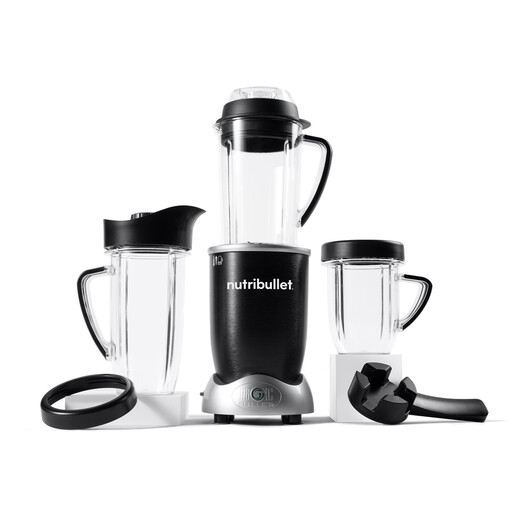
Ideal if you want to heat and blend ingredients using a soup function.
The product description lists a 7-minute soup programme and a 1 l soup jug. The title specifies 1700 W and a 10-piece set; when using hot ingredients, use the supplied vented lid.
 No image available
A jug blender option if you want to blend hot soup in the jug.
The product description lists a heat-resistant glass jug, a total capacity of 2 l and a usable capacity of 1.5 l. Check this model’s instructions for preparing hot ingredients.
 No image available
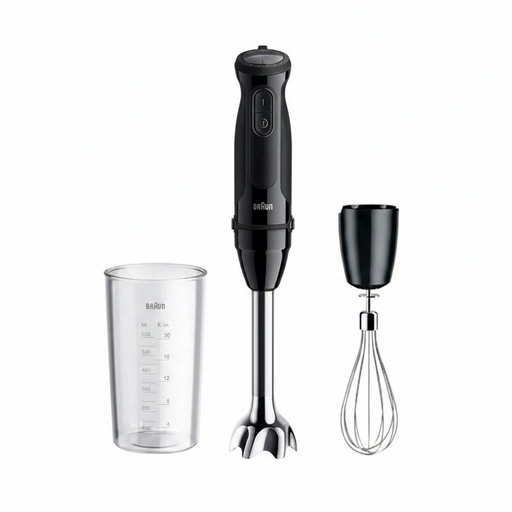
Ideal if you want to blend prepared soup straight in the pan.
The product description lists 21 speeds and a 1000 W motor. Don’t process boiling liquids; refer to the model-specific instructions for use and cleaning.
 No image available
A jug blender option for soup that’s within the model’s temperature limit.
The product description lists a 1 l effective capacity and a maximum temperature of 60 °C. Don’t process ingredients hotter than 60 °C.
 No image available
Ideal if you want to blend soup with a hand blender and make use of separate accessories.
The product description lists a stainless steel blending shaft, two stainless steel blades, a turbo function and a 700 ml measuring jug. Use a heat-resistant bowl for hot ingredients, and blend hot liquids in small batches to prevent them from overflowing.
No. Don’t assume all jugs are heat-resistant. Allow hot ingredients to cool slightly first and follow the temperature limit for your specific model. For example, Tefal specifies a maximum of 80 °C for the BL46EN38. Check the usable filling capacity too.
Follow the instructions for the model you’ve chosen. Braun’s general FAQ recommends a maximum of two minutes’ continuous use when making soup; a removable foot can make cleaning easier.
Yes. According to the Voedingscentrum, you can reheat spinach as long as leftovers are cooled quickly after cooking and stored at 4 °C; keep them for no more than two days. Following the general food storage advice, refrigerate leftovers within two hours.
In the Netherlands, contact the retailer. The Dutch government explains that there is no fixed statutory guarantee period for all products, and the retailer must provide a solution if something goes wrong. A manufacturer’s guarantee is in addition to this.
CE marking is mandatory for equipment covered by harmonised EU rules that require it. The mark represents the manufacturer’s declaration of conformity; it isn’t an independent assessment of how well a blender purées soup.