What should you look for when buying?
Start with the number of portions you need and how much washing up you want to do after class. Then think about the ingredients, noise during use and how much space the blender takes up.
Consumentenbond assesses smoothie results and noise separately, and notes that many budget blenders struggle with harder pieces or frozen fruit. Wattage alone therefore won’t tell you how smooth or noisy a blender will be.
| What to consider |
What should you check? |
Who is this important for? |
| Quick preparation and less washing up |
Check whether the blending cup doubles as a drinking cup and which parts are dishwasher-safe. |
If I want to make one smoothie quickly after class and keep washing up to a minimum, I look for a simple cup-and-cleaning routine. Around 31% of consumers prioritise speed and less washing up. |
| Blending spinach and other ingredients smoothly |
Look for a relevant smoothie test; check whether the blender is suitable for frozen fruit or ice if your recipe includes them. |
I want my smoothie to suit the ingredients I actually use, including frozen fruit. Around 31% of consumers prioritise their preferred blending results and ingredients. |
| Noise late in the evening |
Compare noise ratings or measurements taken under similar conditions. |
If others at home may be resting, I want to know how noisy the blender is when it’s running. For around 23% of consumers, evening noise is the main consideration. |
| Portion size and storage space |
Compare the usable capacity with the number of portions you usually make, and check the model’s dimensions. |
I sometimes make more than one portion or have limited kitchen space, so the capacity and size need to suit my routine. Around 15% of consumers focus mainly on portion size and storage space. |
Blenders for smoothies after an evening class
This Joybuy selection focuses mainly on compact blenders and personal smoothie makers for preparing one serving. Compare the capacity and cleaning instructions for the exact model with your own routine.
 No image available
Philips 3000 Series Mini Blender HR2510/90
A compact blender for making a smoothie after class.
0.6 litres; 350 W; two speeds; pulse function; crushes ice.
View at Joybuy
 No image available
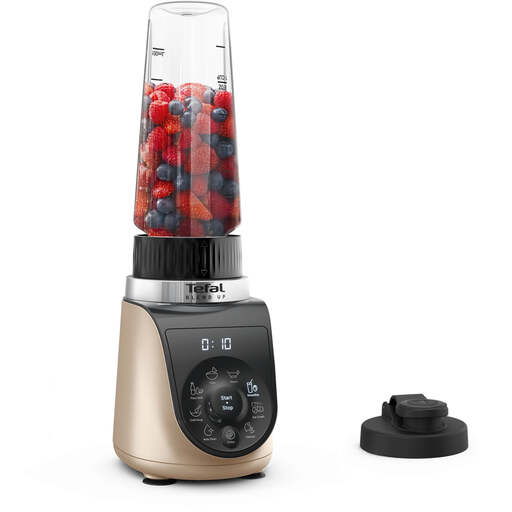
Tefal BL190A Blend Up Personal Smoothie Blender
This personal smoothie blender is ideal if you want to make one smoothie at a time.
View at Joybuy
 No image available
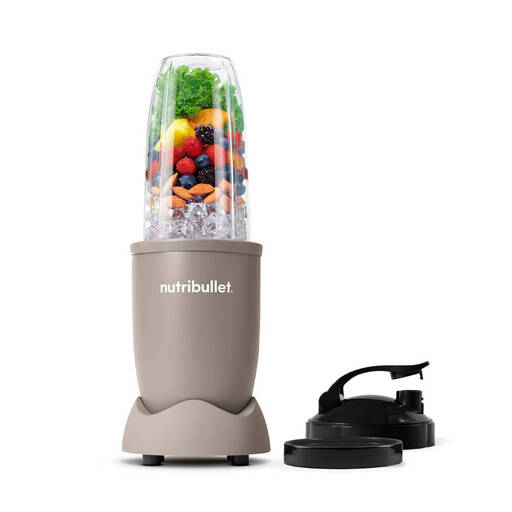
nutribullet Exclusive Blender, Mocha Brown, 700 ml
The cup with a to-go lid is handy if you want to take your smoothie with you.
700 ml; 900 W; includes a to-go lid and accessories.
Clean the blade with water and washing-up liquid; the dishwasher-safe parts are the cup and accessories, not the blade.
View at Joybuy
 No image available
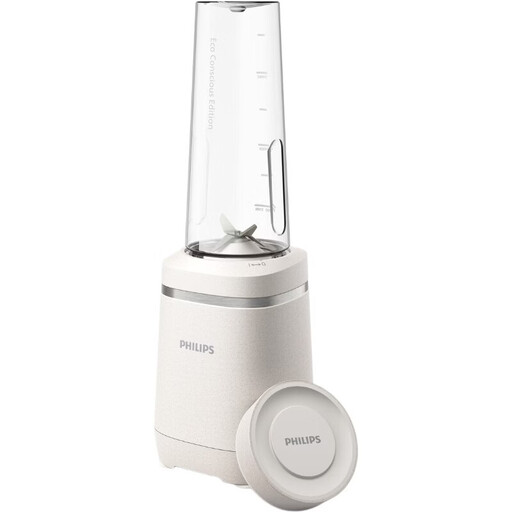
Philips Eco Conscious Edition 5000 Series HR2500/00
This mini blender is a compact option for a smoothie after class.
0.6 litres; 350 W; ProBlend technology; ice-crushing function.
View at Joybuy
 No image available
Aigostar Marden BL-250
This jug blender is an alternative if you want to make other recipes as well as smoothies.
250 W; 500 ml glass jug.
View at Joybuy
Frequently asked questions
Do you need a power blender for fresh spinach?
No, a standard blender can make smoothies too. Choose one based on your full recipe and the result you want; frozen fruit or ice can be more challenging to blend than soft ingredients. Consumentenbond tests smoothies made with fruit and vegetables, but it isn’t a specific spinach test.
How do you clean a blender after making a late-night smoothie?
Follow the instructions for your exact model, and clean the cup, blade and motor base as directed. For the NB904CP, nutribullet recommends rinsing the blade with water and washing-up liquid; for the BL871D31, Tefal lists a cleaning programme and removable blades. Don’t assume the cleaning instructions are the same for different models.
What guarantee and cancellation period apply to an online purchase in the Netherlands?
If a product is faulty, the seller is your point of contact for your statutory right to a product that is fit for purpose; the Dutch government says there is no fixed statutory end date. For eligible distance purchases, the cancellation period is generally 14 days. This is separate from your rights if a product is faulty; check the terms and any exceptions that apply to your specific purchase.
Can an electric blender be sold in the Netherlands without the required CE marking?
If the applicable EU rules require that blender to carry a CE marking, it must have one. The European Commission outlines the applicable safety rules for electrical equipment; you can’t tell whether a specific model meets all relevant requirements from its product title or wattage alone.


