
Smoothie makers short on space
If you make small servings at home, you’ll want an appliance that fits and is easy to put away. When comparing blenders, the Consumers’ Association highlights factors such as the jug’s material and capacity.


If you usually make one smoothie and want to keep storage to a minimum, start by looking at a compact mini blender. If you want to take your drink with you, a personal blender with a drinking cup is a practical choice. A jug blender with an extra bottle offers more flexibility for different serving sizes, but it also needs more storage space. A stated wattage or manufacturer claim alone doesn’t prove how smooth your spinach smoothie will be.
If you make small servings at home, you’ll want an appliance that fits and is easy to put away. When comparing blenders, the Consumers’ Association highlights factors such as the jug’s material and capacity.
If you want to take your smoothie with you, check for a drinking cup and a suitable lid. The Consumers’ Association describes a personal blender as a model you can use to make a smoothie and take it with you straight away.
If you sometimes make more than one serving, weigh up the jug’s capacity against the space needed for the appliance and its separate parts.
Start by considering the serving size and the space you have available. Then decide whether you want to take your smoothie with you and how much cleaning you’re happy to do.
Best for: making small servings mainly at home, without needing a separate drinking lid.
Consider: a small jug limits how much you can blend at once. Check the actual space needed to set it up and put it away, too.
Best for: blending a single serving and taking it with you in the same cup.
Consider: check that the capacity suits your serving size, and allow for the cup, lid and blade assembly when storing it.
Best for: pouring from a jug as well as taking a smoothie with you from time to time.
Consider: the jug and extra bottle take up more space together and mean more parts to clean.
| What to consider | What should you check? | Who is this important for? |
|---|---|---|
| Will it fit? | Measure the available height, width and depth, then compare them with the dimensions of the complete appliance. Remember to allow room to put the jug or cup in place and take it off. | If my worktop and cupboards are short on space, I want to make sure there’s room for the separate parts, too. Around 40% of consumers in this buying context give fit the highest priority. |
| Can you take the smoothie with you? | Check whether the exact model comes with a drinking cup and a sealable lid, and whether its capacity suits your serving size. | If I want to drink my smoothie on the go, I’m looking for a model I can blend in and seal. Around 20% of consumers give portability the highest priority. |
| Does it suit what you want to blend? | Check the ingredients allowed, the fill line and the instructions for the exact model. Don’t rely on wattage as proof of a smooth result. | If I want to blend spinach and other ingredients, I want to know whether the model and its instructions suit my recipe. Around 30% of consumers give their intended use the highest priority. |
| How easy is it to clean? | Check the manual for each part to see whether it’s dishwasher-safe and which parts need to be cleaned separately. | If I want to keep washing-up to a minimum after making a smoothie, I look for clear cleaning instructions for the cup, lid and blades. Around 10% of consumers give ease of cleaning the highest priority. |
Models described as compact can vary in size and in the parts included. Measuring just the motor base won’t always give you the full picture of how much space you’ll need.
Measure the space available and compare it with the complete model, including the jug, cup and lid.
Wattage alone doesn’t tell you what results a particular recipe will produce. Manufacturer claims about blending performance aren’t independent spinach tests that you can compare like for like.
Check the manual for the ingredients allowed and the fill line. If you want to compare models by blending performance, look for a relevant independent test.
What’s included in a bundle and the cleaning instructions can vary between models and parts.
Check the parts included with the exact model you’re considering, and consult the manual for each removable part.
The HR2510/90 is a mini blender for home use, suited to kitchens where storage space is limited.
The VitaPower Serie 2 MMB2111S is a mini blender with a travel cup, designed for small servings.
The Original 600 NB603DG is a personal blender that the manufacturer says comes with a cup.
Braun says the PowerBlend 1 JB1051BK comes with a glass jug and a smoothie-to-go bottle.
This Joybuy selection focuses on compact mini blenders and portable personal blenders for small servings or taking with you.
 Image unavailable
A compact mini blender for making a small smoothie at home. Check that the model fits in the space you have available.
The product name specifies a capacity of 0,6 l and a power rating of 350 W.
 Image unavailable
A blender with a cup for making a serving to take with you. Check that its capacity suits your serving size.
The product name specifies 250 W and a capacity of 500 ml.
 Image unavailable
A portable personal blender for making a smoothie in a cup you can take with you.
The product name specifies a capacity of 475 ml, a rechargeable battery and USB-C charging.
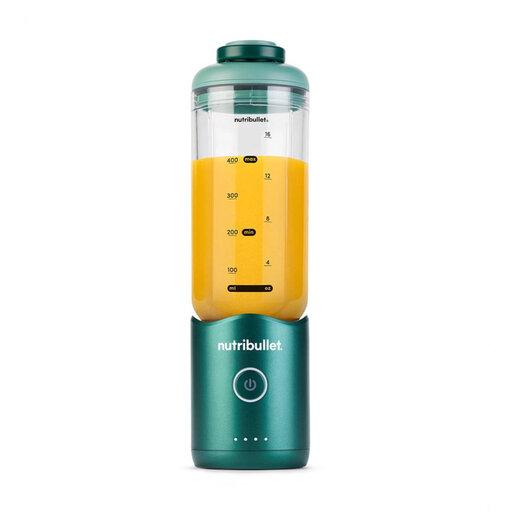 Image unavailable
A portable blender for taking a personal serving with you. Compare its capacity with the amount you usually make.
The product name specifies a capacity of 590 ml, a rechargeable battery and USB-C charging.
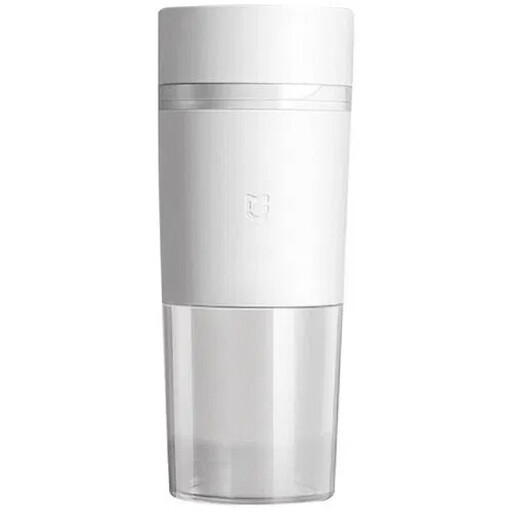 Image unavailable
A portable blender for making a smoothie in different places. Check the product specifications and whether it’s suitable for your ingredients.
Compare its height, width and depth with the space where you’ll use and store it. Also allow enough room to lift the jug or cup off the motor base.
Follow the instructions for the exact model when cleaning the jug, cup, lid and blades, as dishwasher suitability can vary between parts. The Consumers’ Association advises wiping the housing with a damp cloth and drying the parts thoroughly after washing.
In the Netherlands, the seller must offer a solution if the product doesn’t meet what you could reasonably expect. The Dutch government says there’s no fixed statutory guarantee period; a manufacturer’s guarantee is separate from this.
No. According to the European Commission, the manufacturer uses the CE marking to declare that a product meets the applicable EU requirements; it isn’t an independent quality mark. The rules and marking that apply depend, among other things, on the type of blender.