
For serving several people
You want to pour everyone’s smoothies at the same time, so usable jug capacity is a key consideration. The Dutch Consumers' Association highlights jug capacity as something to consider when making larger quantities.


For spinach smoothies for several people, a jug blender with enough usable capacity is generally a better fit than a small personal smoothie cup. Add up the portions you need, then check which ingredients the model can handle and how to clean it; wattage alone won’t guarantee a smooth result. Also check the exact model variant and the applicable safety information.
You want to pour everyone’s smoothies at the same time, so usable jug capacity is a key consideration. The Dutch Consumers' Association highlights jug capacity as something to consider when making larger quantities.
You may want to use harder or frozen fruit as well as spinach. Check which ingredients the blender is designed for and look for test results on blending performance; the Dutch Consumers' Association assesses blenders on tasks including making smoothies and crushing ice.
You make smoothies regularly and want to know which parts are easy to clean. Check the instructions for the exact model variant; Philips describes the HR2510/90 as easy to clean, with dishwasher-safe parts.
Choose a blender to suit the amount you want to make at once, the ingredients you use and the cleaning routine that works for you.
| What to consider | What to look for | Who should prioritise this? |
|---|---|---|
| Portions per blending cycle | Compare the usable capacity with the total amount you want to serve; don’t assume it is the same as the stated jug capacity. | If I want to pour everyone’s smoothie at once, I focus on how much the blender can make per cycle. Around 36% of consumers prioritise making portions for everyone. |
| Blending ingredients | Check which ingredients are suitable and which speed settings or pulse function the exact model variant has. Wattage alone doesn’t prove how well it will blend. | If I want to use harder or frozen fruit as well as spinach, I want to know what the model can handle. Around 29% of consumers give blending capabilities top priority. |
| Cleaning | Check which parts can be removed and which, according to the instructions, are dishwasher-safe. | After regular use, I want to clean the jug and removable parts without a complicated routine. Around 21% of consumers prioritise ease of cleaning. |
| Compact storage or individual portions | Compare the capacity of each cup, the number of cups included and the number of blending cycles needed with the size of your usual group. | If I’d rather use a compact blender or make individual portions, that matters more than preparing everything at once. Around 14% of consumers prioritise compactness or individual portions. |
If you’re making smoothies for several people, a low usable capacity may mean you need to blend them in multiple batches.
Add up the portions you need and compare the total with the usable capacity stated for the exact model.
Wattage alone doesn’t show how well a particular model blends spinach or other ingredients.
Check which ingredients the blender is designed for and, where available, compare independent test results for the exact model and the blending task you have in mind.
A small cup is designed for different portion sizes from a large jug; you may need several batches to make smoothies for everyone at once.
Choose the type of blender based on how many portions you want to make at once. Only factor in individual cups if you’re going to use them.
The VitaPower Serie 4 MMB6172S is a jug blender with a stated blending jug capacity of 1,5 l, according to Bosch.
The Blendforce II BL435831 is a jug blender with a stated capacity of 1,25 l, according to Tefal.
According to the manufacturer, the Combo NBF500MB comes with a jug and individual cups.
According to Braun, the PowerBlend 3 JB 3272 SI comes with two Smoothie2Go bottles.
The 3000 Series Mini HR2510/90 is a compact blender for anyone who values a smaller size and individual portions.
This selection focuses on blenders with a stated capacity for smoothie portions. Compare the capacity with the amount you want to make and check which ingredients and cleaning methods are specified for the exact model variant.
 Image unavailable
The jug design and stated capacity may suit smoothies for several people; compare the capacity with the portions you need.
The product name lists 1,5 l, 1300 W, four blades, two speeds and ice-crushing capability.
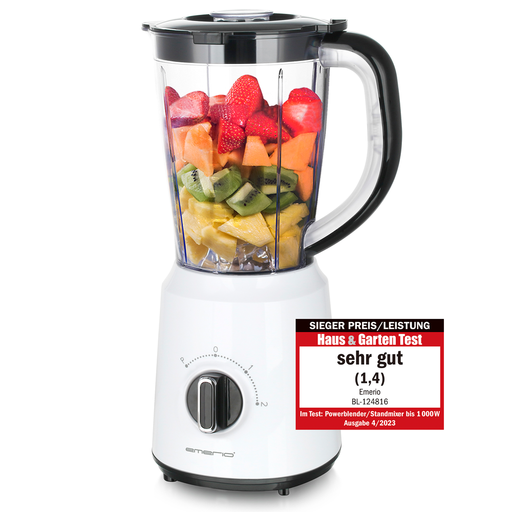 Image unavailable
The stated capacity may be useful if you want to make smoothies for several people at once; check the usable capacity for the portions you need.
The product name lists 1,5 l, two speeds and the colour white.
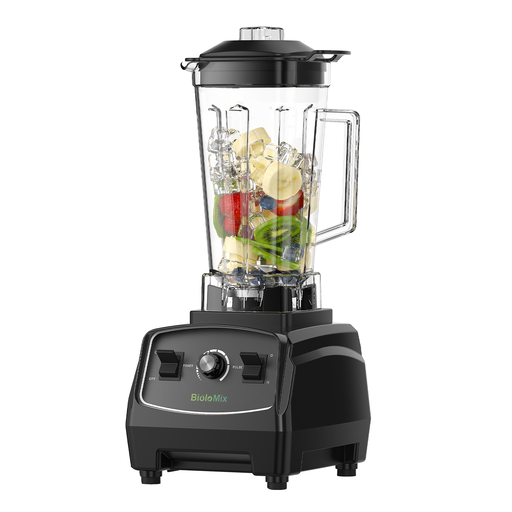 Image unavailable
The stated capacity is worth considering if you want to make smoothies for several people in one blending cycle.
The product name lists 2 l, 2200 W, six stainless steel blades and an automatic cleaning function.
 Image unavailable
The stated capacity may suit smoothies for several portions; compare it with the amount you want to prepare at once.
The product name lists 600 W, 1,5 l, three speeds and ice-crushing capability.
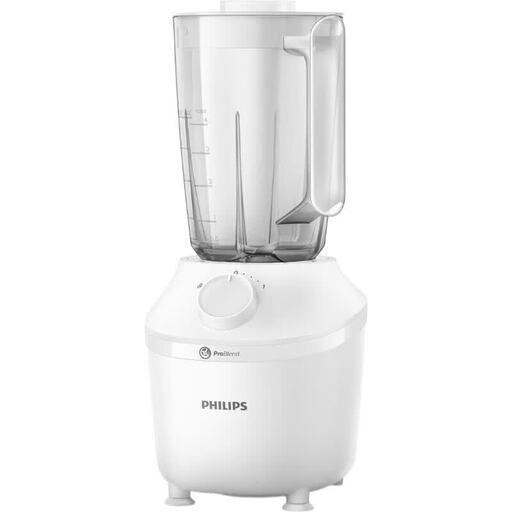 Image unavailable
The product name states a capacity of 1,9 l, while the effective capacity is 1,0 l. Bear this effective capacity in mind when planning portions; the Dutch Consumers' Association recommends a jug of 1,5 l or more as a guide for larger quantities.
The product name lists 450 W and ice-crushing capability.
Not always. First add up the portions you need and compare the total with the usable capacity of the exact model. The stated capacity of a blending jug and the amount you can actually blend aren’t necessarily the same.
No, don’t assume you can just because it’s a blender. Philips lists dishwasher-safe parts for the Mini HR2510/90; for your own model variant, follow the manufacturer’s list of parts and cleaning instructions.
Paid-for extra cover isn’t a requirement for your statutory rights in the Netherlands. According to the Dutch government, there is no fixed statutory guarantee period. If a product is faulty, you may be entitled to a free repair, replacement or refund, depending on the circumstances.
According to the Dutch government’s Business.gov.nl service, electrical appliances must meet the applicable European requirements; after the required conformity assessment, the manufacturer affixes the CE marking. Check the information for the exact model variant: a listing on a sales page alone doesn’t confirm that a specific model has the marking or complies with the requirements.