
Making single portions with limited space
You usually make one spinach smoothie and want a small blender that’s easy to put away afterwards. Consumentenbond describes a smoothie blender or personal blender as a model with a small blending cup.


If you usually make one smoothie and want to keep washing-up to a minimum, a compact blender with a blending and drinking cup is an obvious choice. If you need several portions or want to use it for other things, a model with a jug may be worth comparing. Check the dimensions, usable capacity and how to clean the blade and seal. Wattage alone won’t tell you how smooth a spinach smoothie will be. Consumentenbond recommends considering factors such as the type of blender and how you plan to use it.
You usually make one spinach smoothie and want a small blender that’s easy to put away afterwards. Consumentenbond describes a smoothie blender or personal blender as a model with a small blending cup.
You’re particularly interested in how it handles leafy greens and want to know whether frozen ingredients are suitable. Wattage alone won’t give you the answer.
You want to make more than one portion or use the blender for other recipes, and are weighing up the capacity of a jug against the space it takes up and the washing-up involved.
Start with how much you usually make: a blending and drinking cup suits a single portion, while a jug may be more practical for several. Then check that the complete appliance and its parts will fit in your kitchen, and that the instructions suit the ingredients you plan to use.
| What to consider | What to look for | Most relevant to |
|---|---|---|
| Kitchen space | Compare the dimensions of the exact model, allowing for the cup or jug when fitted and any separate parts. | If cupboard space is limited, you’ll want to know whether the blender and all the included parts will fit away after use. Around 31% of consumers say the space it takes up is their top priority. |
| Blending results and ingredients | Where available, look for a test of the exact model and check the manual to see whether frozen fruit or ice is allowed. | If you mainly want a smooth spinach smoothie, you’ll want to assess how it performs with your ingredients rather than compare power alone. Around 31% of consumers put blending results first. |
| Cleaning | Check which parts can be removed and which the manufacturer says are dishwasher-safe. | If you use it regularly, you’ll want to be able to clean the blade and seal thoroughly after blending. Around 25% of consumers make ease of cleaning their top priority. |
| Portion size and use | Compare the usable capacity with your usual portion and consider whether the blender will suit any other recipes you have in mind. | If you want to make several portions or use the blender for other things, you’ll need to consider its capacity and how much space a jug takes up. Around 13% of consumers put portion size and versatility first. |
The stated motor power doesn’t, by itself, tell you how well a particular model blends spinach. So a higher figure doesn’t guarantee the texture you want.
Compare the instructions and, where available, independent results for the exact model and the ingredients you plan to use.
The base, fitted cup or jug and separate parts all take up space. A compact base doesn’t automatically mean the complete set will fit easily in a cupboard.
Measure the space you have and compare it with the dimensions of the complete appliance and the parts supplied.
Not all blenders are suitable for frozen fruit or ice. Consumentenbond notes that some blenders can’t process these ingredients.
Check the manual for the model you’ve chosen before adding frozen ingredients.
The Philips 3000 Series HR2620/40 is described on the Dutch product page as a compact blender with a tumbler.
The Pro 900 NB904CP is a personal blender with a 0.7 l cup, according to the manufacturer. Its stated dimensions are 376 × 140 × 140 mm.
The PowerBlend 1 JB1051BK is described as having a glass jug with a working capacity of 1.25 l and a to-go bottle included.
Tefal describes the Blend Up BL190AF0 as a compact blender with a 700 ml bottle and eight automatic programmes.
These product choices include compact smoothie blenders and a hand blender for use with a separate bowl or cup.
 No image available
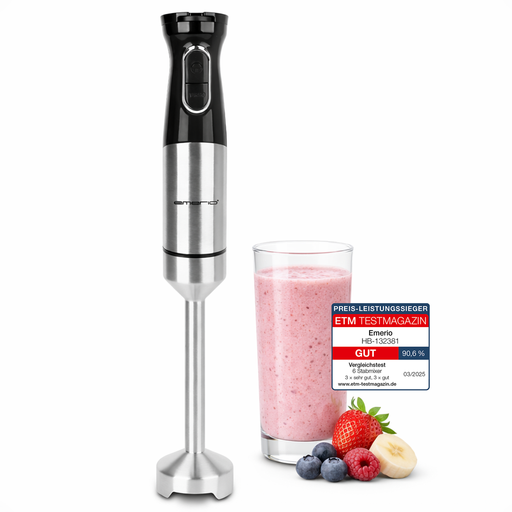
Suitable if you’re looking for a hand blender for smoothies and already have a suitable bowl or cup.
The product information lists variable speed and a detachable blending shaft. No blending cup is mentioned for this model, so use the blending shaft in a separate, suitable bowl or cup.
 No image available
A mini blender for smoothies may suit you if you’re looking for a compact appliance. Measure its height both when stored and when in use to make sure it fits in your cupboard.
The product name lists 0.6 l and 350 W. The product information mentions two speeds and a pulse function, as well as ice crushing; check the manual to see which ingredients are suitable for this version.
 No image available
This personal blender with a drinking lid is a good fit if you want to make one smoothie and take it with you.
The product information lists a 500 ml capacity, a removable drinking lid and detachable, dishwasher-safe parts.
 No image available
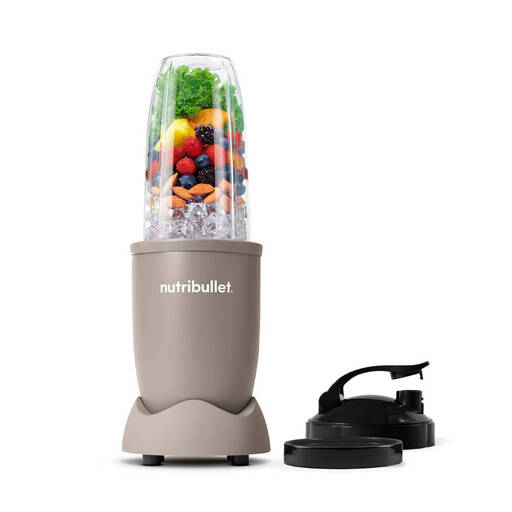
The cup with a to-go lid is an option if you want to make a smoothie and take it with you in the same cup.
The product name lists 700 ml and 900 W; the product information mentions a pulse function and dishwasher-safe parts. Check exactly which parts are dishwasher-safe.
 No image available
This portable model is designed for making a smoothie to take with you. It may also be a good option if you have limited worktop space.
The product name lists USB-C charging and a 20-minute operating time. The product information says the removable parts can be rinsed with soap and water. Do not use it for hot liquids: the product information warns that pressure can build up and cause burns.
No. The stated wattage alone doesn’t guarantee a particular blending result. Voedingscentrum also uses a hand blender or food processor for a spinach smoothie; when choosing a blender, check how the exact model works and which ingredients it can handle. Wash the spinach before use.
No. Check whether the manufacturer allows this for the version you’ve chosen. Consumentenbond notes that not every blender can crush frozen fruit or ice cubes.
Follow the usage restrictions and cleaning instructions for the exact model, particularly for the blade and electrical base. The Netherlands Food and Consumer Product Safety Authority (NVWA) says that manufacturers must specify any restrictions for safe use. Whether parts are dishwasher-safe varies by model and component.
For a typical online consumer purchase, you generally have a statutory cooling-off period of up to 14 days after delivery, subject to legal exceptions. You also have statutory rights against the seller if a product is faulty; a manufacturer’s guarantee doesn’t replace them. ACM ConsuWijzer explains the cooling-off period and guarantees.
Yes. Electrical kitchen appliances must meet the applicable European product rules. The exact requirements depend on the appliance and the rules that apply to it; Ondernemersplein explains matters including CE marking and the EU declaration of conformity. A CE mark isn’t an independent test of blending performance.