
Host cooking for a crowd
You want to know in advance how much pasta each cycle makes and whether you’ll need to plan several batches. Manufacturers describe both fully automatic machines and electric rollers, each with different steps.


If you want to leave most of the mixing, kneading and shaping to one appliance, consider a fully automatic pasta maker and check whether its output per cycle will suit your guests. An electric pasta roller is a better fit if you want to prepare the dough yourself and control the thickness of your sheets or ribbons; check which cutters or attachments are included, too. Manufacturers’ serving and preparation claims don’t guarantee the same results with your spinach dough.
You want to know in advance how much pasta each cycle makes and whether you’ll need to plan several batches. Manufacturers describe both fully automatic machines and electric rollers, each with different steps.
You want to work spinach into the dough, so you’ll need to get the flour-to-liquid ratio right. Philips’ recipe information includes an approach for pasta made with flavourings or vegetable juices.
You want to control the thickness of your pasta sheets or use attachments for a mixer you already own. Check whether the appliance handles both rolling and cutting, and whether it has a motor; some attachments require a compatible stand mixer.
Choose this method if: you want to keep separate steps to a minimum while preparing dinner. Philips describes the HR2665/93 as a machine that mixes, kneads and shapes pasta automatically.
Bear in mind: you choose a shaping disc rather than controlling the thickness of each sheet of dough yourself. Adjust the spinach-containing liquid to suit the recipe and the instructions for your specific model.
Choose this method if: you want to prepare the dough yourself, then roll sheets or ribbons to an adjustable thickness. Ariete lists nine thickness settings for the Pastamatic 1593, while Marcato lists ten for the Atlasmotor+.
Bear in mind: the motor replaces manual cranking, not the need to make the dough in advance. Check which cutters are included with each version.
Choose this method if: you already own a compatible stand mixer. The KitchenAid 5KSMPSA rolls dough on a KitchenAid mixer; the Kenwood KAX92.A0ME is designed for a compatible Chef machine.
Bear in mind: an attachment isn’t a standalone pasta maker. KitchenAid cutters and certain Kenwood shaping dies are sold separately; some older Kenwood connections require an adapter.
| What to consider | What to look for | Who should pay particular attention? |
|---|---|---|
| Yield and preparation | Check the yield per cycle for the specific model and plan servings using the same weight basis. Philips lists up to eight servings per cycle for the HR2665/93; the serving size you need for your guests may differ. | When I’m cooking for guests, I want to know whether I’ll need to make several batches and how much preparation time that will take. Around 36% of consumers prioritise yield and preparation. |
| Spinach in the dough | Check whether the manual or recipes for the exact model include ingredients such as vegetable juice. The right liquid ratio depends on the recipe and appliance. | If I want spinach in the dough, I need a recipe that suits the machine rather than simply adding ingredients. Around 29% of consumers are most concerned with spinach dough. |
| Shape and dough thickness | First choose between pasta made with a shaping disc and sheets or ribbons made with a roller. Then check which discs, rollers and cutters are actually included. | If I have a particular pasta shape or thickness in mind, I want to know which parts I’ll need. Around 21% of consumers prioritise shape and thickness control. |
| Compatibility and cleaning | For an attachment, check the connection and whether an adapter is needed. Also check the cleaning instructions for every part of the version you choose. | If I want to use an attachment with my existing mixer, it needs to fit properly. After dinner, I also want to know which parts need to be cleaned by hand. Around 14% of consumers focus mainly on compatibility and cleaning. |
The KitchenAid 5KSMPSA requires a KitchenAid mixer, and the pasta cutters are sold separately. The Kenwood KAX92.A0ME requires a compatible Chef connection; for some older connections, Kenwood specifies the KAT001ME adapter.
Before buying, check your mixer’s full model number, the connection and what’s included in the box.
Several cycles may require extra preparation time.
Philips’ cleaning advice distinguishes between parts and the front panel; KitchenAid recommends cleaning the pasta roller with a small brush and a dry cloth.
Before buying, read the cleaning instructions for the exact version, especially if you want to clean the appliance quickly after dinner.
The HR2665/93 is a fully automatic pasta maker; Philips’ recipe information covers pasta made with flavourings or vegetable juices.
The Pastamatic 1593 is an electric roller for pasta sheets and ribbon shapes.
The Atlasmotor+ combines a pasta roller with an included electric motor.
The 5KSMPSA is a pasta roller that attaches to a KitchenAid mixer.
The KAX92.A0ME is a pasta shaper for compatible Kenwood Chef stand mixers.
This selection includes a pasta machine, a fully automatic pasta maker and pasta rollers for making your own sheets of dough. If you’re buying a mixer attachment, always check that it’s compatible with your stand mixer.
 No image available
The product title describes a pasta machine; check that its method suits your spinach pasta recipe.
The title lists a 4.5 L stainless steel bowl, 1300 W and six speeds.
 No image available
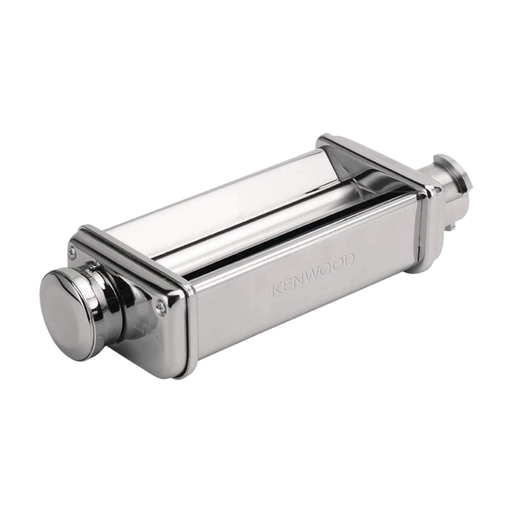
This attachment is designed for anyone who wants to roll fresh lasagne sheets and already owns a compatible Kenwood stand mixer.
The product description lists nine adjustable thickness settings. Check that your mixer is compatible.
 No image available
This fully automatic pasta maker could suit you if you want to cut down on separate dough-making steps while preparing dinner.
The product description lists automatic mixing, kneading and extrusion, four types of pasta, and automatic and manual programmes. The stated yield is up to 450 g per batch; the description gives a preparation time of 15 minutes.
Use a recipe and liquid ratio that suit your machine. Philips’ recipe information distinguishes between pasta made with flour and water and pasta made with egg or flavourings, including vegetable juices; this isn’t a universal measurement for every model.
Not always: a compatible mixer attachment may be an alternative. The KitchenAid 5KSMPSA rolls sheets on a KitchenAid mixer, while the Kenwood KAX92.A0ME uses a compatible Chef connection. Before buying, check the exact model and whether an adapter is required.
It depends on the machine, portion size and recipe. Philips lists up to eight servings per cycle for the HR2665/93; treat this as a manufacturer’s claim for a specific model and compare it with the amount you need.
Follow the cleaning instructions for your model. For the models mentioned, Philips recommends letting dough residue dry first and not immersing the main unit in water; according to its support page, the front panel of the 7000 Series isn’t among the parts listed as dishwasher-safe.
The Netherlands Food and Consumer Product Safety Authority states that CE marking is mandatory for electrical products and describes the obligations of responsible market operators in relation to electrical safety. Check the information for the specific version; a product listing alone doesn’t establish that it meets all applicable requirements.