
Vandaag of morgen in huis

Kwaliteit gegarandeerd

Welkomstaanbiedingen ontgrendelen: GRATIS bezorging | Tot 80% korting | Gratis 30 dagen JoyPlus-proefperiode
Download de app
Spicy konjac snacks are popular with fans of Chinese snacks, Sichuan seasoning and a firm, chewy texture. They are ready to eat, often individually portioned and therefore convenient for taking on the go, enjoying during a lunch break or serving with a meal.
However, eye-catching packaging does not tell you everything. If you only look for terms such as “low calorie”, “mala” or “authentic flavour”, you may choose a product that is too salty, too spicy or packaged in an impractically large quantity. Use these practical checkpoints to compare a konjac snack based on the information provided on the label and in the product description.
According to the nutrition table, konjac products can contain relatively few calories. However, this varies from one recipe to another. For example, Wei Long Hot and Sour Vegetarian Tripes lists 108 kcal per 100 grams, while the Jinzai Jingmen version lists 196 kcal per 100 grams.
Pay attention to the salt content too. Spicy and hot-and-sour snacks often contain soy sauce, pickled chilli, flavourings or added salt. The products mentioned range from 2.5 to 8.2 grams of salt per 100 grams. So do not compare calories alone: consider the portion size and nutritional values as well.
A Sichuan snack with mala flavour generally combines chilli with Sichuan pepper. This can create a flavour that is both spicy and slightly numbing. The intensity is not the same for every brand.
Check the ingredients list for chilli, Sichuan pepper, chilli oil, pickled peppers and flavourings. If you are not used to spicy snacks, it is better to start with an individual 50-gram pack rather than buying a large multipack straight away.
A product containing konjac is not automatically vegan. Always check the complete ingredients list. The konjac snacks mentioned list soya and, in some cases, wheat, peanuts or sesame as allergens.
According to the product description, Jinzai Jingmen Konjac Hot & Spicy Sesame Flavor is offered without animal ingredients, but it does contain soya, peanuts and sesame. The Youyou snack with duck wings is, of course, not meat-free. Therefore, check the allergen information and only choose a “vegan konjac snack” when this is supported by the product information.
Konjac flour forms the basis of many of these snacks, but the proportion varies. Wei Long, for example, lists 6% konjac flour, while Hao Ba Shi lists 7% konjac powder. Other ingredients, such as tapioca starch, corn starch or soya, affect the firmness and bite.
If you are looking for a chewy snack in strip form, look for terms such as “wavy strips”, “jelly strips” or “vegetarian tripes”. The texture is a product characteristic and does not indicate that the snack contains meat.
For a single snack occasion, 50-gram bags are easy to manage. The WEILONG Konjac Snack Spicy Flavor contains 50 grams and is ready to eat. A larger pack is more practical for sharing or when you want to take snacks with you more regularly.
The Jinzai pack contains 20 individual 18-gram sachets. This makes portioning and carrying them easy. Wei Long Hot and Sour Vegetarian Tripes is available in a 252-gram pack with 28 portions. With larger packs, make sure you can store the sachets in a dry place and keep them properly sealed.
The konjac snacks mentioned are ready to eat unless stated otherwise. Check the packaging for the best-before date and store the product as instructed, usually in a cool, dry place away from direct sunlight.
Once opened, it is best to consume the pack quickly. A ready-to-eat snack is particularly convenient when you do not want to spend time cooking. Please note that not every Asian snack in the same category is ready to eat. Tian Xiao Hua potato noodles, for example, must be prepared with boiling water and are not a ready-to-eat konjac snack.
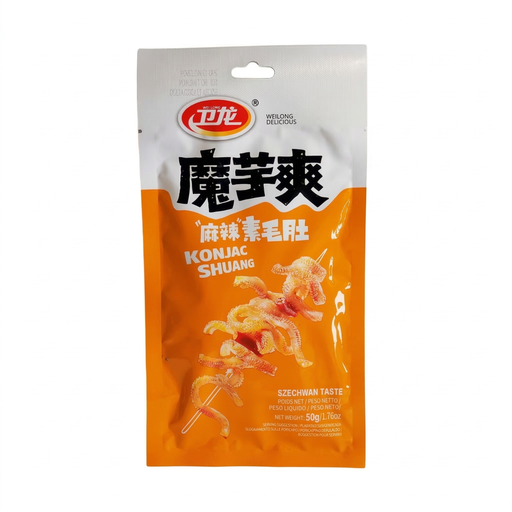
Why it suits this profile: The compact 50-gram bag is ideal for trying a Sichuan-style mala flavour without immediately buying a large pack.
The portion is limited, allowing you to assess the heat and salt content of 2.8 grams per 100 grams first.
84 kcal per 100 grams, ready to eat and, according to the ingredients list, made with konjac, soya, chilli and Sichuan pepper.
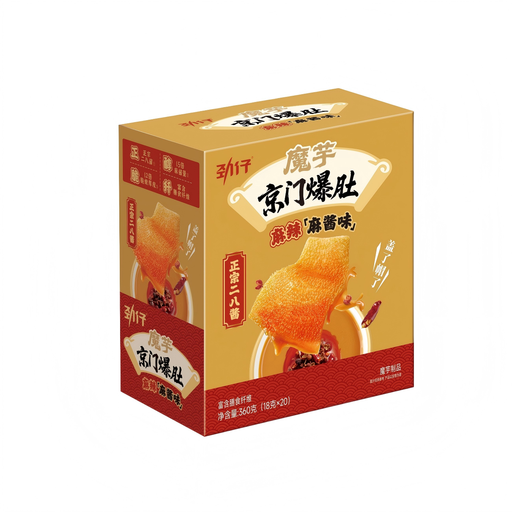
Why it suits this profile: The combination of sesame, peanuts, chilli and Sichuan pepper is ideal for fans of a rich, nutty mala flavour.
The 20 individual sachets make portion sizes clear. However, check the listed allergens beforehand: soya, peanuts and sesame.
360 grams in total, 20 portions of 18 grams and 196 kcal per 100 grams according to the product information.
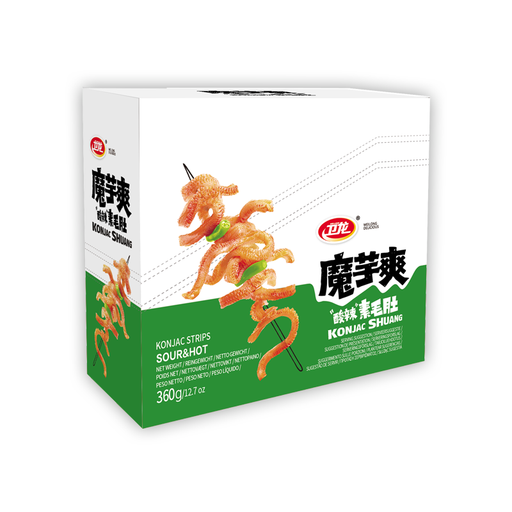
Why it suits this profile: The box containing around 20 small bags is ideal for stocking up, sharing with friends or taking to work or university.
The number of portions is stated in the product description. However, note the listed salt content of 8.2 grams per 100 grams.
Hot-and-sour flavour, chewy texture, 360 grams of product and ready to eat. The ingredients list states 6% konjac flour and soya as an allergen.
We have put together a complete, up-to-date list of products that fully meet these strict selection criteria and the applicable European safety regulations.
Some are. Products such as Wei Long Vegetarian Tripes are sold as vegetarian. Nevertheless, always check the label, as recipes may contain soya, wheat or other allergens. A konjac snack is not automatically vegan, so check the complete ingredients list and whether any animal ingredients are mentioned.
Store unopened packs in a cool, dry place away from direct sunlight, following the instructions on the label. Individual snack packs are convenient for taking on the go. Once opened, it is advisable to eat the portion straight away and reseal any remaining product properly if the label permits this.
A 50-gram bag is a practical starting point, as it lets you assess the flavour, texture and heat without buying a large pack. Also check the salt content and possible allergens such as soya, wheat, peanuts and sesame.
