
Vandaag of morgen in huis

Kwaliteit gegarandeerd

Welkomstaanbiedingen ontgrendelen: GRATIS bezorging | Tot 80% korting | Gratis 30 dagen JoyPlus-proefperiode
Download de app
Spicy konjac snacks are a firm favourite among fans of Chinese snacks, Sichuan flavours and chewy textures. The name can be a little confusing, though: “sweets” usually refers to savoury, individually wrapped strips or strands. Konjac is shaped into a texture that resembles vegetarian tripe, but the products vary widely in seasoning, salt content, allergens, portion size and nutritional value.
If you only look for words like “authentic”, “low-calorie” or “plant-based”, you could end up buying a product that doesn’t suit your preferences. With these checks, you can compare a konjac snack much more practically.
A product might be mainly sour, sweet, salty or aromatic. With a mala konjac snack, you also get the numbing effect of Sichuan pepper. So check the ingredients for chilli, Sichuan pepper, pickled pepper, vinegar, ginger and sesame. A “hot and sour” variant has a completely different flavour profile to a snack with salt & pepper seasoning.
Also pay attention to the portion size. A strong flavour in a small pack can be handy, but it makes it harder to know in advance how much seasoning and salt you’re actually getting.
According to the product information provided, konjac products contain around 108 to 134 kcal per 100 grams across different variants. That’s a useful comparison, but you also need to look at salt per 100 grams. The values vary significantly. For example, a boxed hot-and-sour variant lists 8.2 grams of salt per 100 grams, while other variants sit at around 2.5 to 3.4 grams.
So a lower energy value doesn’t mean every product is suitable for every dietary preference. Use the nutritional information table on the packaging as your starting point, and always check the actual portion size.
The term refers to the ridged, chewy texture. Always check the ingredients list and allergen information. Many konjac strips contain soya. Some also contain wheat, gluten, sesame or sulphites through soya sauce, chilli sauce or flavourings.
A plant-based product may also contain flavourings or blended spices that you’ll want to check in advance. If you follow a strict vegan diet, it’s wise to read the full packaging rather than just the product name.
Konjac powder is often only part of the recipe. In the product information provided, several Wei Long variants contain 6% konjac flour; other products list 10% konjac powder or combine konjac with starch and vegetables. This affects the bite.
For on-the-go, the office or a film night, individually wrapped snacks are practical. You open only what you need and keep the rest sealed. A box of 20 sachets weighing 16 or 18 grams each works differently to a 200-gram bag: the first is ideal for sharing and portion control, the second for home use or sharing.
Also check whether the net weight matches the number of sachets. Product titles may say “approximately 20” or “approximately 28” portions.
Compare at least:
According to the brands’ own product information, these snacks are ready to eat. Still, always check the actual packaging, best-before date and storage instructions. Most variants should be stored in a cool, dry place and consumed quickly after opening.
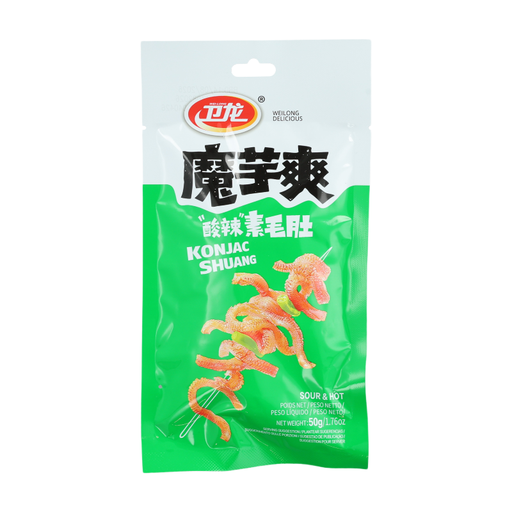
Why this fits the profile: According to the product information, the pack contains 28 portions and has a hot-and-sour flavour profile. The nutritional value is 108 kcal per 100 grams.
The flavour is specifically described as sour and spicy, so you’re not relying on the general term “spicy” alone. Contains soya; check the label if you have allergies.
252 grams, ready to eat and ideal for sharing; wavy konjac strips with a firm bite.
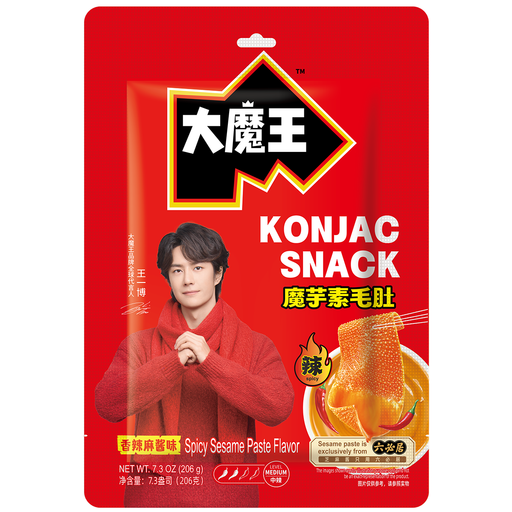
Why this fits the profile: The combination of chilli, sesame paste and Sichuan pepper offers more depth than a simple chilli flavour. The product information lists 134 kcal and 2.45 grams of salt per 100 grams.
The seasoning and allergens are clearly specified. Please note: this product contains sesame, soya and wheat.
Small portions for sharing or on-the-go; sesame adds a creamy, nutty note to the mala seasoning.
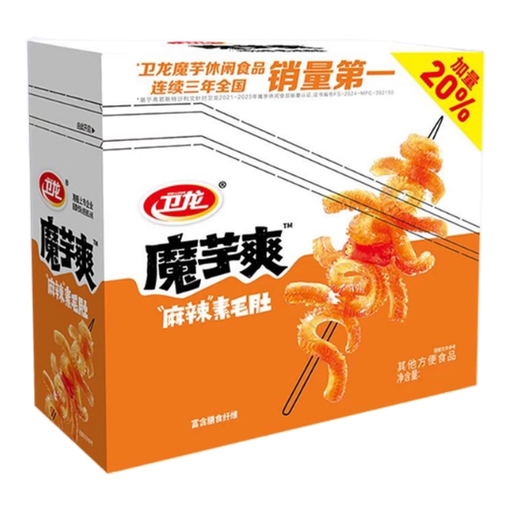
Why this fits the profile: According to the product information, this box contains 20 individual sachets and is aimed at fans of a pronounced mala flavour with chilli and Sichuan pepper.
The packaging and flavour type are clearly stated. The listed salt value is 5 grams per 100 grams, so it’s important to compare beforehand.
360 grams total weight, individually wrapped and ready to eat; ideal for sharing or stocking up.
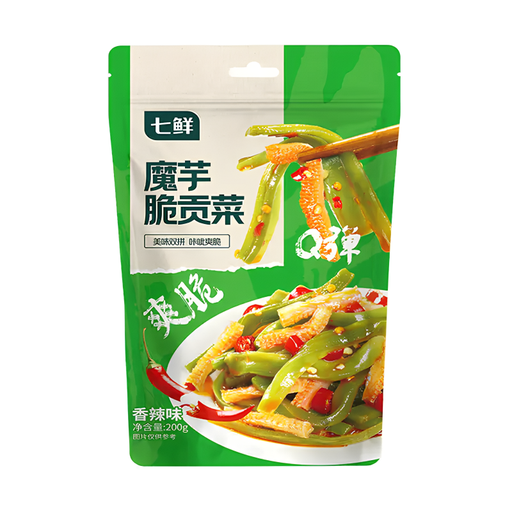
Why this fits the profile: The combination of konjac and edible vegetable offers a different mouthfeel compared to konjac strips alone. According to the product information, this product contains no listed allergens.
The product description mentions a crunchy texture and gives clear storage instructions: keep refrigerated after opening.
200 grams, ready to eat and also works well with rice or congee; the listed sodium value is 580 mg per 100 grams.
We’ve put together a full, up-to-date list of products that fully meet these strict selection criteria and comply with current European safety regulations.
Many variants are based on konjac, starch and soya and are presented as a vegetarian snack. However, always check the ingredients list. A name like “vegetarian tripe” describes the shape and texture; the actual packaging remains the deciding factor.
Store unopened products in a cool, dry place away from direct sunlight. After opening, follow the instructions on the packaging. Some products must be kept sealed and eaten quickly; 7FRESH recommends refrigerated storage after opening.
Based on the nutritional values provided, several variants are lower in energy than many oily or meat-based snacks. That makes them potentially interesting as a low-calorie snack, but also pay attention to salt, fat, sugar and portion size. Always compare per 100 grams and per individual sachet.
