
Vandaag of morgen in huis

Kwaliteit gegarandeerd

Welkomstaanbiedingen ontgrendelen: GRATIS bezorging | Tot 80% korting | Gratis 30 dagen JoyPlus-proefperiode
Download de app
A spicy konjac snack might seem straightforward at first glance: open, eat, and enjoy a chewy texture with chilli and Sichuan pepper. Yet konjac snacks vary greatly in flavour, portion size, salt content and packaging. If you only look out for words like “light”, “vegan” or “mala”, you could end up buying a snack that’s too salty, doesn’t match the texture you’re after, or is awkward to take with you.
With this practical guide, you’ll know exactly which information really matters.
Many products contain around 68 to 134 kcal per 100g. That’s a useful comparison point, but you should also check the salt per 100g. A product can be low in calories yet still relatively high in salt. Particularly with Chinese spicy snacks, hotpot flavours and mala snacks, a robust seasoning often goes hand in hand with a higher salt content.
So always compare:
The term vegetarian tripe snack refers to the shape and chewy bite that can remind you of tripe. According to the product description, the product contains no meat, but that doesn’t mean it’s free from all allergens.
Many konjac snacks contain, for example:
Always check the packaging, especially if you have food allergies or want to eat vegan. A product described as vegan may still contain traces or ingredients that are relevant to you.
A bag of 180g, 252g or 360g might seem good value, but once opened you need to seal the contents properly and consume them quickly according to the product information. For the office, train journeys, gaming or a film night, individually wrapped portions are often more practical.
Look out for the difference between:
Portion packaging also helps you decide in advance how much you want to eat.
Konjac flour gives the characteristic springy bite. The stated konjac percentage varies from product to product. In the available product information, this ranges from 6% konjac flour to 10% konjac powder. A higher percentage doesn’t automatically mean the texture will suit your preference better, because starch, oil and the preparation method also have an effect.
Look in the description for words like:
If you’re after a firm, elastic bite, you’re better off choosing a product that explicitly mentions a crispy and chewy or springy texture.
“Spicy” isn’t a fixed level of heat. A Sichuan snack can combine chilli with the tingling sensation of Sichuan pepper. With a mala snack, those spicy and numbing notes take centre stage. Other varieties include:
Also check the ingredients list. Chilli, Sichuan pepper, garlic, ginger and sesame give a better indication of the flavour than just the product name.
A snack with 108 kcal per 100g provides around 19 kcal in an 18g bag, based on the stated nutritional values. For a 9g portion, that’s about 10 kcal when the product contains 114 kcal per 100g. Use this calculation only as a guide; the nutritional information on the packaging remains definitive.
Store unopened products in a cool, dry place, away from direct sunlight. Once opened, instructions vary by product. Some products need to be stored sealed, while others must be refrigerated and consumed quickly.

Why this fits the profile: The packaging contains around 28 individual portions. That makes this Chinese spicy snack suitable for trying at home, taking with you or sharing without opening a large portion straight away.
The individual packaging means you don’t have to consume the whole bag at once once opened. The product information states 114 kcal and 3.16g of salt per 100g.
252g total, around 28 portions and a stated chewy and crispy texture. Contains soya and wheat.
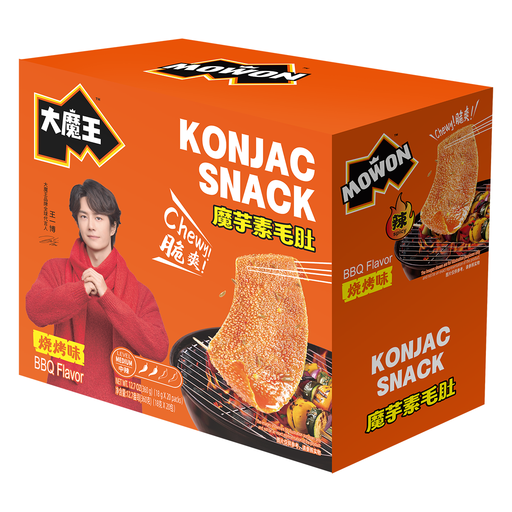
Why this fits the profile: According to the product description, the barbecue variant combines a smoky note with cumin and spicy flavours. That suits those who want savouriness but not just a sharp chilli sensation.
The flavour description makes it clearer what to expect than just the word “spicy”. The 18g portions limit the amount per eating occasion.
20 individually wrapped bags, 360g total and 111 kcal per 100g. Contains soya.

Why this fits the profile: This compact bag is aimed at fans of Sichuan pepper and a distinctly spicy flavour. It fits in a desk drawer, bag or snack stash for an individual eating occasion.
The 50g portion stops you buying a large assortment before you know whether the tingling Sichuan pepper flavour suits you. The stated energy is 68 kcal per 100g.
Small, individually wrapped portion and 68 kcal per 100g according to the product information. Contains soya and sulphites.
We’ve put together a full, up-to-date list of products that fully meet these strict selection criteria and comply with current European safety regulations.
That depends on the product. Some varieties are described as vegan or plant-based, but always check the full ingredients list. Also look out for flavourings, soya sauce, sesame and possible allergens. “Vegetarian” and “vegan” are not automatically the same thing.
Follow the instructions on the packaging. Unopened bags should usually be kept in a cool, dry place, away from direct sunlight. An opened large bag must be sealed properly. Some products need to be refrigerated after opening and eaten within a short time.
Work it out using the nutritional values per 100g and the weight of the bag. An 18g bag with 111 kcal per 100g contains around 20 kcal. A 9g portion with 114 kcal per 100g contains around 10 kcal. Always check the actual packaging when you buy, because recipes and portion sizes can vary.
