
Vandaag of morgen in huis

Kwaliteit gegarandeerd

Welkomstaanbiedingen ontgrendelen: GRATIS bezorging | Tot 80% korting | Gratis 30 dagen JoyPlus-proefperiode
Download de app
A spicy konjac snack might seem straightforward to pick at first glance: just grab the pack with the brightest chilli image. But these Asian snacks actually vary a lot in texture, salt content, portion size and allergens. If you only look for words like “mala”, “low calorie” or “vegetarian tripe”, you could end up with a snack that’s too salty, too fiery or awkwardly packaged.
Konjac products often contain relatively few calories per 100 grams. However, the nutritional values across the range can differ significantly. For instance, one product lists 68 kcal per 100 grams, while a variant with sesame and peanuts contains 196 kcal per 100 grams. The sauce, oil, starch and toppings all make a difference.
So always check the full nutrition table. Pay particular attention to:
A low-calorie snack isn’t automatically low in salt or low in fat.
Terms like vegetarian tripe snack, “tripe-style” and konjac strips usually describe the shape and mouthfeel. The products in this selection are made from konjac, starch and plant-based ingredients. Still, always check the ingredients list, especially for flavourings such as soy sauce, stock or blended spices.
Also watch out for allergens. Many spicy konjac snacks contain soya. Some varieties also include wheat, gluten, sesame, peanuts or sulphites.
A Sichuan snack with a mala flavour typically combines chilli with Sichuan pepper. Chilli provides the heat; Sichuan pepper is associated with a tingling or numbing sensation in the mouth. Not everyone is looking for the same level of intensity.
If you prefer sour and spicy, look for hot-and-sour varieties instead. For a pronounced snack with chilli and sesame, sesame sauce or sesame paste works better. If you’d rather choose a savoury barbecue or hotpot flavour, you’ll find different notes in the ingredients list.
Konjac is processed into various shapes:
Product descriptions regularly use terms like “crispy”, “springy” or “chewy”. These describe the intended eating experience, not a standardised legal texture category. So also look at the ingredients: extra tapioca starch or other starches can affect the bite.
For the office, travel, gaming or sharing, small packets are practical. A box with 20 sachets of 18 grams makes portion control easy and stops an opened large bag from sitting around. Other packs contain a single bag of 50, 105, 120 or 180 grams.
Before you buy, check:
Many products state that they are ready to eat. Always follow the storage and opening instructions on the actual packaging.
A spicy Chinese snack can contain chilli, Sichuan pepper, vinegar, ginger, garlic, soy sauce, sesame oil or flavour enhancers. This determines not only the taste, but also whether the snack suits your dietary preferences.
Compare the salt content per 100 grams. In the product information, this ranges from 2.3 grams to 5.0 grams of salt, for example. A smaller portion naturally contains less absolute salt, but the comparison per 100 grams is still useful.
A plant-based composition doesn’t automatically mean allergen-free. Soya and wheat are common in this category. So read the allergen declaration before you make a konjac snack buy decision.
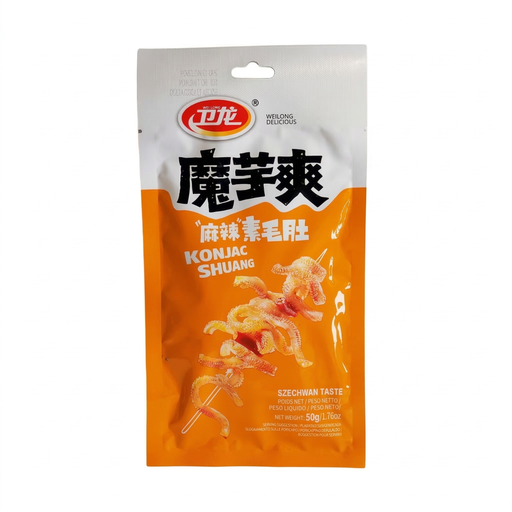
Why this fits the profile: A small 50-gram pack is a manageable introduction to a spicy Sichuan snack, without committing to a large box straight away.
The net weight and nutritional values are clearly stated. The ingredients include chilli, Sichuan pepper, soya and wheat, so you can check in advance whether it suits you.
50 grams per pack, 84 kcal per 100 grams according to the product information, and ready to eat.

Why this fits the profile: The combination of red chilli oil and sesame appeals to fans of a fuller, aromatic mala-style flavour with a firm bite.
The packaging lists soya, sesame and wheat as allergens. It also states that you need to refrigerate the product after opening and consume it quickly.
180 grams net weight, 84 kcal and 3 grams of fat per 100 grams according to the product information; ideal for sharing at home or during a film night.
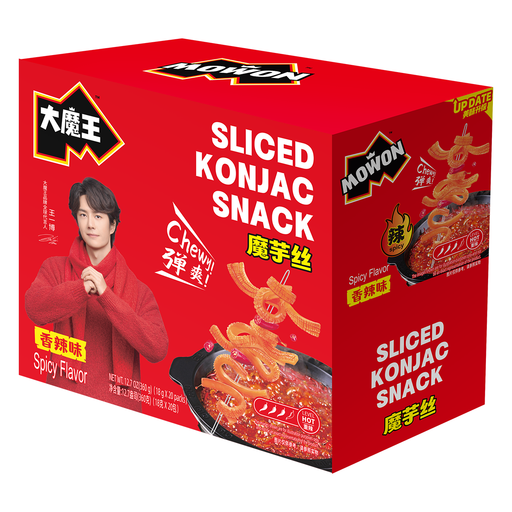
Why this fits the profile: The box contains 20 individual sachets of 18 grams. That works well for the office, on the go, gaming or handing out controlled portions at a gathering.
The portion size is pre-divided, so you’re not reliant on a large opened bag. The allergen list mentions sesame, soya, gluten and sulphites.
20 portions of 18 grams, 108 kcal and 2.5 grams of salt per 100 grams according to the product data.
We’ve put together a full, up-to-date list of products that fully meet these strict selection criteria and comply with current European safety regulations.
Many varieties are made from konjac, starch, oil and plant-based flavourings. That doesn’t automatically mean every product meets your vegan requirements. Check the current ingredients list and allergen information. Pay particular attention to blended sauces, flavourings and possible cross-contamination.
Unopened products are generally stored in a cool, dry place away from direct sunlight. For some varieties, the packaging states that it must be kept sealed after opening and that the product should be refrigerated and consumed quickly. Always follow the instructions on the packaging of your chosen product.
Compare the energy per 100 grams and the portion size. The range includes varieties with 68, 84, 108, 114 and 196 kcal per 100 grams, for example. A snack with sesame paste or extra oil can be noticeably higher. So don’t just look at the front of the pack; check the full nutrition table.
