
Vandaag of morgen in huis

Kwaliteit gegarandeerd

Welkomstaanbiedingen ontgrendelen: GRATIS bezorging | Tot 80% korting | Gratis 30 dagen JoyPlus-proefperiode
Download de app
Spicy instant noodles are a handy option for a quick meal, but not every pack suits every eater. A cup is practical for the office or a student room, while a multipack can be more cost-effective if you eat Korean noodles regularly. Preparation also varies: some spicy ramen are eaten with broth, while others are drained and mixed with sauce.
If you only look at an eye-catching packet or the words “extra spicy”, you might be in for a surprise. The key things to consider are heat level, portion size, preparation time and allergens.
Words like “hot”, “fire” or “spicy” give a clear indication, but they don’t form a uniform scale. One variety has chilli mainly in the broth, while another contains noodles with concentrated chilli sauce. For example, with Samyang Buldak, the product information states that the original variety is very spicy. That’s a clue to start cautiously with the sauce, but it’s not an official, comparable heat score.
A cup weighing 65 to 80 grams is easy to take with you, but contains fewer noodles than a bag of 130 or 140 grams. A multipack may seem more expensive at first, but can work out better per portion. Always check the net weight, number of servings and price per serving.
Some Samyang noodles with chicken or carbonara flavour contain, according to the product information, milk, soya and gluten among other ingredients. Other products contain sesame, peanut or celery. The flavour name alone doesn’t tell you enough about the ingredients. Check the actual packaging before buying, especially if you have an allergy or dietary requirement. Product information on a web shop can change; the label on the pack you receive is what counts.
A cup is suitable when you don’t want to use a pan. Check whether the product only needs hot water or needs to go in the microwave. The Samyang Hot Chicken Cup Carbonara is prepared with hot water according to the product information. Some udon bowls, on the other hand, require about 20 ml of water and two to three minutes in the microwave.
With bags, the preparation is often more involved. The Buldak Carbonara 130 grams is boiled for about five minutes according to the instructions, after which most of the water is drained. Always follow the instructions on the pack and be careful with boiling water.
Compare nutritional values per 100 grams and also pay attention to the total weight per pack. In the product information provided, salt values range from about 1.8 to 5.7 grams per 100 grams. That makes comparison worthwhile, but the final amount also depends on how much sauce or seasoning you use.
Also check the allergen list. Many Asian instant noodles contain wheat/gluten and soya. Carbonara and cheese varieties often contain milk, while certain Chinese noodles contain peanut and sesame. If you want to avoid an ingredient, it’s a good idea to read the full ingredients list and allergen warning.
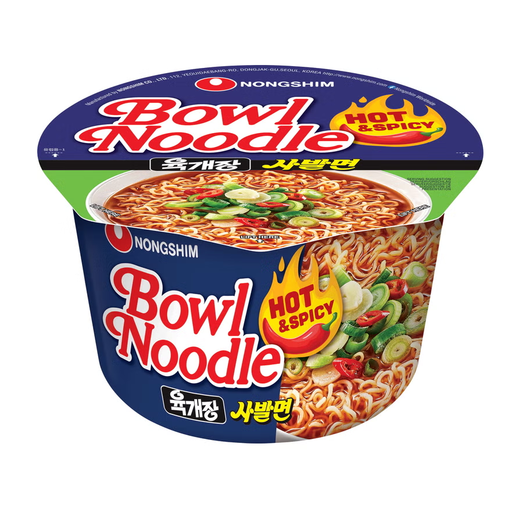
Why this fits the profile: The bowl is practical for a first introduction to Korean noodles. You add hot water and wait four to five minutes according to the product information.
The portion size and preparation method are clearly stated on the product. This way, you don’t buy a large multipack before you know whether you like the flavour.
Bowl packaging, soup base and dried vegetables included; prepare with boiling water in just a few minutes.
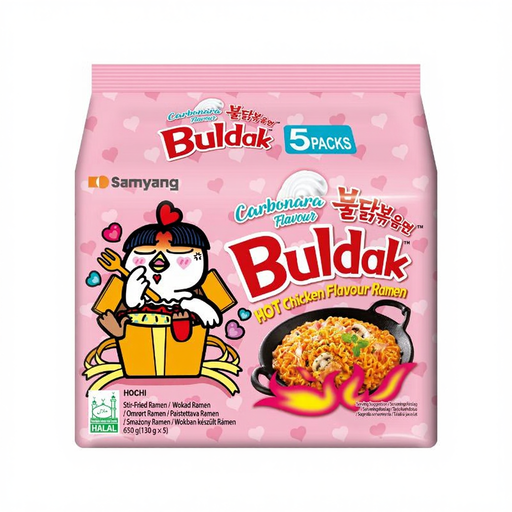
Why this fits the profile: This multipack suits fans of hearty noodles, chilli and a creamy carbonara element. According to the product information, the seasoning contains milk and cheese components among other things.
The portion size is clear: five bags of 130 grams. Just check beforehand whether gluten, soya and milk fit within your diet.
Five individual portions, thick noodles and a combination of spicy sauce with carbonara powder.
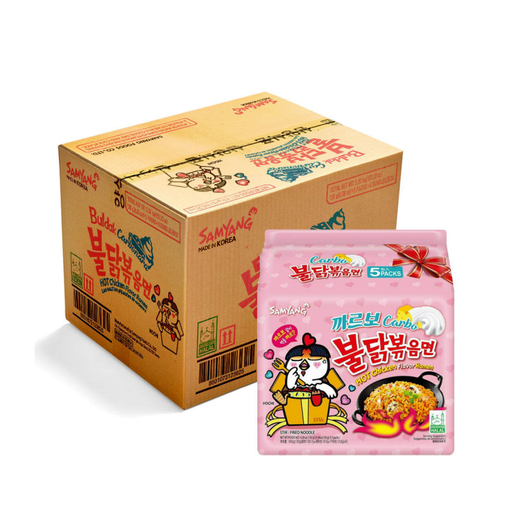
Why this fits the profile: A box with forty portions is aimed at households, clubs or fans who want to make Buldak ramen regularly.
The large format makes the total contents visible, so you can calculate the price per portion instead of just looking at the box price.
Forty individual portions, preparation instructions for boiling and stir-frying, suitable for storing in a dry cupboard.
We’ve put together a full, up-to-date list of products that fully meet these strict selection criteria and comply with current European safety regulations.
First, use only part of the chilli sauce or seasoning powder and add more to taste later. With dry noodles, you can also add extra noodles, egg, vegetables or a small amount of dairy. Do check the allergen information for carbonara ramen.
The best-before date varies by product and is printed on the pack. Store unopened instant ramen according to the instructions, usually in a dry, cool place away from direct sunlight. Do not use a pack if it is damaged. Once opened, it’s best to prepare the contents straight away.
That depends on the portion size and composition. A cup of 65 to 80 grams is practical as a snack or light meal. Bag varieties of around 130 to 140 grams and larger bowls generally offer more substance. Add vegetables, egg or a source of protein if you want to make the meal more substantial.
