
Vandaag of morgen in huis

Kwaliteit gegarandeerd

Welkomstaanbiedingen ontgrendelen: GRATIS bezorging | Tot 80% korting | Gratis 30 dagen JoyPlus-proefperiode
Download de app
Spicy Asian snacks are popular with fans of street food, gaming, drinks and quick bites. The range includes everything from Chinese mala snacks and Korean seaweed snacks to Thai seafood snacks, tofu snacks and konjac snacks. However, attractive packaging can sometimes create the wrong expectations.
Look out for these three common pitfalls:
If you are mainly looking for heat, look for terms such as hot, super spicy or chilli. For a more complex flavour, mala snacks containing chilli and Sichuan pepper are worth considering. Thai snacks more often combine spicy, sweet, sour and umami flavours, for example with Namprik, lemongrass or lime leaf.
Chinese snacks such as seasoned tofu, konjac and wheat gluten often have a firm, chewy texture. Korean snacks, on the other hand, can be crisp, such as seaweed or prawn crackers. The product name provides an initial indication, but always check the ingredients list.
The base ingredient has a major influence on how a snack feels:
Compare energy, fat, sugar, protein and salt per 100 grams. For a high-protein option, Wuxianzhai Vegetarian Meat Skewers contain 21.6 grams of protein per 100 grams according to the stated nutritional information. Wuxianzhai Spicy Vegetarian Tendon states 25 grams of protein per 100 grams.
That does not automatically make these snacks suitable as a complete meal. They are ready-to-eat snacks containing seasoning, oil and often a relatively high amount of salt. If you are watching your salt intake, it is best to keep the portion small and check the label on the packaging you receive.
Also check the 14 major EU allergens. The range includes, among others, soya, wheat, sesame, fish, crustaceans, molluscs and egg. Product compositions and packaging information may change; always use the packaging as the definitive source.
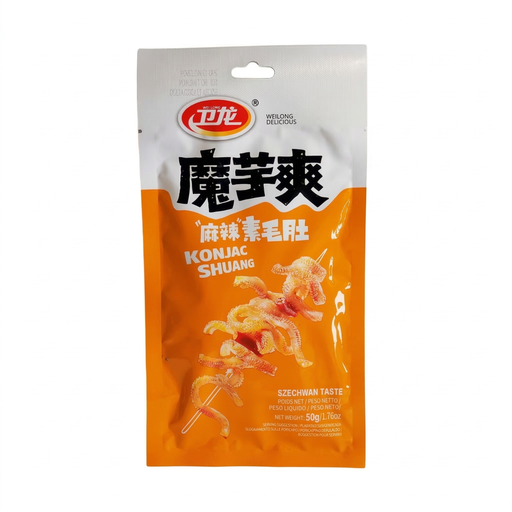
Why it suits this profile: The 50-gram portion is manageable for anyone trying mala snacks for the first time. The chewy konjac texture is distinctly different from crisps or crackers.
The product information states the main ingredient, allergens and nutritional values. This tells you that the snack contains soya and wheat, and is not a standard crunchy crisp.
84 kcal per 100 grams according to the label; ready-to-eat and suitable for a small snack portion.
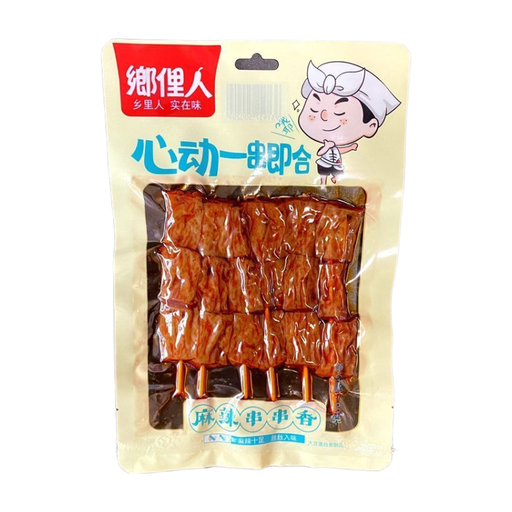
Why it suits this profile: This single-serve snack combines bean curd skin, soya protein, konjac and bamboo shoots with chilli and Sichuan pepper.
The pack contains 90 grams and is vacuum-packed according to the product description. The flavour description is supported by specific herbs and ingredients.
Ready-to-eat; 7.5 grams of protein and 239 kcal per 100 grams according to the stated label.
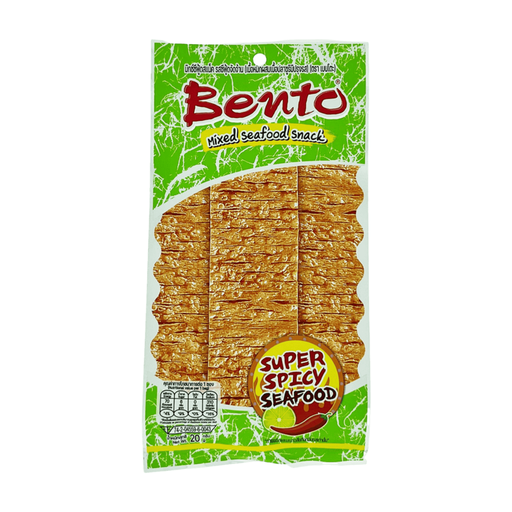
Why it suits this profile: The compact pack is handy for taking on the go, parties or a small snack while gaming. The mix contains squid, fish and prawns.
The 20-gram contents avoid having a large open bag left sitting around for a long time. The allergen list makes it clear that this snack is not suitable for vegetarians or anyone with a crustacean allergy.
18 grams of protein per 100 grams according to the product information; chewy seafood texture and ready to eat without preparation.

Why it suits this profile: This snack is made with soya protein and designed as a plant-based alternative with a fibrous, chewy texture.
The ingredients list soya protein as the base. However, always check the current packaging: according to the information, the product also contains soya, wheat and sesame.
25 grams of protein per 100 grams according to the label; ready-to-eat and seasoned with chilli, soya sauce and Sichuan pepper.
We have compiled a complete, up-to-date list of products that fully meet these strict selection criteria and the applicable European safety regulations.
Popular choices include Chinese tofu and mala snacks, Korean seaweed snacks and prawn crackers, and Thai seafood snacks with chilli. The right choice depends on the texture you prefer, the level of seasoning and any allergens. If you follow a vegetarian diet, you can look at tofu, soya protein or konjac, but you should check the full ingredients list.
Tofu and soya protein snacks may be suitable for vegetarians, such as Wuxianzhai Spicy Bean Curd or a vegetarian meat skewer. This is only the case if the current packaging does not list any animal-derived ingredients. Also look out for chicken extract, fish sauce, crustaceans, egg and shared production lines.
Store unopened snacks in a cool, dry place, away from direct sunlight and heat and moisture. Once opened, the storage advice varies by product. Some packs should be consumed quickly, while other soya products state that they should be refrigerated after opening. Always follow the storage and best-before information on the packaging.
