
Vandaag of morgen in huis

Kwaliteit gegarandeerd

Welkomstaanbiedingen ontgrendelen: GRATIS bezorging | Tot 80% korting | Gratis 30 dagen JoyPlus-proefperiode
Download de app
Spicy Asian snacks are a firm favourite among street food lovers, students, flexitarians, and anyone who fancies something different from crisps while gaming or enjoying a drink. The range stretches from chewy tofu and konjac to crunchy bean mixes, seaweed snacks and seafood bites.
Yet a flashy packet doesn’t always tell you what you’re actually buying. These common pitfalls often crop up:
Chinese snacks often use chilli, garlic, soy sauce and Sichuan pepper. Mala refers to the combination of heat and a tingling sensation. You’ll find this profile in products like dried tofu, spicy tofu snacks and konjac items.
Thai snacks tend to have a different accent. According to BENTO’s product description, namprik combines chilli, garlic, shallot, lemongrass and kaffir lime leaf, among other ingredients. This means the flavour can be sour, aromatic and savoury as well as spicy.
So don’t just look for words like “hot” or “spicy” – also check for specific ingredients such as Sichuan pepper, chilli, lemongrass, fish sauce or soy sauce.
Texture plays a big part in whether a snack suits your occasion:
Also check whether the product is ready-to-eat. The tofu, konjac and seafood snacks mentioned can be eaten straight from the packet. Heating may change the texture of some products, so follow the instructions on the label.
Clear allergen information is important for British shoppers. Many Chinese snacks contain soya, wheat or sesame. Seafood snacks may contain fish, shellfish, molluscs and sometimes soya. If you have an allergy, always read the packaging; product information online can change.
Also keep an eye on salt per 100g. Here are a few examples from the available product data:
That makes portion size important. A small 20g or 50g sachet can be handy if you don’t want to open a large amount at once. Also check the storage advice and the date on the packaging. Some snacks need to be eaten straight after opening; others must be kept sealed or refrigerated.
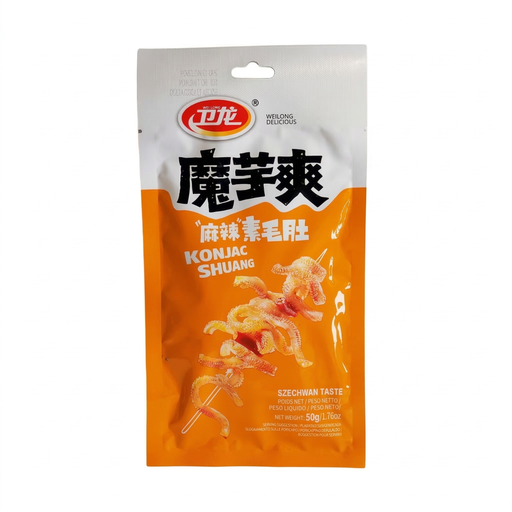
Why it fits the profile: The 50g pack is a manageable size for anyone trying a spicy konjac snack for the first time without committing to a large assortment.
The product information clearly states a chewy texture, Sichuan-style málà and a net weight of 50g. This lets you assess the flavour and texture with confidence.
Ready-to-eat, plant-based according to the product description and 84 kcal per 100g. Contains soya and wheat.
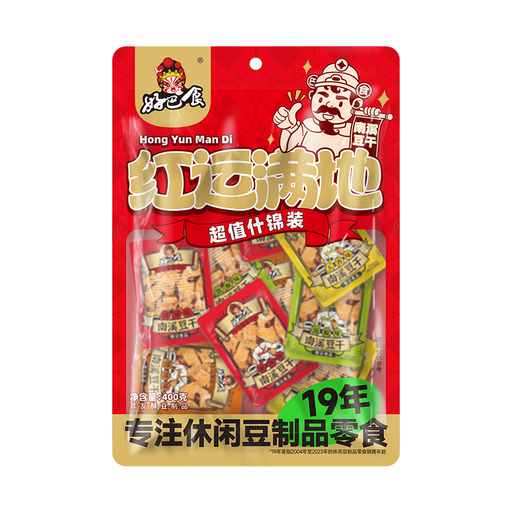
Why it fits the profile: If you want to compare different Chinese snacks, this single pack offers mala, barbecue, five-spice and pickled chilli.
The flavours and nutritional values are listed per variant. So you don’t have to rely on the packaging to know what the assortment contains.
400g total, ready-to-eat and soya-based. Contains soya and sesame; check the portion and salt content per flavour.
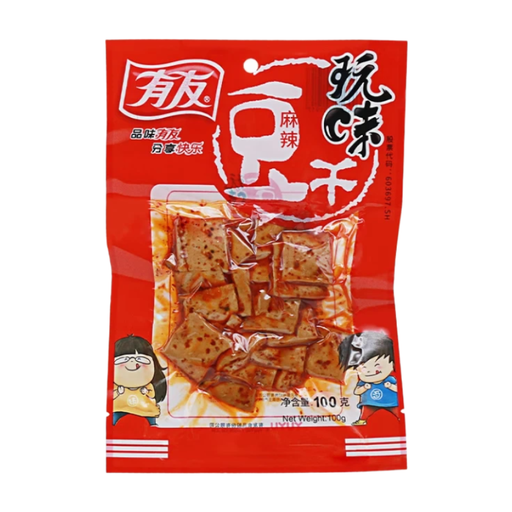
Why it fits the profile: The firm tofu and pronounced málà seasoning appeal to fans of authentic Chinese street food flavours, whether for a gathering or a long gaming session.
The product description explicitly mentions the mala flavour, soya as the main ingredient and that it’s ready to eat. This makes the choice more concrete than a general claim about spiciness.
20.7g protein and 5.6g fibre per 100g according to the label. Contains soya and 990 mg sodium per 100g.
We’ve put together a full, up-to-date list of products that meet these strict selection criteria and comply with current European safety regulations.
Tofu, konjac and some bean snacks are made from plant-based ingredients. That doesn’t automatically mean every product is vegetarian or vegan. Check the ingredients for fish, chicken, fish sauce, egg and other animal-derived components. The BIKANO Aloo Bhujia Mix is listed as suitable for vegetarians according to the product information. When in doubt, the label is your best guide.
Regular spiciness usually comes mainly from chilli. Mala combines chilli with Sichuan pepper, which can create a tingling or numbing sensation in the mouth alongside the heat. The intensity varies by recipe. If you’re not familiar with this effect, start with a small pack such as a spicy konjac snack or an individual tofu sachet.
Store unopened snacks in a cool, dry place away from sunlight, heat and moisture. Seal an opened pack tightly to keep the crunch and flavour intact. Some marinated tofu products need to be refrigerated after opening and eaten within a few days. Always check the specific storage advice on the packaging.
