
Vandaag of morgen in huis

Kwaliteit gegarandeerd

Welkomstaanbiedingen ontgrendelen: GRATIS bezorging | Tot 80% korting | Gratis 30 dagen JoyPlus-proefperiode
Download de app
A bag of spicy Asian fish snacks might seem straightforward to pick at first glance. Yet fish snacks vary widely in fish content, texture, heat level, salt content and packaging. A cheap Asian fish snack can therefore be less suitable for eating on the go, while a small bag of seafood snack can work out relatively expensive.
Also watch out for misleading expectations. The term “extra spicy” has no fixed European standard. What’s more, “high in protein” is sometimes used for snacks that contain relatively little fish or seafood. Always check the ingredients list and nutritional information on the packaging.
“Spicy”, “hot”, “mala” and “Namprik” refer to different flavour profiles. A spicy Chinese fish snack with chilli can be mainly savoury and crunchy. A Thai seafood snack, on the other hand, can taste sour, aromatic and sharp. With a Korean chilli snack, the emphasis is often on crunchiness and a roasted flavour.
If you’re sensitive to strong spices, it’s better to choose a sauce or mild chilli variant rather than a product with “super spicy” or “numbing” in its name.
A product with a prominent fish image doesn’t automatically consist mostly of fish. Look at the quantitative ingredient declaration. For several Jin Zai variants, for example, 69% to 70% anchovy is stated. For Bento Mixed Seafood Snack Hot & Spicy, 40% squid and surimi is listed.
A dried fish snack with a higher fish content often has a firmer, chewier texture. Crackers and seaweed snacks are a different product category: NongShim Shrimp Cracker contains 8.5% prawn according to the product information, while the main ingredient is wheat flour.
An individually wrapped snack is handy for a lunchbox, school bag or train journey. But do check the total weight and the number of packets. The Jin Zai packs of 240g contain 20 sachets of 12g. That makes portioning easy, but always compare the price by weight, not just by the number of packs.
When looking at an anchovy snack or other fish snack, check the first ingredients. A high stated proportion of fish, squid or prawn gives a clearer picture of the product than terms like “deep sea” or “premium”. Such marketing words have little practical meaning without a percentage.
Also pay attention to the type of product:
Use the nutritional information table to compare products fairly. The Jin Zai Spicy Flavour states per 100g: 396 kcal, 28.5g protein and 1.8g salt. The Spicy & Numbing variant states 227 kcal, 20g protein and 3.5g salt. This shows that flavour variant and recipe can make a clear difference.
With small portions, the amount per sachet is more relevant. A 12g sachet naturally contains much less energy and salt than the values per 100g suggest. If you’re eating a spicy seafood snack with a drink or a meal, it’s wise to factor in multiple portions.
Fish, crustaceans, molluscs, soya, wheat, sesame, peanuts and sulphites are common in this product group. So always check the allergen declaration, especially with mixed seafood snacks. The information on the packaging is leading if it differs from an online product description.
“Ready-to-eat” means the snack can be eaten straight from the pack. This applies, for example, to Jin Zai, Bento and NongShim Shrimp Cracker. The Meng Fu Hot Pot Meatballs are an exception: they are frozen and need to be cooked for 5 to 7 minutes according to the product information.
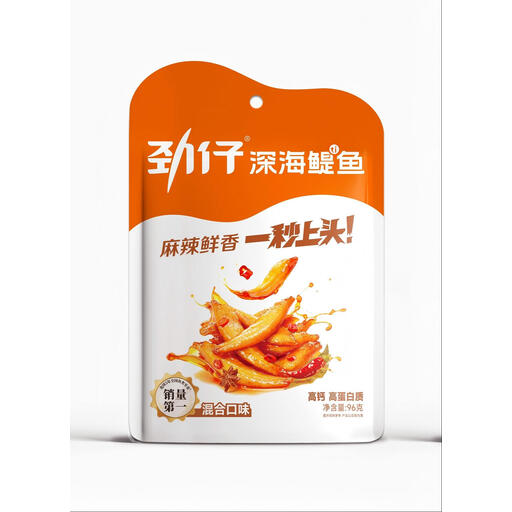
Why this fits the profile: Three flavour variants in one pack make it possible to try spicy, spicy & numbing and sauce flavour without having to buy several large bags straight away.
The product information states 12 individual sachets of 8g and at least 69% anchovy per flavour variant. This makes the portion size and fish base easier to assess.
Three flavours, ready-to-eat and handy for on the go or a lunchbox.
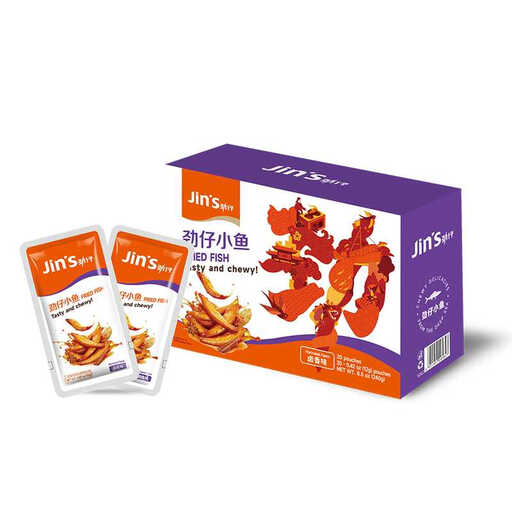
Why this fits the profile: Ideal for anyone looking for a savoury, marinated fish flavour and who values a clearly stated proportion of wild anchovy.
The description states 69% anchovy, 20 sachets of 12g and a concrete nutritional information table. This helps you compare fish content, portion size and nutritional values side by side.
240g total, individual packaging and suitable as a snack or with rice, noodles and a drink.
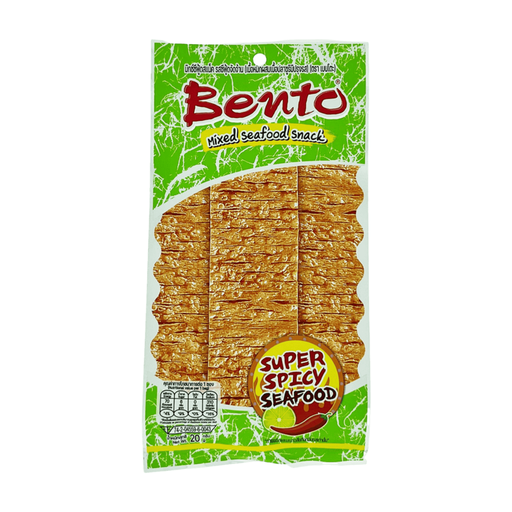
Why this fits the profile: For snackers looking for a compact, distinctly spicy seafood snack for on the go, parties or with a drink.
The pack is 20g and the ingredients list fish, squid and prawn. The strong spiciness is clearly stated in the product name, so the flavour expectation is less likely to be misjudged.
Small size, ready-to-eat and a mixed composition with 18g protein per 100g according to the product information.
We’ve put together a full, up-to-date list of products that fully meet these strict selection criteria and comply with current European safety regulations.
Choose an individually wrapped snack of 8 to 20g. This keeps the rest of the product sealed and makes it easy to store a portion in a bag or lunchbox. Check that the snack is ready-to-eat and store it according to the label in a cool, dry place.
No. The protein content varies by product. Anchovy and squid snacks often contain more protein than crackers or seaweed snacks, but always check the value per 100g. A small portion naturally contains less protein than the table value.
An unopened pack can be stored until the date on the packaging, provided the storage instructions are followed. After opening, product descriptions generally advise consuming the snack immediately. Seal larger packs tightly and do not use any product whose packaging is damaged or that smells or tastes damp.
