
Workshop host preparing several batches
If you’re making spice blends one after another, consider the stated capacity per batch and how an electric grinder is operated. Severin lists spices as a use for the KM 3879.


For several batches of dry spices in a row, an electric grinder that the manufacturer specifies for spices may be a good fit. For a workshop where participants grind and mix the spices themselves, a pestle and mortar is better suited to the activity. A hand grinder with an adjustable setting may work for suitable dry spices, but check which ingredients each model is designed for and how to clean the tool between mixtures.
If you’re making spice blends one after another, consider the stated capacity per batch and how an electric grinder is operated. Severin lists spices as a use for the KM 3879.
If you want crushing and mixing to be part of the workshop, manual tools may be a good choice. Le Creuset describes an earthenware pestle and mortar for kitchen use.
If you want to grind suitable dry spices more coarsely or finely, compare the mechanism and intended ingredients for each model. WMF describes the Ceramill as having an adjustable grind setting.
Choose your approach based on the number of batches, whether manual grinding is part of the activity and how much control you want over the grind. Also check that each model is suitable for your recipe and find out how to care for it.
A good fit if: you want to grind batches of dry spices repeatedly and choose a model that the manufacturer specifies for spices.
Bear in mind: you’ll need a power supply, and you should consider the batch size for each grind. A stated capacity alone doesn’t tell you how many batches the grinder can process over the course of a workshop.
A good fit if: participants want to crush and mix the spices themselves, or if the process is part of the activity.
Bear in mind: it takes manual effort and time to grind and clean between mixtures.
A good fit if: you want to adjust the grind for ingredients the model is designed to handle.
Bear in mind: an adjustable mechanism doesn’t prove that the grinder is suitable for every ingredient in a complete curry blend.
| Consideration | What to check before buying | Who should consider this most? |
|---|---|---|
| Grinding several batches | Check the capacity per batch and whether the manufacturer lists spices as a suitable use. | If I’m making several batches in a row, I want to know how much each batch can hold and how the appliance works. Around 36% of consumers prioritise processing successive batches. |
| Grinding by hand | Check whether the pestle and mortar is designed for spices and whether its weight and dimensions suit your workspace. | If participants want to crush and mix the spices themselves, I want the process to suit the workshop. Around 29% of consumers prioritise grinding by hand. |
| Cleaning between mixtures | Read the care instructions for the exact model; don’t assume it’s dishwasher-safe based on its material. | If I’m switching recipes, I want to know what cleaning steps I’ll need to allow for. Around 21% of consumers prioritise easy cleaning between mixtures. |
| Adjusting the grind | Check how to adjust the grind and which dry ingredients the manufacturer says the grinder is suitable for. | If I want to change the coarseness, I want to know whether the mechanism suits the spices in my recipe. Around 14% of consumers prioritise adjustability. |
Suitability depends on the exact model and the ingredients it is designed for. Severin lists spices as a use for the KM 3879.
Check the product information or manual for the model you’re considering and compare the listed ingredients with your recipe.
A manufacturer may describe a grinder as suitable for certain dried ingredients without proving that it can handle every spice in a blend.
Compare the ingredients each model is designed for with your recipe. Choose a pestle and mortar if manually crushing the ingredients or making it part of the workshop is a better fit.
Cleaning instructions vary by model. WMF states that the Ceramill is not dishwasher-safe.
Factor the care instructions for the exact model into your plans for preparing successive mixtures.
Hand-washing takes extra time between workshop sessions.
According to Severin, the KM 3879 is an electric coffee and spice grinder for dry batches.
The Ceramill spice grinder is a manual grinder for suitable spices, with an adjustable grind setting.
The earthenware pestle and mortar is an option for grinding and crushing by hand.
According to the manufacturer, the Stadhampton Chilli & Spice Mill is designed for dried chillies and coarse spices.
This selection focuses on electric grinders whose product information describes them as suitable for dry spices or similar grinding uses. EU Regulation (EC) No 1935/2004 sets out rules for materials that come into contact with food. For each model, check that the parts which contact food meet the applicable requirements.
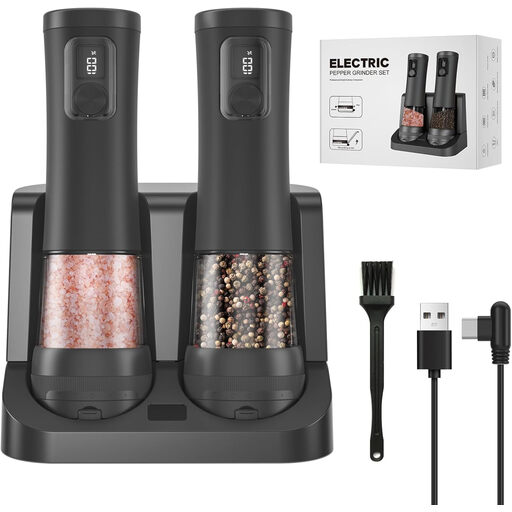 Image unavailable
The product name mentions salt and pepper. Check whether the product information for this model also permits the spices in your complete curry blend.
The product name lists five grind settings, battery power and a digital display.
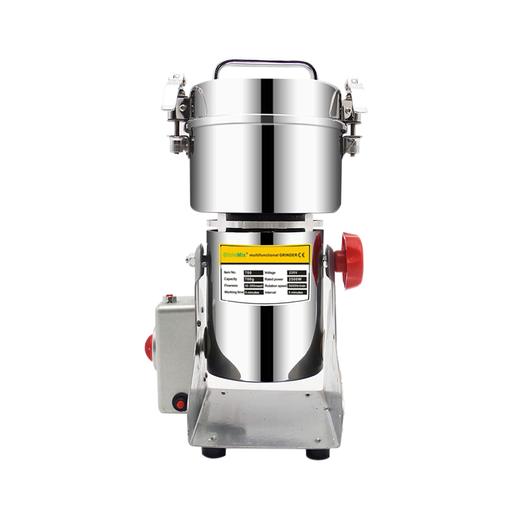 Image unavailable
The product name describes a dry spice grinder. Check whether all the ingredients in your curry blend are within its intended use.
The product name lists a capacity of 700 g.
Image unavailable
The product name describes a dry spice grinder. Check whether all the ingredients in your curry blend are within its intended use.
The product name lists a capacity of 800 g.
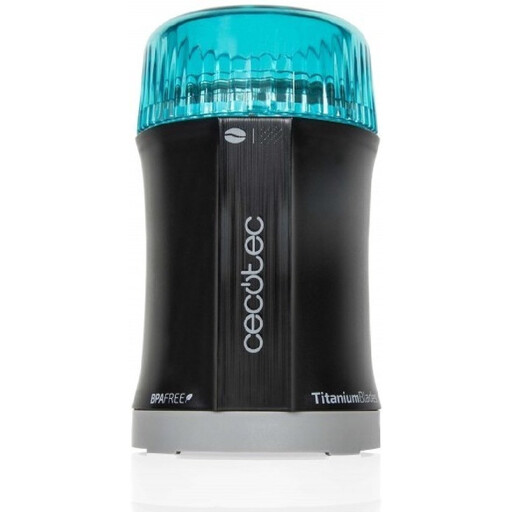 Image unavailable
The product name mentions coffee and spices. Check the manual before using it with the ingredients in your recipe.
Do not use the appliance for more than 1 minute at a time. Allow it to cool for at least 10 minutes before grinding again.
Not simply because it is a pestle and mortar: according to the European Commission, CE marking is only required for products covered by applicable harmonised EU rules that require it. The relevant food contact rules also apply to materials that come into contact with food. Assess an electric model separately, based on the rules that apply to it.
Follow the cleaning instructions for the exact product before switching blends. WMF states that the Ceramill model mentioned is not dishwasher-safe. Store ground, dried spices in a sealed container in a dark place, as recommended by the Netherlands Nutrition Centre (Voedingscentrum).
Statutory consumer rights apply alongside any manufacturer’s or seller’s warranty. According to ACM ConsuWijzer, if a product breaks sooner than you could reasonably expect under normal use, the seller must repair or replace it free of charge or, if necessary, refund you. There is no single fixed expected lifespan for all products.
This depends, among other things, on how the workshop is organised. The Netherlands Food and Consumer Product Safety Authority (NVWA) explains that food businesses in catering and similar sectors that prepare, process or sell food must work with an HACCP food safety plan or an appropriate hygiene code. When selling unpackaged food to consumers, there are also rules on providing information about allergens present. Don’t automatically apply these requirements to a private workshop.