
Making a larger batch of spice mix
You want to prepare several spices in batches for a family gathering, so you compare which ingredients each grinder can handle and how much it can grind.


For a batch of spice mix, choose an electric grinder whose manufacturer explicitly says it can be used for spices. Compare each model’s capacity and check how to clean the grinding chamber. Krups lists an 85 g capacity for the F2034210, while Severin gives 50 g for the KM 3879. Cuisinart lists two separate bowls for the SG21BE. A hand grinder is better for small amounts while you cook, while a pestle and mortar lets you grind ingredients together without electricity. For every model, check which ingredients it can handle and follow the cleaning instructions.
You want to prepare several spices in batches for a family gathering, so you compare which ingredients each grinder can handle and how much it can grind.
You make separate mixes and want to be able to swap or clean the grinding bowls between batches.
You grind small amounts while cooking, or prefer to pound ingredients together without an electric appliance.
| What to consider | What should you check? | Who is this important for? |
|---|---|---|
| Batches for a spice mix | Check that the model can handle your dried spices, then compare its stated capacity with the amount in your recipe. | I want to grind enough mix for the gathering in advance, rather than keep refilling a small grinder. Around 36% of consumers prioritise grinding in batches. |
| Keeping flavours separate | Check how many bowls are included and which parts the instructions say are dishwasher-safe. | I make different mixes one after another and want to keep them separate. Around 29% of consumers prioritise preparing and cleaning ingredients separately. |
| Grinding or pounding by hand | Choose between a grinding mechanism for dispensing small amounts and a pestle and mortar for pounding ingredients together. Check which spices are suitable. | I want to grind small amounts without an electric grinder, or pound ingredients together. Around 21% of consumers prioritise working by hand. |
| Compact and simple | Check the dimensions, the type of grinding mechanism and which parts need to be washed by hand. | I only grind small amounts occasionally and want a straightforward grinder. Around 14% of consumers prioritise compactness and simplicity. |
Hand grinders are designed for dispensing small amounts, while manufacturers specify a batch capacity for some electric models. They are suited to different uses.
Before you buy, decide whether you want to prepare a batch of mix in advance or grind small amounts while cooking.
For the Cuisinart SG21BE, the manufacturer says the bowls are dishwasher-safe. That does not automatically mean the motor base can go in the dishwasher too.
Check the cleaning instructions for each part, including the motor base.
A stated manufacturer’s guarantee does not automatically remove your statutory rights in the Netherlands. ACM ConsuWijzer explains that if a product breaks sooner than you could reasonably expect with normal use, the retailer must put it right free of charge.
Keep your proof of purchase and contact the retailer if the product develops a fault unexpectedly soon.
Cuisinart describes the SG21BE as an electric grinder for spices and nuts, supplied with two grinding bowls.
Krups describes the F2034210 as a coffee grinder that can also be used for seeds, herbs and spices.
Severin describes the KM 3879 as an electric coffee and spice grinder.
IKEA describes the 365+ IHÄRDIG as a manual spice grinder and the ÄDELSTEN as a pestle and mortar.
The Mini 0648199990 is a manual grinder for dispensing spices.
These products are designed for electrically grinding dried spices and herbs, including preparing a mix in batches.
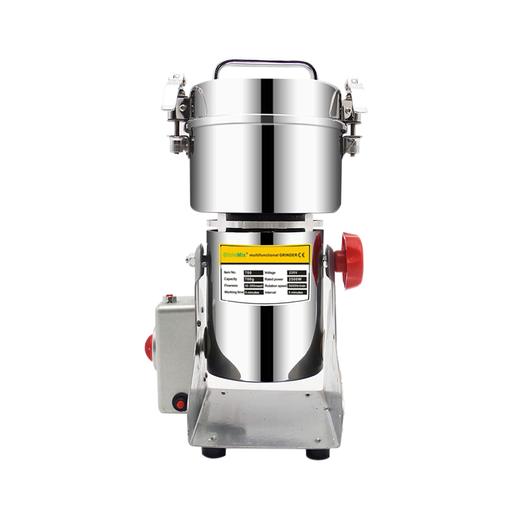 No image available
A good fit if you want to grind dried spices and aromatic herbs in batches using an electric grinder.
The product name lists a capacity of 700 g, peak power of 2500 W, speed of 36000 rpm, 3 stainless steel layers and a 270-degree pivot.
No image available
A good fit if you want to grind dried spices and aromatic herbs in batches using an electric grinder.
The product name lists a capacity of 800 g, peak power of 2500 W, speed of 36000 rpm, 3 stainless steel layers and a 270-degree pivot.
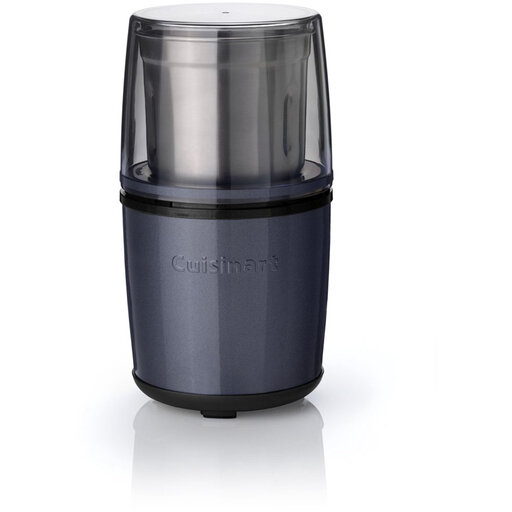 No image available
A good fit if you want to prepare different spice mixes separately. Cuisinart lists two grinding bowls for the SG21BE.
The manufacturer says the bowls are dishwasher-safe. Check the instructions for the motor base separately.
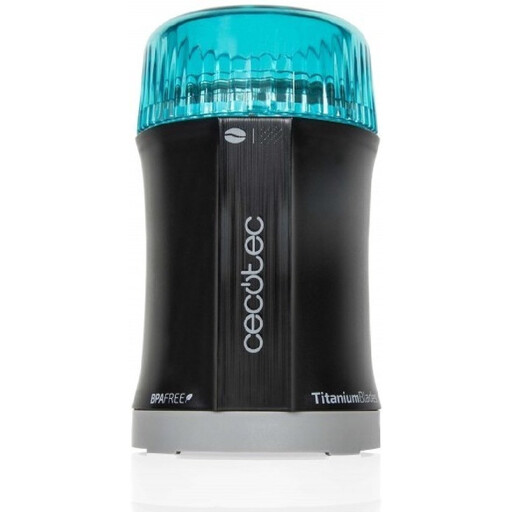 No image available
A good fit if you want to grind spices in batches using an electric grinder. The product information lists a maximum of 50 g per use.
After no more than 1 minute of continuous use, the motor must cool down for at least 10 minutes before you grind again.
No. Don’t assume it is suitable just because it is listed as a grinder. Krups explicitly says the F2034210 can be used for spices, and Severin says the same for the KM 3879. For another model, check the instructions and make sure it can handle your ingredients.
Follow the instructions for each part. Cuisinart says the SG21BE’s two grinding bowls are dishwasher-safe, while IKEA says to hand-wash the IHÄRDIG’s grinding mechanism and the ÄDELSTEN pestle and mortar. Don’t assume that instructions for a separate bowl also apply to the motor base.
The Netherlands Nutrition Centre advises storing dried herbs and spices, whole or ground, in a sealed jar in a dark place. Keep them away from moisture and don’t open the jar over a pan.
According to ACM ConsuWijzer, statutory guarantees apply alongside any manufacturer’s guarantee. If a product breaks sooner than you could reasonably expect during normal use, the retailer must repair or replace it free of charge, or sometimes refund the purchase price. There is no fixed statutory two-year period for this.
In the Netherlands, articles intended to come into contact with food must meet the relevant requirements of the Commodities Act Decree on Packaging and Consumer Articles, as explained by the NVWA. Producers and importers are responsible for product safety; the NVWA does not approve every product before it is sold. The Dutch government also sets out safety requirements and CE obligations for manufacturers of electrical kitchen appliances. A CE marking alone does not prove that a particular item has been independently tested or that its food-contact parts have been assessed separately.