
Vandaag of morgen in huis

Kwaliteit gegarandeerd

Welkomstaanbiedingen ontgrendelen: GRATIS bezorging | Tot 80% korting | Gratis 30 dagen JoyPlus-proefperiode
Download de app
SPF50 sunscreen may seem straightforward to choose at first glance. However, products can differ considerably in texture, UVA labelling, water resistance, how they feel on the skin and where they can be used. A sunscreen that feels comfortable on the body may be too greasy for the face. And a product labelled “water-resistant” will not necessarily provide protection all day after just one application.
SPF mainly refers to protection against UVB radiation, which can cause redness and sunburn, among other effects. SPF50 does not mean you can skip reapplying. Sweat, swimming, drying yourself and friction all reduce the layer applied.
Apply plenty of sunscreen before exposing yourself to the sun and reapply regularly. Always follow the instructions on the packaging. Even when using sunscreen, it is sensible to limit prolonged direct sun exposure and use protective clothing and shade.
For everyday protection, UVA protection is also important. UVA rays penetrate deeper into the skin and contribute to the long-term effects of sun exposure. So check whether the product has a UVA logo in a circle. Some Korean sunscreens also state PA++++. This is an additional indication of UVA protection that you will mainly see on Asian products.
A high SPF does not automatically make a product suitable for every skin type. The formula, amount used and application method remain important.
A sunscreen that does not leave a white cast may feel more comfortable on darker skin tones or under make-up, but the skin feel varies from person to person. A product for sensitive skin may also contain ingredients that do not suit everyone. So check the full ingredients list, particularly if you want to avoid fragrance or certain filters.
“Dermatologically tested”, “water-resistant” and “non-comedogenic” are not reasons to buy a product without further consideration. Use this information alongside the specific product details and your own preferences.
For everyday use, choose a product with SPF50 or SPF50+ when you are looking for high protection. Also check the UVA marking. For the face, a product with clear UVA and UVB information is often more practical than a general body lotion.
Using the right amount is just as important as the label. A thin layer of SPF50 facial sunscreen may provide less protection than the packaging suggests. Apply the product evenly to your face, ears, neck and any other uncovered areas.
A water-resistant sunscreen still needs to be reapplied after swimming, drying yourself or heavy sweating. Check the precise wording on the packaging, such as “water-resistant” or “very water-resistant”.
Ingredients such as glycerine, panthenol, niacinamide and vitamin E are often added for skincare benefits or a more comfortable skin feel. This does not automatically mean that every user will experience the same effect.
Brands sometimes make claims about anti-ageing, pigmentation or free radicals. Treat such statements as information provided by the brand. For example, NIVEA states that, according to its own research or in-vitro tests, some facial sunscreens deliver results relating to shine control, free radicals or visible wrinkles. Such claims are not a guarantee of personal results. If you are mainly looking for sunscreen to help prevent pigmentation, it is best to check the UVA protection and suitability for daily use first.
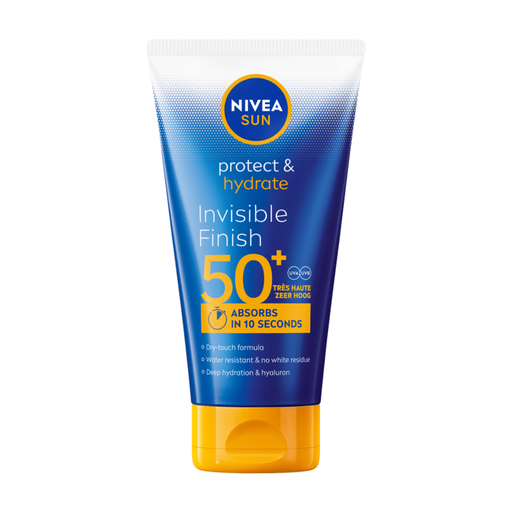
Why it suits this profile: The 150 ml pack is practical for everyday use on larger areas of the body. According to the product description, the formula has a dry-touch finish, absorbs quickly and leaves no white cast.
The water-resistant formula dispels the misconception that a lotion is only intended for dry conditions. Reapplication is still necessary after swimming or drying yourself.
SPF50+, 150 ml, water-resistant and, according to the description, quick-absorbing without white residue.

Why it suits this profile: The compact milk is ideal if you are looking for a lightweight texture and a small size for your bag or travels. The product information states that it is water-resistant and suitable for use on the face, neck, arms and other uncovered areas.
The small size makes it easier to carry with you and reapply regularly. The packaging recommends reapplying after 2 to 3 hours and after swimming or perspiring.
SPF50+, milk texture, water-resistant and a compact 12 ml size.
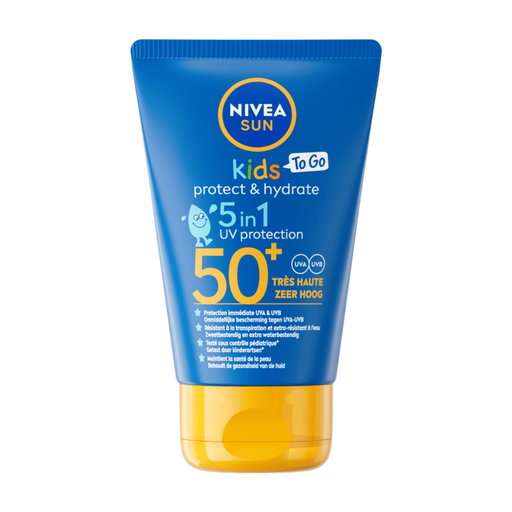
Why it suits this profile: The pocket-sized pack is handy for parents on the go. According to the product description, the milk is extra water-resistant and intended for children. The formula contains panthenol and vitamins C and E, among other ingredients.
The “extra water-resistant” claim does not mean that reapplication is no longer needed. The small pack makes it more practical to top up after swimming, playing or drying yourself.
SPF50+, 50 ml, extra water-resistant and a handy size for on the go.
For a mattifying sunscreen for oily or combination skin, you could also consider NIVEA SUN UV Face Shine Control SPF50. The product description mentions a dry-touch formula and oil control. If you prefer a Korean sunscreen, you will find lightweight options from iUNIK, Haruharu Wonder, and Beauty of Joseon, among others. Check the current packaging and ingredients list for each product.
We have put together a complete, up-to-date list of products that fully meet these strict selection criteria and the applicable European safety regulations.
Yes, but a specialist SPF50 facial sunscreen is often more comfortable thanks to its lighter texture and smaller packaging. Look out for fragrance, alcohol and ingredients that have irritated your skin in the past. A body product may work perfectly well, but it could feel heavier or sit less well under make-up.
Reapply after swimming, sweating and drying yourself. Even in other conditions, regular touch-ups are necessary, particularly during prolonged exposure. Always check the usage instructions for the specific product.
Check the expiry date or the open-jar symbol on the packaging. Store sunscreen in a cool place, away from direct sunlight and extreme heat. It is best not to use a product if its smell has changed, its texture is different or it has visibly separated.
