
Vandaag of morgen in huis

Kwaliteit gegarandeerd

Welkomstaanbiedingen ontgrendelen: GRATIS bezorging | Tot 80% korting | Gratis 30 dagen JoyPlus-proefperiode
Download de app
A good SPF50 facial sunscreen needs more than a high protection rating. Its texture, UVA protection, ingredients and water resistance all influence whether you use it properly every day. A formula that feels sticky, stings or leaves a white cast can quickly end up unused in the bathroom.
SPF mainly indicates protection against UVB radiation, which can cause redness and sunburn. Also check whether the product states that it offers protection against UVA. UVA contributes to long-term sun damage, pigmentation and skin ageing.
With Korean sunscreens, you will often see the PA++++ rating. This is a separate scale for UVA protection. European products generally use the UVA circle on the packaging. Always check the current product packaging, as the labels may vary between markets.
Not every SPF50+ facial sunscreen is water resistant. Products such as Anua Heartleaf Silky Moisture Suncream and iUNIK Centella Calming Daily Sunwater are listed as not water resistant in the product information. This makes them more suitable for commuting, the office and everyday use than for swimming or intense exercise.
If you spend a lot of time outdoors, sweat heavily or swim, look for an explicit description such as water resistant or very water resistant. Even then, you still need to reapply after swimming, drying yourself or sweating heavily.
Terms such as ‘anti-ageing’, ‘reduces pigmentation’ or ‘soothing’ often describe a brand’s positioning. According to NIVEA’s own research, Luminous630 visibly reduces pigmentation; this is a brand claim and not a guarantee for every skin type. Claims about wrinkles, soothing effects or an even complexion should therefore be viewed as product information from the brand, rather than a guaranteed result.
Also pay attention to ingredients that may be less comfortable for your skin. Alcohol denat., fragrance and essential oils can cause sensitivity in some users. A patch test on a small area of skin is advisable if you have sensitive skin.
For everyday use, choose a product with SPF50 or SPF50+ if you are looking for intensive protection. Apply the cream generously to your face, ears and neck. A thin layer does not automatically provide the level of protection stated on the label.
Use sunscreen as the final step in your morning routine. Most product descriptions recommend applying it 15 to 30 minutes before exposure and reapplying approximately every two hours during prolonged periods outdoors.
A chemical sunscreen uses organic UV filters that absorb UV radiation. These formulas are often lightweight and generally leave little white cast. Birch Juice Moisturizing Sunscreen and Beauty of Joseon Relief Sun contain several chemical UV filters, including Ethylhexyl Triazone and Diethylamino Hydroxybenzoyl Hexyl Benzoate.
A mineral sunscreen uses filters such as zinc oxide or titanium dioxide. Haruharu Wonder Black Rice Pure Mineral Sunscreen contains zinc oxide. According to the product information, a slight white cast may initially be visible, but becomes less noticeable when the product is thoroughly blended in.
Hybrid formulas combine both types of filter. Aloe Soothing Sun Cream is described as a hybrid sunscreen in the product information. If you have sensitive skin, do not just consider the type of filter; also check for fragrance, alcohol and other ingredients.

Why it suits this profile: This Korean sunscreen is designed for everyday use and has a lightweight cream texture. The product information states SPF50+ PA+++ and 30% rice extract.
The description mentions a formula without a white cast or sticky feel. This reduces the chance of skipping daily UV protection because of an unpleasant finish.
SPF50+ PA+++, 50 ml, fragrance-free according to the product information, with rice extract and fermented ingredients.

Why it suits this profile: The milk texture and compact size are ideal for users looking for portable facial sunscreen with water-resistant properties.
The product description mentions a lightweight texture and water resistance. However, check the current packaging and instructions for use when buying.
SPF50+, 12 ml and a milk formula. The usage instructions recommend reapplying after sweating or swimming.
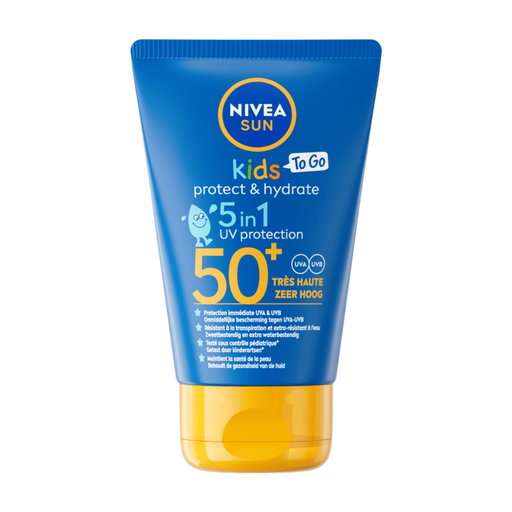
Why it suits this profile: The 50 ml size is practical for days out, and the product information states that it offers extra water resistance for active children.
The compact packaging and water-resistant claim are suited to use on the go. Reapply after drying yourself.
SPF50+, UVA/UVB protection, 50 ml and a product description featuring panthenol, vitamin C and vitamin E.
We have put together a complete, up-to-date list of products that fully meet these strict selection criteria and the applicable European safety regulations.
During prolonged sun exposure, every two hours is a practical guideline. Reapply sooner after swimming, sweating or drying yourself. Staying indoors does not always mean that reapplication is necessary, but it is important when you spend a lot of time outdoors.
SPF50+ may be suitable for sensitive skin, but the protection rating says nothing about how well you will tolerate the complete formula. Check the fragrance, alcohol, essential oils and other ingredients. Test a new product on a small area of skin first and stop using it if redness, itching or swelling occurs.
Yes, many lightweight formulas are designed to be the final step in your morning routine and can be worn under make-up. Allow the sunscreen to absorb first, then apply make-up gently to help prevent pilling. A lightweight sunscreen without a white cast is generally more practical for this than a rich cream that feels stiff or heavy.
