
Livraison le jour même et le lendemain

Qualité garantie

Débloquez vos offres de bienvenue: Livraison GRATUITE | Jusqu'à -80 % | 30 jours d'essai gratuits à JoyPlus
Téléchargez l'application
Daily sun protection for your face needs to feel comfortable enough for you to use it consistently. Yet many consumers choose a product based on attractive packaging, a Korean skincare trend or a promise of hydration. Afterwards, they find that the texture is too greasy, leaves a white cast or is not suitable for swimming and exercise.
With this practical buying guide, you can compare SPF50 facial sun cream, SPF50+ sun cream and a few lighter alternatives based on specifications that matter in the Netherlands.
SPF mainly refers to protection against UVB radiation. You should also check the UVA protection. Korean sun cream often uses the PA rating for this, such as PA+++ or PA++++. This designation appears on many Asian products, but it does not automatically replace the information provided on European packaging.
A product with SPF50+ is not automatically suitable for every situation. Also check whether the product is water-resistant and how often you need to reapply it.
A facial sun cream containing glycerine, hyaluronic acid, rice extract or centella can feel comfortable on dehydrated skin. However, ingredients do not tell you everything about the final finish. A rich cream may pill under make-up, while a gel may not provide enough comfort for dry skin.
That is why you should consider the combination of texture, finish and skin type, rather than focusing on just one popular ingredient.
Mineral sun cream containing zinc oxide or titanium dioxide can leave a slight white cast, particularly on darker skin or when you apply a large amount of product. Some product descriptions mention a transparent finish, but the result can vary depending on your skin type and how much you apply.
A chemical or hybrid formula often blends in more easily. If you have sensitive skin, test a small amount on a limited area first and always follow the warnings on the packaging.
For everyday use, many people choose SPF50 or SPF50+ sun cream. Apply the product as the final step of your morning routine, before exposure to the sun. Product information for various models recommends reapplying after swimming, sweating or drying yourself. For prolonged exposure, reapplying approximately every two hours is often advised.
Use enough product for your face and neck. A thin layer that feels comfortable does not automatically provide the level of protection stated on the label.
None of these categories is automatically suitable for everyone. Check the full INCI list if you are sensitive to fragrance, alcohol, certain filters or plant extracts.
For cycling, walking or spending a day by the water, water resistance is a practical criterion. Anessa Perfect UV Sunscreen Skincare Milk is described as water-resistant. Abib Airy Sunstick states that it has a water-resistant formula. Anua Heartleaf Silky Moisture Suncream, on the other hand, is explicitly not water-resistant.
For sun cream worn under make-up, a thin, quick-absorbing texture and an even finish are important. The product description for Aloe Soothing Sun Cream mentions use under make-up. According to Beauty of Joseon product information, the duo set is designed to be used under make-up without a white cast or pilling. These are product claims; the final result depends on your skin, make-up and the amount applied.
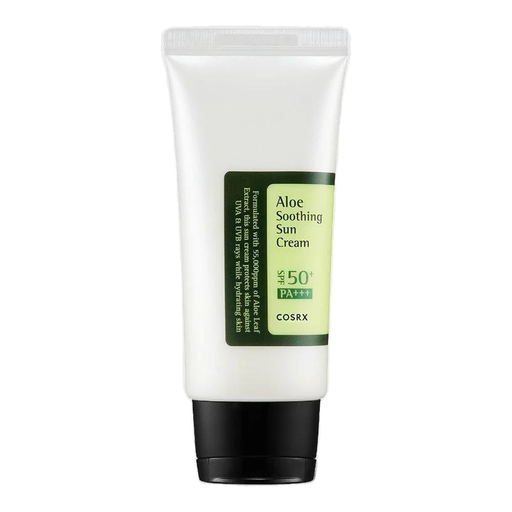
Why it suits this profile: A straightforward everyday option for anyone looking for a lightweight SPF50+ sun cream that, according to the product description, can be used under make-up.
The description mentions a lightweight, non-greasy formula without a white cast. If you have sensitive skin, do check the full ingredients list.
SPF50+, PA+++, 50 ml and, according to the product information, suitable for all skin types.
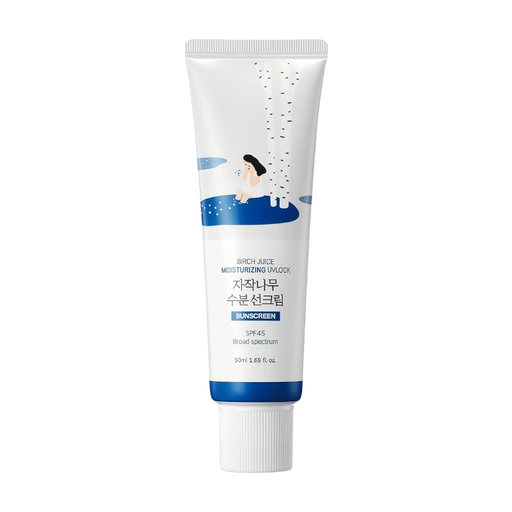
Why it suits this profile: A good fit for anyone looking for a moisturising sun cream with a lightweight, skincare-inspired formula for everyday use.
The formula contains several humectants, including glycerine and hyaluronic acid. The product information mentions chemical UV filters; a mineral white cast is not a feature of the formula.
50 ml, niacinamide, glycerine and hyaluronic acid in the listed ingredients; apply as the final step of your skincare routine.
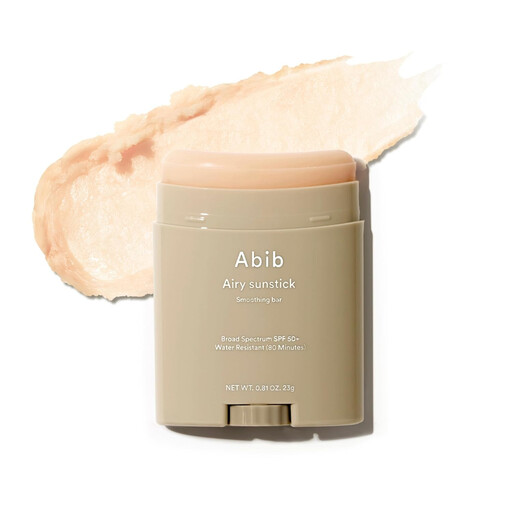
Why it suits this profile: Handy for reapplying on the go, during walks or while travelling, when you would rather not use your hands to apply more product.
The stick does not rely on a liquid cream and is described as water-resistant and free from a white cast. Apply enough strokes; a single swipe may not provide enough product.
SPF50+, PA++++, 23 g, curved applicator and, according to the description, a semi-matte finish.
We have put together a complete, up-to-date list of products that fully meet these strict selection criteria and the applicable European safety regulations.
SPF30 may be suitable when you expect less intense sun exposure, but it is not the same as SPF50+. In this selection, SKIN1004 Airfit Suncream Light and ISNTREE Hyaluronic Acid Daily Sun Gel are examples of SPF30 products. If you are specifically looking for SPF50 facial sun cream, it is better to filter for SPF50 or SPF50+ and then check the UVA rating, water resistance and texture.
Also consider the size: a 50 ml tube is suitable for everyday use, while a 12 or 15 ml format may be particularly convenient for a handbag or travel. A sun cream duo set, such as Beauty of Joseon Sun Cream Duo or the SKIN1004 Twin Pack, can be practical if you reapply regularly or want to stock up. Do check the expiry information on the packaging.
Apply generously and evenly to your face and neck. The product descriptions recommend using the product as the final step of your morning routine. During prolonged exposure, you should reapply regularly, especially after swimming, sweating or drying yourself.
Choose a lightweight formula that absorbs evenly and does not pill when you apply make-up over it. Aloe Soothing Sun Cream and Beauty of Joseon are mentioned in the product information in relation to use under make-up. Apply enough sun cream first and give the product time to set.
That depends on the formula. Some products are described as suitable for sensitive skin, but you should always check the full ingredients list. A mineral sun cream such as Haruharu Wonder Black Rice Pure Mineral Sunscreen contains zinc oxide, while other Korean sun creams use chemical filters. Stop using the product if irritation occurs and follow the safety instructions on the packaging.
