
Vandaag of morgen in huis

Kwaliteit gegarandeerd

Welkomstaanbiedingen ontgrendelen: GRATIS bezorging | Tot 80% korting | Gratis 30 dagen JoyPlus-proefperiode
Download de app
Buying sunscreen for your face sounds simple: choose SPF50, apply it and you’re done. In practice, facial sunscreens can vary considerably in texture, filters, water resistance and comfort. A formula that works well under make-up may be less suitable for oily skin. A mineral sunscreen may also be more visible on the skin than a lightweight Korean sunscreen with chemical filters.
That’s why choosing the right product should start with verifiable product information, not a striking marketing claim.
SPF mainly indicates protection against UVB rays. Also check whether the product states that it protects against UVA. Labels such as PA++++ or a UVA logo provide additional information, depending on the product and the market in which it is sold.
A high SPF does not make reapplication unnecessary. Sweating, swimming, towel-drying and prolonged exposure reduce the layer of product applied.
A sunscreen for sensitive skin may be fragrance-free, contain mineral filters or have a short ingredients list. That does not automatically mean every skin type will tolerate the formula well. Alcohol, fragrance, essential oils or certain UV filters may be less comfortable for some users.
Always check the current ingredients list on the packaging. If you have sensitive or reactive skin, testing a small amount on a limited area is a sensible precaution.
A lightweight sunscreen without a white cast feels comfortable, but that benefit disappears if you apply too little. Apply a generous, even layer to your face and neck. Use it as the final step in your morning skincare routine, spreading it over your ears, hairline and neck too.
A formula that is comfortable enough for everyday use will generally be applied more consistently than a product that feels sticky, pills or clumps under make-up.
For daily facial care, SPF50 or SPF50+ is a sensible choice if you spend a long time outdoors or are prone to pigmentation. Also look for UVA protection. Products with SPF50+ and PA++++, including various Korean and Japanese skincare formulas, are designed to offer broad-spectrum protection according to their product descriptions.
Water resistance is a separate feature. The Shiseido Anessa Perfect UV Sunscreen Skincare Milk SPF50+ is described as water-resistant, for example. Other products in this guide, such as the Centella Sun Cream, are listed as not water-resistant in the product information. In that case, reapplying after swimming, sweating or towel-drying is especially important.
A mineral sunscreen uses ingredients such as zinc oxide. This type of filter remains on the surface of the skin and may leave a slight cast, particularly when applied generously. The Haruharu Wonder Black Rice Pure Mineral Sunscreen lists zinc oxide as a mineral filter and warns that it may initially leave a white cast.
Chemical filters absorb UV radiation and often allow for a thinner, more transparent texture. The ingredients lists of NIVEA, Beauty of Joseon and BIRCH Juice, among others, include several chemical UV filters. Neither type is automatically suitable for every user; skin feel, ingredients and the situation in which you use the product all matter.
Dry skin may benefit from a moisturising sunscreen containing glycerine, rice extract, panthenol or hyaluronic acid. For oily or combination skin, a gel, milk or airy finish is often more practical than a rich cream.
Also consider:
Claims relating to anti-ageing or pigmentation should be read with a degree of caution. According to NIVEA’s own research, for example, the manufacturer claims that the Anti-Age Q10 formula reduces the appearance of wrinkles and firms the skin in seven days. This is a brand claim, not a guarantee for every skin type. UV protection can help limit exposure, but sunscreen is not a treatment for pigmentation or skin ageing.
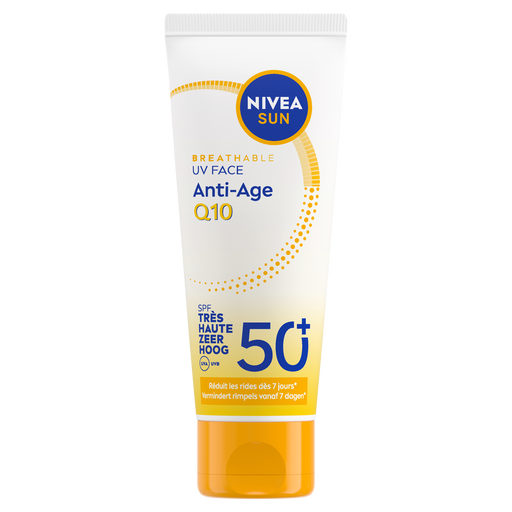
Why it suits this profile: A compact facial sunscreen with SPF50+ for everyday use and as a base under make-up.
The product description states that it has a lightweight, non-greasy and non-comedogenic formula. However, check the ingredients if you are sensitive to alcohol or fragrance.
SPF50+, 40 ml, suitable for layering and contains Q10 according to the ingredients list.

Why it suits this profile: The milky texture and compact size are practical for travelling, commuting and regular reapplication.
The product information mentions a lightweight texture and water resistance. Check the instructions for use and reapply after swimming or heavy sweating.
SPF50+, milk formula, 12 ml and described as water-resistant in the product information.

Why it suits this profile: A Korean sunscreen for anyone looking for a hydrating, fragrance-free formula without a white cast for everyday use.
The product information states that it has a lightweight texture, contains no fragrance and leaves no white cast. Reapplication remains essential during prolonged outdoor activities.
SPF50+ PA+++, 50 ml, 30% rice extract according to the product information and a fragrance-free formula.
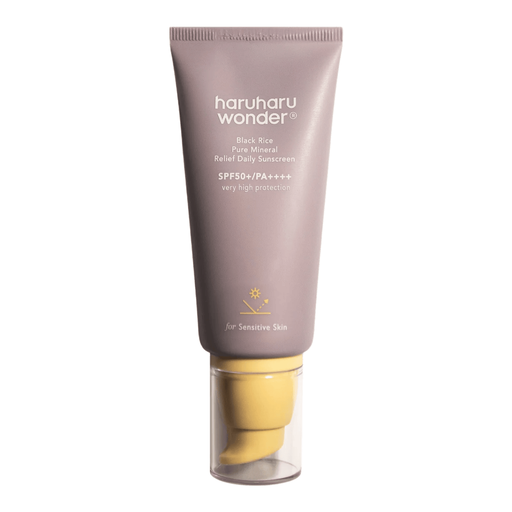
Why it suits this profile: Suitable for users who consciously choose zinc oxide as a mineral UV filter.
The product information explicitly notes that zinc oxide may initially leave a slight white cast. Blending it in thoroughly helps prevent an uneven finish.
Mineral filter with zinc oxide, 50 ml, plus ceramide NP and sodium hyaluronate in the ingredients list.
We’ve put together a complete, up-to-date list of products that fully meet these strict selection criteria and the applicable European safety regulations.
Daily sun protection is particularly useful if you spend a lot of time outdoors, cycle, walk or work near a window. UV exposure varies depending on the season, time of day and situation. SPF50 does not provide complete protection against UV radiation, so a hat, sunglasses and shade remain useful additions.
Check the expiry information and symbol on the packaging. Store sunscreen in a cool, dry place away from direct sunlight. A change in smell, colour or texture may be a reason to stop using the product. Close the tube or bottle securely after use.
That depends on the texture and how it interacts with your other skincare products. Lightweight gels, essences and milk formulas generally pill less quickly than heavy creams, but every combination can react differently. Allow the sunscreen a short time to absorb and test new products together on a small area first.
