
Vandaag of morgen in huis

Kwaliteit gegarandeerd

Welkomstaanbiedingen ontgrendelen: GRATIS bezorging | Tot 80% korting | Gratis 30 dagen JoyPlus-proefperiode
Download de app
A good SPF50 face sun cream needs more than just a high protection factor. The texture, UV filters, skin tolerance and intended use all affect whether you will actually apply enough every morning and reapply it when needed.
If you focus only on prominent claims such as “lightweight formula” or “water-resistant”, you may encounter a few familiar problems in practice.
SPF mainly indicates protection against UVB radiation. So also check whether the packaging or product description mentions UVA and UVB protection. In Korean skincare, you will also often see a PA classification, such as PA++++. This is an additional indication of UVA protection.
A high SPF does not mean that you only need to apply the cream once a day. Sweating, swimming, towel-drying and friction can reduce the layer you have applied.
A hydrating sun cream can feel comfortable on dry skin, but may feel heavy on oily or combination skin. Conversely, a very mattifying formula may feel tight on dry skin.
Pay attention to the combination of texture and ingredients. Glycerine, hyaluronic acid and panthenol are often used to create a comfortable feel on the skin. However, an ingredients list cannot tell you exactly how a product will feel on your skin. Testing a small amount along the jawline can help.
A mineral sun cream may contain zinc oxide, for example. This can appeal to people who want to avoid chemical UV filters, but some formulas may leave a slight white cast. Products containing zinc oxide may become more transparent after being thoroughly massaged in, but this varies according to skin tone and the amount applied.
Also check claims such as “reef safe” carefully. This does not automatically mean that a product has no environmental impact in every setting or situation.
For daily facial sun protection, SPF50 or SPF50+ is a sensible choice if you spend a lot of time outdoors, burn easily or want a high level of protection. According to the standardised testing method, SPF50 filters a larger proportion of UVB radiation than SPF30, but the level of protection depends greatly on the amount applied.
Preferably choose a product that explicitly mentions UVA protection as well. Apply sun cream as the final step in your morning routine, after any moisturiser.
An ordinary face sun cream is not automatically water-resistant. The Anua Heartleaf Silky Moisture Suncream, for example, explicitly states: not water-resistant. This may make the formula suitable for everyday commuting, but less suitable for swimming or intensive exercise.
For beach days, cycling in warm weather or outdoor work, clear information about water-resistant sun cream is important. Even then, you still need to reapply after swimming, sweating or towel-drying.
Fragrance-free options may be worth considering for sensitive skin. Beauty of Joseon Relief Sun states that it has a fragrance-free formula, while iUNIK Centella Calming Daily Sunscreen is also described as fragrance-free. A fragrance-free formula does not guarantee that everyone will tolerate the product without problems. Stop using it if irritation occurs and follow the warnings on the packaging.
If you are looking for a sun cream without a white cast, you may wish to consider a chemical or hybrid formula. With mineral filters such as zinc oxide, it is sensible to allow for the possibility of a visible layer.

Why it suits this profile: This Korean sun cream is aimed at people looking for a fragrance-free, hydrating cream for everyday use. The product information states SPF50+ PA+++ and a lightweight texture.
The stated formula is fragrance-free and, according to the product description, leaves no white cast or sticky feeling. If you have sensitive skin, always check the full ingredients list.
SPF50+ PA+++; 30% rice extract according to the product information; fragrance-free 50ml cream.

Why it suits this profile: According to the product description, this is a water-resistant milk with SPF50+, intended for situations where you spend more time outdoors. Its compact size fits in a coat pocket or washbag.
The water-resistance claim appears in the product description, unlike with products where this is not stated. However, the small size means it will run out more quickly when used generously and regularly.
SPF50+; water-resistant formula according to the product description; convenient 12ml size.
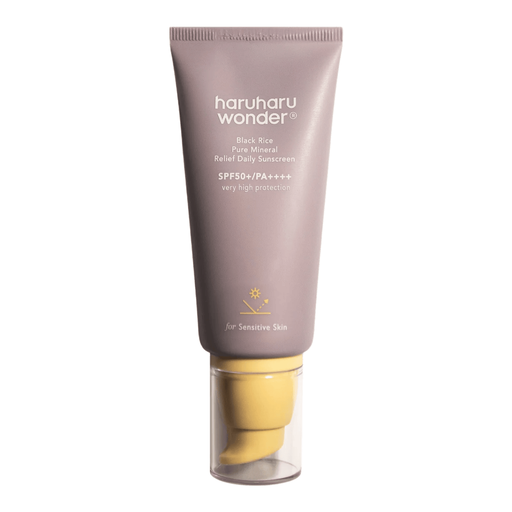
Why it suits this profile: This mineral sun cream uses zinc oxide as its UV filter. That makes it suitable for shoppers who deliberately choose a physical filter and are looking for a formula containing ingredients including ceramide NP and hyaluronic acid.
The product information mentions zinc oxide and warns that a slight white cast may be visible. This means you know in advance that careful blending is important.
Mineral filter with zinc oxide; 50ml size; ingredients list includes ceramide NP and sodium hyaluronate, among others.
We have put together a complete, up-to-date list of products that fully meet these strict selection criteria and the applicable European safety regulations.
Yes, an SPF50 face sun cream can be used every day as the final step in your morning skincare routine. Choose a texture that feels comfortable, so that you apply enough product. Also check that UVA and UVB protection is stated.
The shelf life is stated on the packaging, often using an open-jar symbol showing the period after opening. Store sun cream in a cool, dry place away from direct sunlight. Do not use the product if its smell, colour or texture has noticeably changed.
Look for a fragrance-free, hydrating sun cream containing ingredients such as glycerine, hyaluronic acid or panthenol. The ingredients list remains important for sensitive skin: a fragrance-free product is not automatically suitable for everyone. A mineral sun cream containing zinc oxide may also be an option, provided you take the possibility of a white cast into account.
