
Vandaag of morgen in huis

Kwaliteit gegarandeerd

Welkomstaanbiedingen ontgrendelen: GRATIS bezorging | Tot 80% korting | Gratis 30 dagen JoyPlus-proefperiode
Download de app
Buying SPF 50+ sunscreen may seem straightforward, but differences in texture, application and ease of use determine whether you actually apply enough of the product every day. A thick, sticky cream, a facial sunscreen that pills under make-up or a formula that quickly disappears after swimming can ultimately turn out to be a poor purchase.
The main pitfalls are:
SPF 50+ indicates very high protection, mainly against UVB radiation, which causes redness and sunburn. Also look for an explicit mention of UVA and UVB protection. UVA radiation penetrates deeper into the skin and contributes to premature skin ageing and pigmentation.
For European products, look for the UVA symbol in a circle. Korean sunscreens often display PA++++. This is a classification for UVA protection within the Asian rating system. Do not compare PA++++ directly with a European UVA symbol; always check the full product information and packaging.
Facial sunscreen needs to feel comfortable enough for everyday use. Look out for the following properties:
A water-resistant sunscreen is useful for trips to the beach, exercise and cycling in warm weather. This does not mean that you do not need to reapply it. Apply the product generously before going outside and repeat application after swimming, sweating or drying yourself. When spending a long time outdoors, reapplying according to the instructions is important.
For the face, around two finger lengths of product is often used as a practical guideline. You need considerably more for the body. A bottle that lasts a long time because you use the product sparingly does not automatically provide sufficient protection.
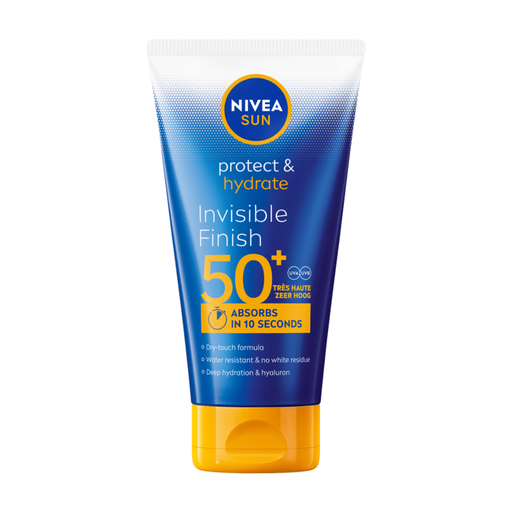
Why it suits this profile: The 150 ml packaging is practical for everyday use on the face, arms and other exposed areas of the body. The product information states that it has a dry-touch formula and a water-resistant composition.
The product description states that the formula absorbs quickly and leaves no white cast. However, check when using it that the finish feels comfortable enough on your skin.
SPF 50+, UVA/UVB protection according to the product information, 150 ml content and stated water resistance.

Why it suits this profile: The milk texture and compact size suit anyone looking for a facial sunscreen to take on the go, on holiday or in a bag.
The product information mentions a lightweight texture and water resistance. At 12 ml, the amount is limited, making this more suitable for the face and for touch-ups than for the whole body.
SPF 50+, milk formula, water resistance according to the product description and a travel-friendly size.
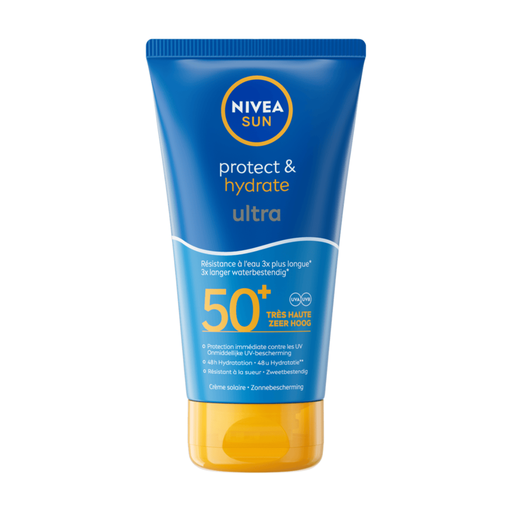
Why it suits this profile: This 150 ml sunscreen is designed for outdoor activities where sweating and contact with water are likely, such as walking, cycling and spending a day at the beach.
The product page states that it is sweat-resistant and offers longer water resistance than conventional water-resistant protection. Reapplication after drying yourself is still necessary.
SPF 50+, UVA/UVB protection, 150 ml content and, according to the manufacturer, a highly water-resistant formula.
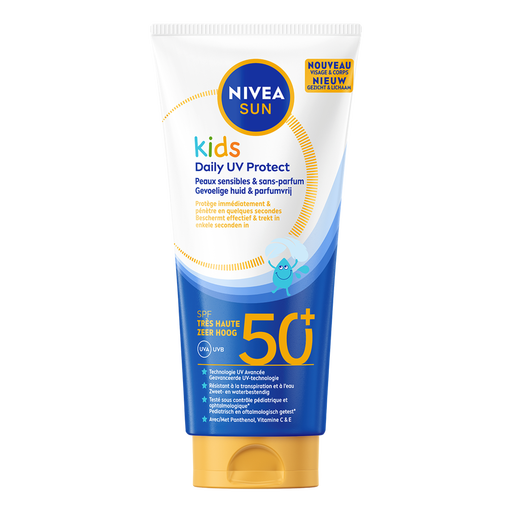
Why it suits this profile: The product information describes this children’s sunscreen as fragrance-free and suitable for the face and body, with a lightweight formula for everyday use.
The fragrance-free and sweat- and water-resistant claims make it suitable for active outdoor play. Always check the current ingredients list and test a new product on a small area of skin first.
SPF 50+, 100 ml, fragrance-free positioning according to the product description, and use on the face and body.
We have put together a complete, up-to-date list of products that fully meet these strict selection criteria and the applicable European safety regulations.
Yes, SPF 50+ can be used every day on the face and body. For the face, preferably choose a formula suited to your skin type, such as a mattifying sunscreen for oily skin or a hydrating sunscreen for dry skin. Apply enough product and reapply during prolonged exposure, sweating or swimming.
The shelf life is stated on the packaging, often using an open-jar symbol indicating how long the product lasts after opening. Store sunscreen in a cool place away from direct sunlight. A product that has been left in a hot car or beach bag for a long time may become less pleasant to use. Check the smell, colour and texture, but use the stated shelf-life information as your main guide.
SPF 50 facial sunscreen is usually developed with attention to texture, fragrance, compatibility with make-up and a matte or invisible finish. Body products are often available in larger packs and may feel richer. You can use a body product on your face if the packaging allows it and the formula feels comfortable, but a separate facial sunscreen is often more practical for everyday use.
