
Vandaag of morgen in huis

Kwaliteit gegarandeerd

Welkomstaanbiedingen ontgrendelen: GRATIS bezorging | Tot 80% korting | Gratis 30 dagen JoyPlus-proefperiode
Download de app
Buying sunscreen might seem straightforward, but the differences between products are noticeable in practice. A face sunscreen needs different properties to a body sun milk. And a sunscreen spray isn’t automatically more convenient if it means you miss patches of skin.
When you’re looking for SPF 50 sunscreen, you typically want a high SPF, UVA and UVB protection, and a formula that stays comfortable on the skin. Yet there are a few common pitfalls to watch out for.
SPF is mainly about protection against UVB rays. So always check whether the packaging also mentions UVA protection. Under European recommendations, UVA protection should be at least one third of the stated SPF. Where possible, look for the UVA symbol on the packaging.
A higher SPF doesn’t mean you can go all day without reapplying. Swimming, sweating, towel-drying and prolonged exposure all reduce the layer you’ve applied.
A sunscreen may have the right SPF on paper, but in practice it offers less protection if you don’t apply enough. For your face and neck, you need a generous, even layer. For your body, make sure you cover all exposed skin, including your ears, shoulders, neck and the tops of your feet.
A sunscreen spray might seem quick, but check that every area of skin is visibly damp and then rub the product in thoroughly. Don’t spray it directly onto your face.
Ingredients like vitamin C, niacinamide and hyaluronic acid can be a useful addition to a formula, but they don’t determine the UV protection on their own. First, look at the SPF, UVA indication, volume and usage instructions. According to NIVEA’s own research, certain formulas can provide up to 48 hours of hydration; this is a brand claim and not a guarantee for every user.
The choice depends on your situation, your skin and your exposure. SPF 15 and SPF 20 can be suitable for limited exposure, for example on a cloudy day or during your daily commute. For a long day outdoors, on holiday, at the beach, cycling or hiking, many people choose SPF 30 or SPF 50 sunscreen.
Bear in mind: SPF 50 is not a licence to use less product. Apply your sunscreen generously and reapply roughly every two hours, or sooner after swimming, sweating or towel-drying.
A daily-use sunscreen for your face needs to fit into your routine. A light texture, subtle fragrance and ingredients like glycerine or hyaluronic acid can be appealing if you have dry skin. If you wear make-up, you’ll probably pay extra attention to how quickly the cream absorbs.
For your body, a larger bottle is more practical. A sun milk of 200 ml is handy for several days outdoors. A smaller 50 or 100 ml bottle fits better in a bag or hand luggage, but can run out more quickly.
A water-resistant sunscreen is designed to stay on your skin better when it comes into contact with water, but no product stays put indefinitely. After swimming, exercise or towel-drying, you need to reapply. Always check the instructions on the packaging.
Also look at the ingredients list. Some formulas contain perfume or denatured alcohol. That doesn’t have to be a problem, but it can feel less pleasant for some people. Test a new product on a small area of skin first and avoid contact with your eyes.
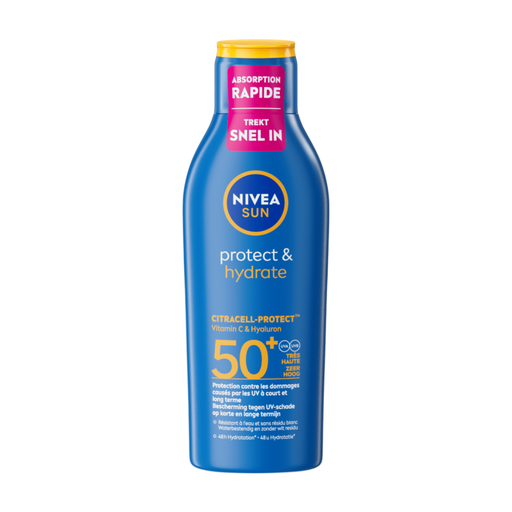
Why this fits the profile: The 200 ml size is suitable for use on the body and for households that spend regular time outdoors. According to the product information, the milk is designed for UVA/UVB protection and contains vitamin C and hyaluronic acid.
The SPF 50+ label makes the protection level clear, while the milk formula helps you cover larger areas of skin evenly. Reapplication is still necessary.
SPF 50+, 200 ml, milk texture, vitamin C and sodium hyaluronate according to the ingredients list.
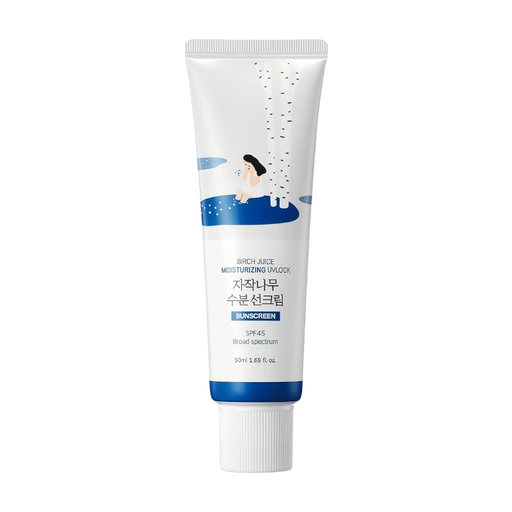
Why this fits the profile: The compact face-sized bottle is suitable for a daily skincare routine and for anyone looking for a light, hydrating sunscreen.
The product description mentions multiple UV filters and gives clear instructions for application and reapplication. Check the SPF and UVA indication on the current packaging.
50 ml, glycerine, sodium hyaluronate, hydrolysed hyaluronic acid and ascorbic acid according to the ingredients list.
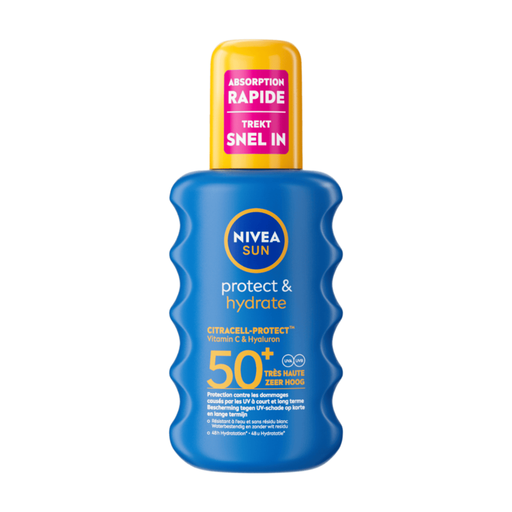
Why this fits the profile: The spray format is practical for outdoor sports, day trips and family use. The bottle contains 200 ml and the product information mentions a water-resistant formula.
The spray makes covering large areas easy, but still requires careful spreading and reapplication after water or towel-drying.
SPF 50+, spray format, 200 ml, vitamin C and sodium hyaluronate according to the ingredients list.
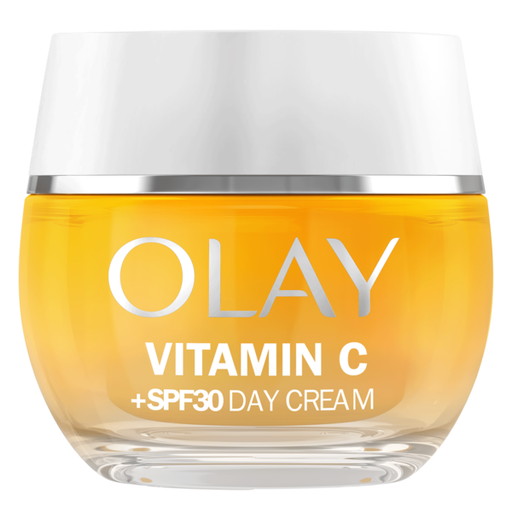
Why this fits the profile: This day cream is designed for the face and, according to the product information, combines SPF 30 with vitamin C, niacinamide and a light texture.
The SPF level is clearly stated. For intense sun or prolonged outdoor activities, a product with SPF 50 may be more suitable.
SPF 30, 50 ml, niacinamide, 3-O-ethyl ascorbic acid and glycerine according to the product information.
We’ve put together a full, up-to-date list of products that fully meet these strict selection criteria and comply with current European safety regulations.
Reapply after roughly two hours and always after swimming, exercise, sweating or towel-drying. Check the packaging for specific instructions. UV rays can still reach your skin even on cloudy days.
It can be, depending on the texture, fragrance and ingredients. Choose a formula that feels comfortable and doesn’t sting around your eyes. A separate face sunscreen can be more practical than a rich body milk. For prolonged time outdoors, regular reapplication is important.
Both offer protection against UVB rays at their stated protection level. Under test conditions, SPF 50 lets through less UVB than SPF 30, but the real-world difference depends heavily on how much product you use and how often you reapply. Choose SPF 50 for intense or prolonged exposure, and always also look for UVA protection.
