
Vandaag of morgen in huis

Kwaliteit gegarandeerd

Welkomstaanbiedingen ontgrendelen: GRATIS bezorging | Tot 80% korting | Gratis 30 dagen JoyPlus-proefperiode
Download de app
Buying a bottle of SPF 50 sunscreen for children may seem straightforward. Yet products vary considerably in size, application method, water resistance and ingredients. A high SPF alone does not determine whether a sunscreen will provide practical protection for children during a day at the beach, swimming or outdoor play.
As a Joybuy Product Recommendation Officer, I filter the most important product information according to verifiable criteria. This helps you avoid paying primarily for packaging, a familiar brand name or an appealing marketing claim.
SPF 50 or SPF 50+ indicates very high protection against UVB radiation under standardised test conditions. It does not mean that you can apply sunscreen once and leave a child protected for hours without doing anything else. Swimming, drying off, perspiration and friction remove some of the product.
Always check:
Water-resistant sunscreen for children may stay on the skin better during swimming than a standard formula. However, no product should be considered permanently waterproof. Product information from various brands states that reapplication is required after swimming, drying off or intensive perspiration.
Also pay attention to the difference between:
Children’s sunscreen spray can be quick and convenient when dealing with a constantly moving child, but never spray it directly onto the face. For example, the product information for NIVEA SUN Babies & Kids Sensitive Spray states that you should spray it into your hands first before applying it to the face.
Do not use too little spray either. A sunscreen milk or lotion often makes it easier to see which areas have already been covered. For sensitive skin, it is sensible to test a small amount on a limited area first. Stop using the product if redness, itching, a burning sensation or swelling occurs, and follow the safety information on the packaging.
For babies, toddlers and children, SPF 50 or SPF 50+ is generally the preferred choice, particularly in strong sunlight, on holiday, around water and during prolonged outdoor activities. Also check the UVA indication. A product that only states its SPF does not provide sufficient information about its overall UV protection.
Keep babies and young children out of direct sunlight. Also use clothing, a hat and shade for additional protection. Take extra care with babies under six months; follow the advice of a doctor or child-health professional as well as the instructions on the product packaging.
If you are looking for sunscreen for sensitive children’s skin, consider:
Claims such as “paediatrician-approved”, “suitable for eczema-prone skin” or “reduces the risk of sun allergy” come from the brand’s product information. According to the brand’s own research or assessment, these are not universal guarantees for every child. If your child has a known skin condition, consulting a healthcare professional is advisable.
A small 50 ml bottle fits easily into a handbag or backpack, but will run out more quickly with daily use. A 150 to 200 ml pack is more practical for several children, holidays or regular use on the body and face.
Where possible, choose:
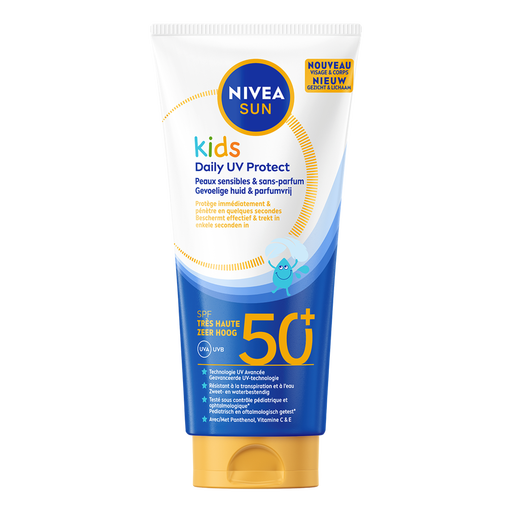
Why this profile is a good fit: A practical choice for everyday outdoor play, school days and short outings. The product description states that it can be used on the face and body.
The specifications state SPF50+, UVA/UVB protection and a fragrance-free formula. Check the current packaging for the complete claim and instructions for use.
100 ml, fast-absorbing texture according to the product description, with no fragrance listed.
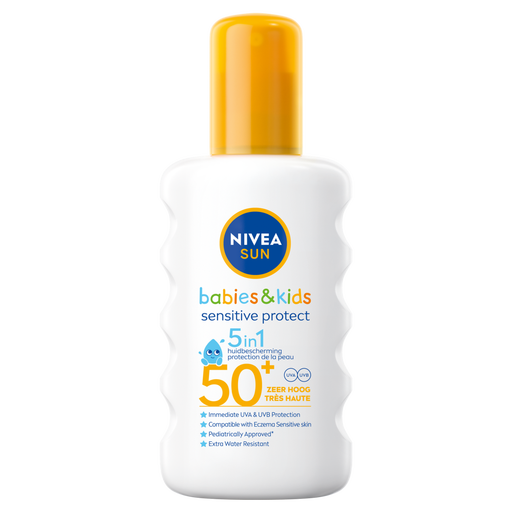
Why this profile is a good fit: Suitable for families looking for a larger pack and a spray format for repeated outdoor use. The product information states that it is suitable from 6 months of age.
The warning states that the product should not be sprayed directly onto the face. According to the brand description, the formula is fragrance-free and offers extra water resistance.
200 ml, SPF50+ and explicit UVA/UVB protection according to the product description.
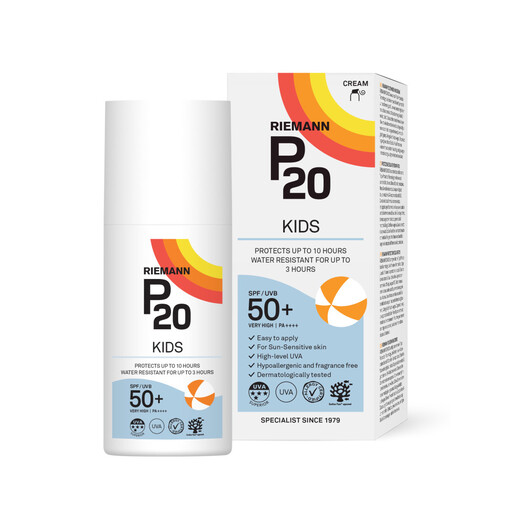
Why this profile is a good fit: An option for families looking for a large lotion pack for beach days, sports and frequent outdoor play.
The instructions recommend applying generously, paying extra attention to the ears, nose, shoulders, lower legs and feet, and reapplying whenever the product has been rubbed off.
200 ml, SPF50+ and instructions to apply before exposure and after swimming or drying off.
Browse a current selection of children’s sunscreen and compare SPF, size, texture and intended use before ordering.
Remember that children’s sunscreen is not intended to allow longer exposure to full sun. Stop using the product if irritation occurs. Product information and ingredients may change, so check the current packaging before use.
SPF 50 or SPF 50+ is a common choice for children because it provides very high protection. SPF does not replace shade, clothing or regular reapplication. Also check for UVA protection and the stated age range.
Not necessarily. Fragrance-free sunscreen for children may be preferable if you want to avoid fragrance, but individual skin reactions remain possible. Check the ingredients and, if in doubt, test a small amount first. If your child has a known skin condition, you can seek advice from a healthcare professional.
Check the expiry date or the period-after-opening symbol on the packaging. Store sunscreen in a cool place away from direct sunlight. A bottle that has visibly changed in smell, colour or texture should no longer be used, even if the date has not yet passed.
