
Vandaag of morgen in huis

Kwaliteit gegarandeerd

Welkomstaanbiedingen ontgrendelen: GRATIS bezorging | Tot 80% korting | Gratis 30 dagen JoyPlus-proefperiode
Download de app
The sunscreen aisle can be overwhelming. Dozens of bottles promise perfect protection, but in reality, you often end up with a product that feels sticky, leaves a white cast, or irritates your skin. Choosing the right SPF 50 sunscreen involves more than just looking at the factor.
As a Joybuy Product Recommendation Officer, I see the daily challenges consumers face. Much of this frustration can be avoided by recognising three common pitfalls before you make a purchase:
By critically examining these marketing claims, you can find a sunscreen that actually delivers on its promises.
A high SPF is a good start, but a few other specifications are just as important for effective protection. Pay attention to these for your next purchase.
The SPF 50 on the packaging refers to protection against UVB rays, the primary cause of sunburn. Equally important is protection against UVA rays, which penetrate deeper into the skin and contribute to skin ageing and other long-term damage. A good sunscreen offers "broad-spectrum" protection. Look for the UVA logo (the letters 'UVA' in a circle) on the packaging. This guarantees that the UVA protection is at least one-third of the stated SPF, in line with EU recommendations.
The texture of a sunscreen determines its ease of use and comfort.
Based on product specifications that meet various needs, we have selected several options that help avoid the pitfalls mentioned earlier.
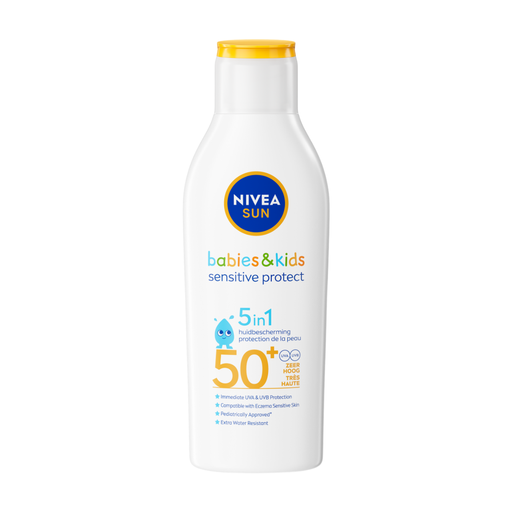
Why This Fits Their Persona: This sun milk is specially formulated for the delicate skin of babies (from 6 months) and children. The formula is practical for a day out, as it keeps the skin soft while providing high protection.
Tackles the "sensitive skin" pitfall. The formula is fragrance-free, contains no dyes, and according to NIVEA, is suitable for eczema-prone skin. Its skin-friendliness is approved by paediatricians.
The formula is extra water-resistant, which is convenient for active children. It contains organic chamomile to soothe the skin.
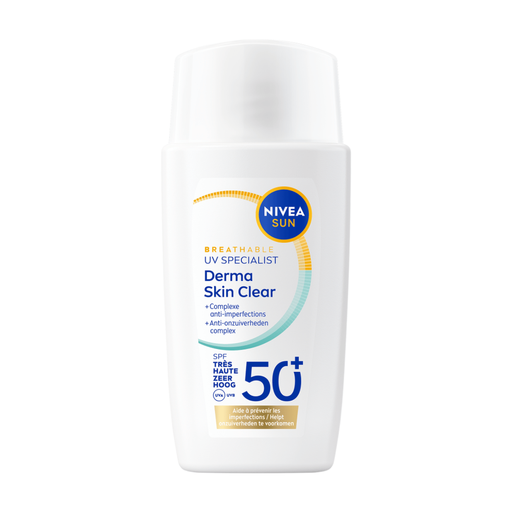
Why This Fits Their Persona: Ideal for those who want to use a daily facial sunscreen without getting a shiny forehead. The lightweight fluid is designed for oily and blemish-prone skin and can be used as a base under makeup.
Counters the "shiny finish" pitfall. According to NIVEA, the formula absorbs excess sebum and provides an 8-hour mattifying effect, preventing the skin from looking shiny.
The formula is non-comedogenic (does not clog pores) and contains Niacinamide, an ingredient known for its beneficial properties for blemish-prone skin.
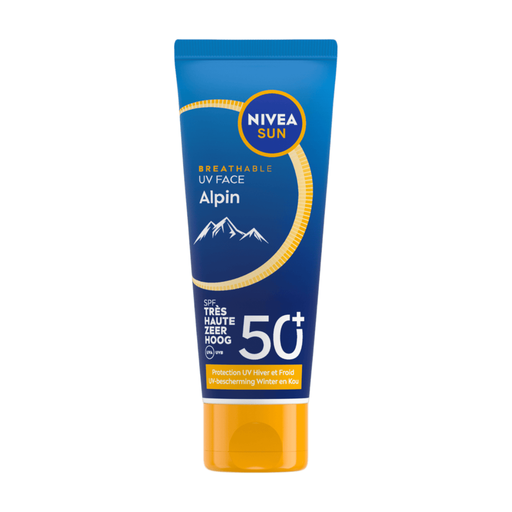
Why This Fits Their Persona: This sunscreen is specifically designed for the unique challenges of the mountains: intense sun, reflection from snow, and biting cold. Perfect for the skier or hiker who needs reliable protection in extreme conditions.
Goes beyond the standard "waterproof" claim. The formula is developed for cold and winter conditions and protects not only against UV but also against dehydration from the cold.
Provides 24-hour hydration thanks to glycerine and shea butter, according to NIVEA. The lightweight formula leaves no white cast, which is pleasant in bright sun.
We have compiled a complete, up-to-date list of products that fully meet these strict selection criteria and UK/EU regulations.
The general rule is to reapply every two hours. Also, reapply immediately after swimming, heavy sweating, or towelling off, even if you are using a waterproof sunscreen. Be generous: most people use too little, which means they don't achieve the promised SPF.
For a typical office day or brief periods outdoors, a day cream with SPF 50 may be sufficient. However, be sure to apply it generously. If you plan to be in the sun for an extended period, such as during a lunch walk, on a terrace, or at the beach, a dedicated facial sunscreen offers better and often more water-resistant protection.
Chemical filters (like octocrylene or avobenzone) absorb into the skin and convert UV radiation into heat. Mineral filters (zinc oxide and titanium dioxide) form a layer on the skin that reflects UV radiation. Products with mineral filters are often recommended for very sensitive skin or for baby sunscreen, as they generally have a lower risk of irritation. Many modern formulas, such as those from NIVEA sunscreen, combine both types of filters for broad and comfortable protection.
