
Vandaag of morgen in huis

Kwaliteit gegarandeerd

Welkomstaanbiedingen ontgrendelen: GRATIS bezorging | Tot 80% korting | Gratis 30 dagen JoyPlus-proefperiode
Download de app
SPF 50 sun cream may seem simple to choose at first glance. However, sun creams vary considerably in texture, application, water resistance and ingredients. A product that feels comfortable on the body may be too heavy for the face, for example. Likewise, a lightweight facial sun cream may be less suitable for a long day at the beach or intensive exercise.
As a Joybuy Product Recommendation Officer, I filter the most important product information down to practical points. This helps you see which features matter and which marketing claims should be viewed with a degree of caution.
SPF mainly indicates protection against UVB radiation, the type of radiation that causes redness and sunburn. So also check whether the packaging states UVA protection. Look for a clear reference to UVA and UVB, such as the UVA symbol or a rating such as PA++++ on some Korean sun creams.
A high SPF does not mean that you can stay in the sun indefinitely. Avoid strong sunlight where possible, wear protective clothing and keep children out of direct sunlight.
A thin layer of SPF 50 sun cream does not provide the same protection as the amount on which the SPF rating is based. The product information for several of the products mentioned recommends approximately 35 ml for an adult body per application. For the face, a generous amount for the face and neck is a practical guideline, often measured as two finger lengths.
Apply SPF 50+ sun cream approximately 15 to 20 minutes before exposure. Reapply regularly, particularly after swimming, drying yourself or sweating.
Water-resistant sun cream is useful when swimming and exercising, but protection decreases because of water, towels and sweat. “Very water resistant” is a product feature under specific test conditions, not a guarantee that it will last all day. NIVEA describes the Protect & Hydrate Ultra SPF 50+, for example, as sweat-resistant and water-resistant for longer than a conventional water-resistant product. This information is based on NIVEA’s product communication; reapplication is still necessary.
Choose a product that clearly mentions both types of radiation. SPF 50 or SPF 50+ is primarily relevant to UVB. Broad-spectrum protection is important for daily sun protection on the face and neck, especially if you spend a lot of time outdoors.
Also note the difference between a product for the face and a formula for the face and body. SPF 50 facial sun cream is often lighter, less greasy or suitable for use under make-up. This makes reapplication easier in practice.
For sensitive skin, fragrance, alcohol denat. or certain preservatives may feel less comfortable. So check the ingredients list and test a new product on a small area of skin first. A fragrance-free option, such as the iUNIK Centella Calming Vegan Moisture SPF 50+ PA++++, may be worth considering if you want to avoid fragrances. The product description states that this formula is fragrance-free.
For oily skin, terms such as mattifying sun cream, dry-touch, oil control and non-comedogenic are relevant. These describe product features, but they do not mean that every skin type will respond in the same way. Dry skin may benefit more from glycerine, panthenol or moisturising ingredients.
A 40 or 50 ml pack fits easily in a bag and is practical for the face. For arms, legs and shoulders, a 90, 150 or 180 ml pack is more efficient. Consider your daily routine: a small SPF 50 facial sun cream for taking with you and a larger SPF 50 sun cream for the body may make more sense than one universal product.
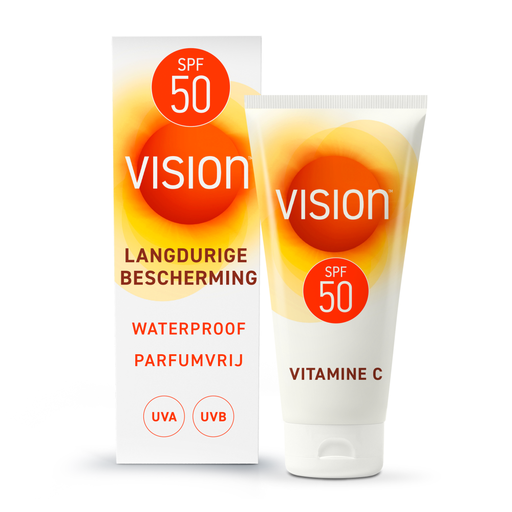
Why it suits this profile: A generous size for daily use on the body and, according to the product information, suitable for babies, children and adults.
The packaging contains clear instructions to apply generously and reapply after swimming, drying yourself or sweating.
SPF 50, stated UVA and UVB protection, and a 180 ml size.
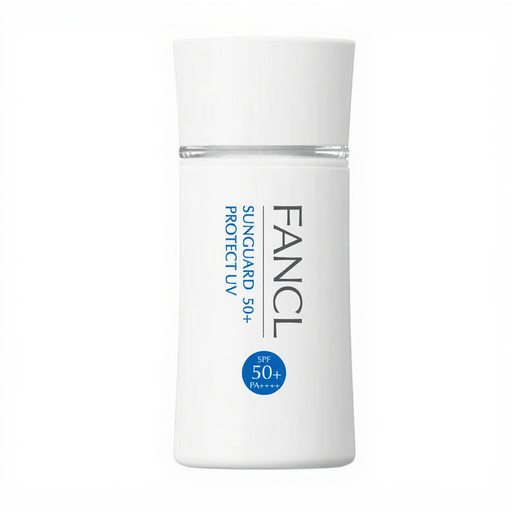
Why it suits this profile: For users who, alongside SPF 50+, specifically look for a PA++++ rating in their daily facial skincare.
Mentioning both SPF 50+ and PA++++ prevents you from selecting a product based on just one protection rating.
SPF 50+, PA++++ and a compact 60 ml size, according to the product details.
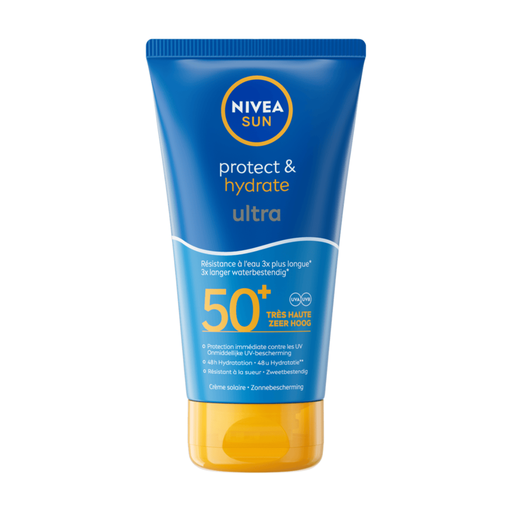
Why it suits this profile: Designed for beach days, exercise and other situations involving heavy sweating or contact with water.
The product description mentions sweat resistance and water resistance lasting three times longer. This does not replace reapplication after swimming or drying yourself.
SPF 50+, stated UVA/UVB protection, 150 ml and a water-resistant formula according to NIVEA.
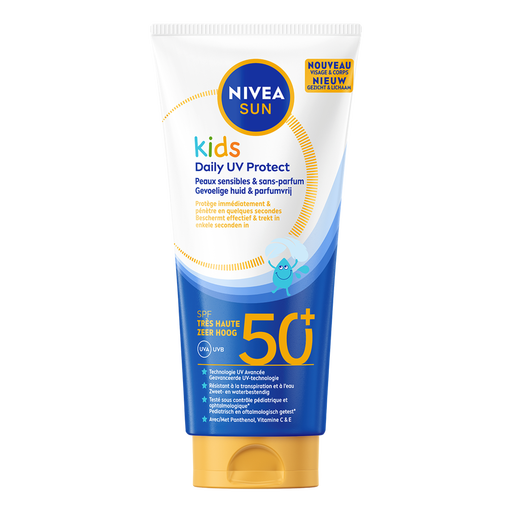
Why it suits this profile: The product description mentions a fragrance-free formula for sensitive children’s skin, suitable for the face and body.
The description mentions extra water and sweat resistance, but reapplication is still necessary after swimming or drying yourself.
SPF 50+, fragrance-free, 100 ml and designed for children’s sensitive skin, according to the product information.
We have put together a complete, up-to-date list of products that fully meet these strict selection criteria and the applicable European safety regulations.
Do not use SPF 50 sun cream only on sunny holidays. UV radiation also reaches your skin while cycling, walking, gardening or sitting on a terrace. For the face, lightweight formulas such as mattifying sun cream or Korean sun cream are often more comfortable when you want to use the product daily and under make-up.
If you have dry skin, look for moisturising ingredients. If you are looking for sun cream for pigmentation or anti-ageing sun cream, it is important to remember that these additional claims do not replace UV protection. According to NIVEA’s own research, some LUMINOUS630 and Q10 products mention results relating to pigmentation or wrinkles. Treat this as brand information and check the full product packaging for the exact conditions.
Store sun cream somewhere cool and out of direct sunlight. Check the expiry date and do not use a product if its scent, colour or texture has clearly changed.
Yes, SPF 50 can be used daily on exposed skin. For the face, preferably choose a formula that suits your skin type and that you find comfortable enough to reapply generously.
Reapply after swimming, drying yourself and heavy sweating. During prolonged exposure, reapplying approximately every two hours is a practical guideline, alongside seeking shade and wearing protective clothing.
Sun cream for the body is often sold in larger packs and may feel richer. SPF 50 facial sun cream is usually developed with texture, make-up, shine or sensitive facial skin in mind. Always check the specific product description and ingredients list.
