
Vandaag of morgen in huis

Kwaliteit gegarandeerd

Welkomstaanbiedingen ontgrendelen: GRATIS bezorging | Tot 80% korting | Gratis 30 dagen JoyPlus-proefperiode
Download de app
An SPF 50 facial sunscreen should feel comfortable enough to use every morning. Yet many creams end up unused in a drawer. The texture feels sticky, make-up pills or the skin reacts to fragrance and alcohol. What’s more, a high SPF on the packaging does not tell you everything about comfort, UVA protection or water resistance.
With this practical guide, you can focus on the points that really make a difference in the Netherlands: protection, skin type, ingredients, texture and intended use.
SPF mainly refers to protection against UVB rays, which are responsible for redness and sunburn, among other things. UVA protection is also important for everyday protection. UVA rays penetrate deeper and are present all year round, even when it is cloudy.
So check whether the product information mentions both UVA and UVB protection. In Korean skincare, you will also often see a PA rating, such as PA+++ or PA++++. European products usually use the UVA logo in a circle. Always check the packaging and the current product information, as markings can vary between markets.
A lightweight sunscreen can feel comfortable on oily or combination skin, but dry skin may need extra hydration. Conversely, a richer formula can feel heavy on shiny skin.
Pay attention to the formula:
Ingredients are not a guarantee of how your skin will react. Stop using the product if you experience redness, swelling, itching or irritation, and seek advice from a dermatologist if necessary.
A water-resistant sunscreen generally stays in place better when swimming or sweating, but protection still decreases due to towel-drying, friction and prolonged exposure. A product that is not water-resistant is not automatically unsuitable for everyday commuting; it is simply less suited to the beach, sport or swimming.
For many everyday situations, consumers choose SPF 50 sunscreen because of its high UVB protection. SPF 50+ indicates an even higher category within the SPF classification, but how well it works in practice depends greatly on how much you apply and how often you reapply.
Use a generous amount for your face and neck. A practical guideline is approximately two finger-lengths for your face and neck together. Apply sunscreen as the final step in your morning routine, preferably 15 to 30 minutes before exposure if this is stated on the label.
A sunscreen without a white cast is usually easier to use every day, especially under make-up. Chemical UV filters often absorb more transparently, while mineral sunscreen containing zinc oxide can be more visible. The final finish also depends on your skin tone, the amount applied and how evenly you spread the product.
Test a new sunscreen on a small area of skin first. Also watch out for pilling: allow serums and moisturisers to absorb fully before applying SPF.
A moisturising sunscreen can partly replace a separate day cream, but this varies according to skin type and season. Check the ingredients list if you are specifically looking for a sunscreen for sensitive skin. Fragrance-free generally means that no perfume has been added, but it does not rule out a reaction to other ingredients.
For example, the product description for NIVEA SUN UV Face Anti-Age Q10 SPF50 lists alcohol denat. and fragrance. This may be a reason for some users to test it first. By contrast, the product description for Beauty of Joseon Relief Sun: Rice + Probiotics lists a fragrance-free formula.

Why it suits this profile: According to the product description, this cream is designed for daily use and offers SPF50+ PA+++, a lightweight texture and a 50 ml capacity. This makes it a straightforward choice if you want to try Korean facial sunscreen.
The product information states that it does not feel sticky and does not leave a white cast. However, check the packaging when you receive it and test how it works with your skincare products.
SPF50+ PA+++, 50 ml, fragrance-free according to the product details, with ingredients including rice extract, glycerine and niacinamide.
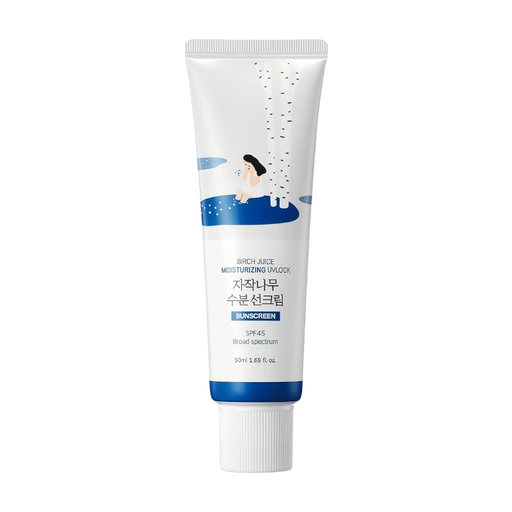
Why it suits this profile: If you are looking for a facial sunscreen that works well for dehydrated skin, this formula contains glycerine, sodium hyaluronate and hydrolysed hyaluronic acid.
The ingredients list includes several hydrating components, so you may not automatically need to layer it with a separate rich cream.
50 ml, chemical UV filters according to the product information, and a formula containing glycerine, hyaluronic acid and niacinamide.

Why it suits this profile: The compact 12 ml pack is convenient for taking with you. According to the product description, the milk has a lightweight texture and is water-resistant, making it suitable for outdoor activities.
The small size makes reapplying on the go easier. Even with a water-resistant formula, you still need to reapply after swimming or drying yourself.
SPF50+, 12 ml and a water-resistant milk texture according to the product description.
We have put together a complete, up-to-date list of products that fully meet these strict selection criteria and the applicable European safety regulations.
For children, a compact product such as NIVEA SUN Kids Protect & Hydrate To Go Pocket Size SPF 50+ is practical for taking on the go. The product description states that it has an extra water-resistant formula and a capacity of 50 ml. Use a children’s product according to the label and keep young children out of direct sunlight as much as possible.
Yes, SPF 50 can be used every day as long as the formula feels comfortable on your skin. Also choose a product with stated UVA protection and apply enough. Applying too little significantly reduces the level of protection.
Follow the expiry information on the packaging and look for the PAO symbol, such as an open jar showing a number of months. Store sunscreen somewhere cool and out of direct sunlight. Has the smell, colour or texture changed? Do not use the product.
Yes, but allow serums and moisturiser to absorb first. Choose a lightweight sunscreen without a sticky finish and apply make-up by patting it on. You can reapply over make-up with a suitable SPF mist, or carefully remove your make-up and apply the sunscreen again; always check that the product in question actually provides sufficient sun protection.
