
当日/次日达

品质保障

开启新人专享福利: 全场免邮 | 低至 2 折 | 免费试用 30 天 JoyPlus 会员
下载 Joybuy
SPF 50 facial sun cream needs to offer more than a high protection factor. Its texture, ingredients, tint and application method all affect whether you will use it every day. Sun cream that feels sticky, pills under make-up or leaves a white cast often ends up unused in the cupboard.
As a Joybuy Product Recommendation Officer, I filter product information for practical details. Below, you will find what to look for in facial sun cream, which marketing claims to assess critically and which type suits your skin and lifestyle.
SPF mainly indicates protection against UVB rays. For daily facial care with SPF, UVA protection is also important. Check whether the product explicitly states that it provides UVA and UVB protection. A product with SPF 50 but no clear information about UVA protection gives you less useful information for comparison than one that mentions both types of protection.
Facial sun cream should work comfortably with your skincare and, if applicable, make-up. Body products are often richer or oilier, which can feel uncomfortable on oily or combination skin. A facial fluid, mist or mattifying sun cream is usually more practical for everyday use.
Tinted sun cream can visually soften redness or make your complexion look more even, but it does not automatically replace foundation. You should also check whether the shade suits your skin. A formula that is too light or too pink may be noticeable along the jawline. If several shades are available, compare the product information and colour variant carefully.
SPF 50 is suitable for consumers looking for a high level of protection for everyday use, such as when cycling, walking or commuting. SPF 50+ is also available in the range. As well as the protection factor, look for statements such as UVA/UVB, PA++++ or a UVA symbol on the packaging.
No sun cream provides unlimited protection. Apply the product generously before exposure and reapply after swimming, sweating or towelling dry. For prolonged exposure, it is important to reapply as directed.
Choose according to your routine:
Be mindful of alcohol, perfume and fragrances if your skin reacts sensitively to them. The ingredients list is more reliable here than general terms such as “mild” or “fresh”.
If you have sensitive skin, it is sensible to check the full ingredients list and test the product on a small area of skin first. “Dermatologically tested”, “non-comedogenic” and “suitable for all skin types” are product claims; individual tolerance may vary.
If you use sun cream under make-up, pay particular attention to how quickly it absorbs, whether it pills and how much shine it leaves. Apply your usual skincare first, allow it to absorb briefly, then spread the sun cream evenly over your face and neck.
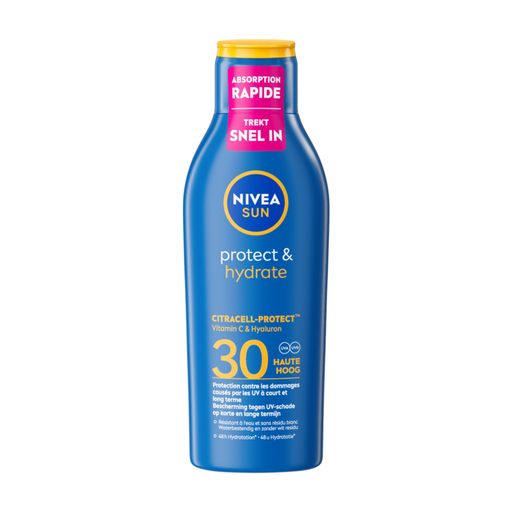
Why it suits this profile: The larger bottle and lightweight lotion texture make this an easy choice for anyone wanting to try daily sun protection. Please note: this is SPF 30, not SPF 50.
The product description mentions UVA/UVB protection and a formula that leaves no white residue. Always check the label, however, and choose SPF 50 if that is an essential requirement for you.
200 ml, a moisturising formulation and, according to NIVEA’s own research, a moisturising effect lasting up to 48 hours. The product is water-resistant according to the product description.
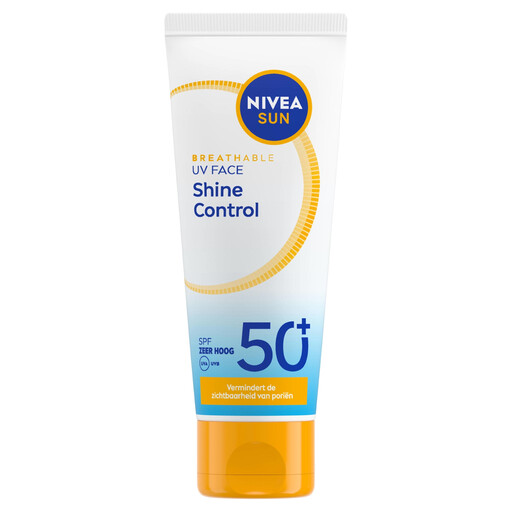
Why it suits this profile: This facial SPF 50 is designed to leave a lightweight, mattifying finish and, according to the product information, can be used as a base under make-up.
The product information describes a non-greasy, fast-absorbing and non-comedogenic formula. If you have sensitive skin, it is still important to consider perfume and alcohol in the ingredients list.
SPF 50, PA++++ according to the product description, oil control and an invisible finish. The pack contains 40 ml.
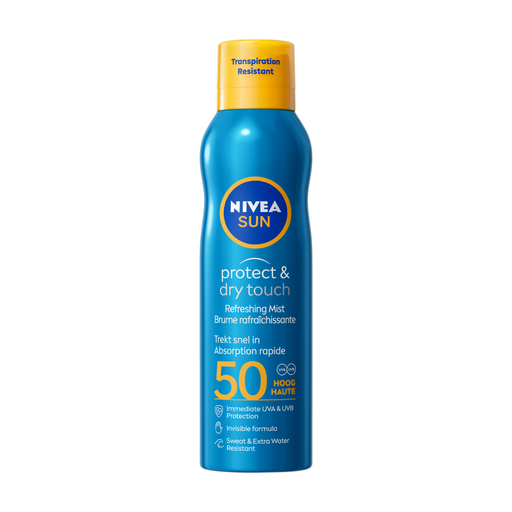
Why it suits this profile: The mist is designed for an active lifestyle, such as exercising or spending a day outdoors. The spray format is convenient for quick application, provided you apply it evenly.
The product description states that the mist absorbs quickly and leaves no white marks. Do not spray directly onto your face; follow the instructions on the packaging.
SPF 50, UVA/UVB protection, 200 ml and, according to the product information, water- and sweat-resistant. The formula contains alcohol denat. and perfume.
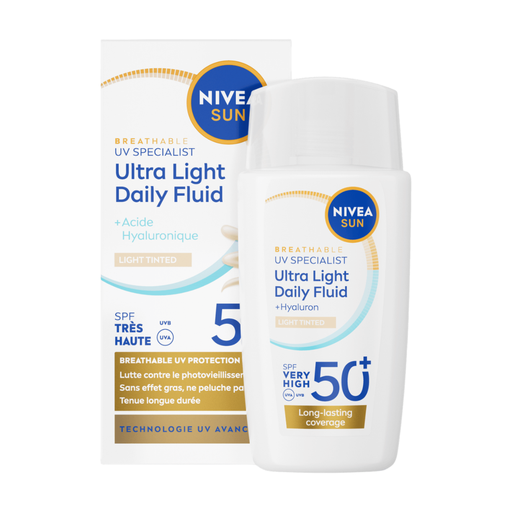
Why it suits this profile: The lightweight tint and fluid texture are designed to create a more even-looking complexion without a heavy layer. A medium shade variant is also available.
The product description mentions a non-greasy, non-sticky formula that absorbs quickly. Test the shade in daylight to minimise any colour difference between your face and neck.
SPF 50+, UVA/UVB protection, 40 ml and lightly tinted pigments. According to the product information, the formula is suitable for everyday use and under make-up.
We have put together a complete, up-to-date list of products that fully meet these strict selection criteria and the applicable European safety regulations.
Check the expiry date, batch information and full instructions for use on the packaging every time you buy the product. Do not store sun cream in direct sunlight or high temperatures for prolonged periods.
That depends on your exposure, skin type and personal preference. If you spend a lot of time outdoors, have fair skin or prefer to use a high protection factor every day, you may choose SPF 50 sun cream. Also check that UVA and UVB protection are stated.
Yes. Choose a fast-absorbing fluid or a formula explicitly designed to be used as a make-up base. A mattifying sun cream can help reduce shine, while a tinted version can make your complexion look more even. Allow the product to absorb fully first, then apply make-up without rubbing vigorously.
Check the expiry date or the period-after-opening symbol on the packaging. Store the product in a cool place away from direct sunlight. If the smell, colour or texture changes, check the packaging and do not use the product if it no longer seems reliable.
