
Vandaag of morgen in huis

Kwaliteit gegarandeerd

Welkomstaanbiedingen ontgrendelen: GRATIS bezorging | Tot 80% korting | Gratis 30 dagen JoyPlus-proefperiode
Download de app
Buying SPF 50 facial sun cream sounds simple, until you find a formula that stings your eyes, pills under make-up or leaves a white cast. A high protection factor does not tell you everything about how easy a product is to use. The texture, ingredients, tint and instructions on the packaging all determine whether you will keep using your facial sun cream every day.
This guide will help you compare facial products based on verifiable product information. That way, you can avoid paying extra for a marketing claim that does not suit your skin or daily routine.
SPF mainly refers to protection against UVB radiation, which can cause redness and sunburn, among other things. UVA protection is also important for daily facial care. UVA rays penetrate deeper into the skin and are associated with premature skin ageing and pigmentation changes. Look for clear information about UVA and UVB protection, such as a UVA logo or a stated PA rating.
An SPF 50 product is not a licence to stay in the sun for longer, either. The level of protection depends on how much you apply, how evenly you spread it and whether you reapply.
A body cream may technically be suitable for use on several parts of the body, but it will not always feel comfortable on your face. A formula may be heavier, more strongly fragranced or more likely to leave your skin looking shiny. If you are looking for non-greasy sun cream, it is worth checking the product type and intended use.
For example, NIVEA SUN Protect & Hydrate Invisible Finish SPF 50+ is described as a water-resistant cream with a dry-touch texture, quick absorption and a finish without white residue. View the NIVEA SUN Protect & Hydrate product details for the current packaging, contents and ingredients.
Terms such as “anti-ageing”, “reduces pigmentation” or “soothing” should be considered in the context of the full product description. According to NIVEA’s own research, the UV Face Anti-Age Q10 formula can affect the appearance of wrinkles and skin firmness; this is a brand claim, not a guarantee for every user. Also check whether a product contains perfume, alcohol or essential oils if your skin tends to react to them.
For adults who want to protect their face every day, SPF 50 or SPF 50+ is a practical choice when spending a lot of time outdoors. Also look out for:
Water-resistant does not mean that you can leave the product on indefinitely. Reapplication is still necessary, particularly during prolonged exposure.
An everyday facial sunscreen should fit into your routine. Dry or tight-feeling skin may benefit from glycerine, hyaluronic acid or a moisturising cream base. For oily or combination skin, terms such as mattifying sun cream, dry-touch, silica or starch can be relevant to how the product feels on the skin.
If you want to avoid a white cast, look for a product with an “invisible finish”, a light tint or an explicit “no white cast” claim. Tinted sun cream can visually even out differences in skin tone, but the tint is not a substitute for a foundation match. Apply enough product; a thin layer may look better, but it can reduce the actual level of protection.
Read the ingredients list and warnings. Perfume, alcohol denat. and fragrances such as linalool may be less suitable for some users. That does not automatically mean that a formula is unsuitable for everyone. If in doubt, first test a small amount on a limited area of skin and stop using it if irritation occurs.
For sun cream for sensitive skin, fragrance-free options are worth considering, but individual tolerance remains important. Always check the current packaging, as formulations may change.
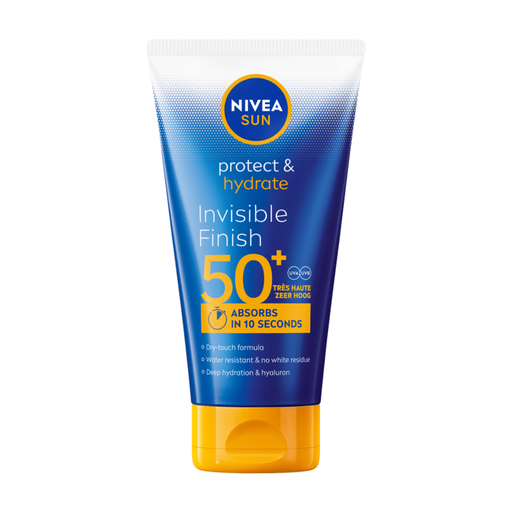
Why it suits this profile: A straightforward SPF 50+ option for anyone looking for protection and hydration in one product, without a noticeable white finish.
The product description mentions a dry-touch formula, absorption in around 10 seconds and no white residue. Check the ingredients if you are sensitive to perfume or alcohol.
SPF 50+, water-resistant formula, 150 ml capacity and, according to the description, at least 50% recycled plastic in the bottle and cap.
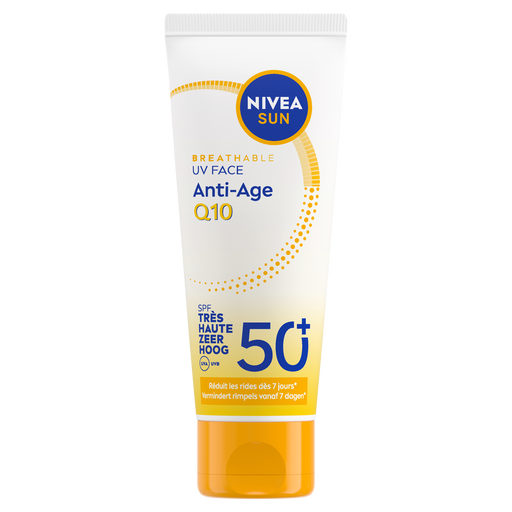
Why it suits this profile: Suitable for users who want to combine daily SPF with caring ingredients such as Q10 and collagen peptides.
According to the product information, the formula is lightweight, non-comedogenic and suitable for use under make-up. The stated anti-ageing results are claims made by NIVEA and are not guaranteed outcomes.
SPF 50+, PA++++, lightweight finish and Q10 in the ingredients list. The product description also states that it has dermatological approval.
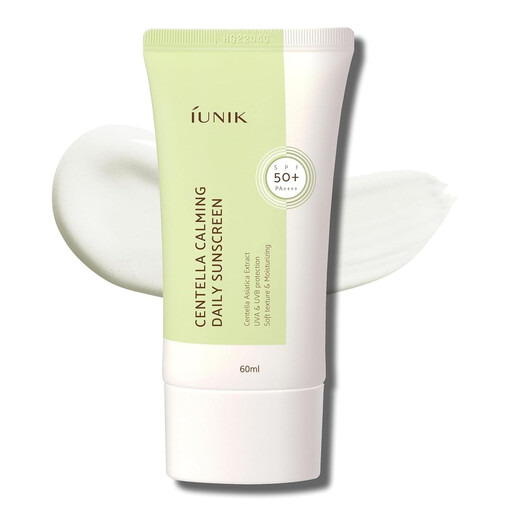
Why it suits this profile: An option for anyone looking for a fragrance-free, lightweight everyday sun cream that, according to the product description, is suitable for all skin types.
The description states that it is fragrance-free, has a non-sticky texture and leaves no white cast. Reapply after swimming or sweating, as stated on the product page.
SPF 50+, PA++++, UVA and UVB protection, fragrance-free formula and 60 ml capacity.
We have put together a complete, up-to-date list of products that fully meet these strict selection criteria and the applicable European safety regulations.
An SPF 50 product does not have an unlimited shelf life. Check the expiry date, the PAO symbol and the storage advice. Do not store sun cream in direct sunlight or high temperatures for prolonged periods. Has the smell, colour or texture changed? Check the packaging before using it again.
That depends on your exposure, skin type and daily activities. If you spend a lot of time outdoors, cycle, walk or have sensitive skin, SPF 50 may be a suitable choice. UV radiation can also be present on cloudy days. As well as SPF, pay attention to UVA protection and apply enough product.
Yes, many lightweight fluids and mattifying formulas have been developed for this purpose. First apply enough facial sun cream and give it a short while to settle. Tinted sun cream can even out your complexion, but check that the shade suits your skin. If the product pills or flakes, it can sometimes help to use fewer different layers of skincare.
During prolonged exposure, reapplication is generally necessary, particularly after swimming, sweating or drying yourself. Follow the manufacturer’s instructions. A higher SPF does not make reapplication unnecessary. Where possible, also use clothing, a hat or shade as additional protection.
