
Vandaag of morgen in huis

Kwaliteit gegarandeerd

Welkomstaanbiedingen ontgrendelen: GRATIS bezorging | Tot 80% korting | Gratis 30 dagen JoyPlus-proefperiode
Download de app
SPF 50 face sunscreen should feel comfortable enough for everyday use. Yet many people buy a product that ends up forgotten in the cupboard after a few weeks. The texture feels too greasy, make-up starts to pill or the skin is left with a white cast. Marketing claims about “anti-ageing”, oil control or long-lasting protection can also be easy to misinterpret.
This guide will help you choose sunscreen for your face based on verifiable product information. That way, you can find an SPF 50 that suits oily, combination, dry or sensitive skin.
SPF mainly indicates protection against UVB rays, which can cause redness and sunburn, among other things. UVA protection also matters for everyday sun protection. UVA rays are often linked to premature skin ageing and changes in pigmentation, but sunscreen cannot guarantee that these effects will be prevented.
So check whether the packaging or product description also mentions UVA and UVB protection. Korean sunscreens often show PA++++ as an additional indication of UVA protection. This is not the same as SPF, but it provides extra information.
A rich sunscreen can feel comfortable on dry skin, but heavy on oily or combination skin. Conversely, a formula with a high alcohol content and a matte finish may feel less comfortable if your skin tends to feel tight.
Look out for terms such as:
If you have sensitive skin, always check the latest ingredients list. Formulas can change, and a product described as suitable for “all skin types” may not feel equally comfortable for everyone.
The high SPF stated on the packaging only provides the indicated level of protection if you use enough product. A thin layer of sunscreen under make-up is usually not enough. Apply sunscreen as the last step in your morning routine, and remember your ears, neck and hairline.
If you are spending a long time outdoors, sweating, swimming or drying yourself off, reapply. An everyday SPF 50 face sunscreen routine does not mean applying it once and then leaving it untouched for the rest of the day.
SPF 50 or SPF 50+ represents a very high UVB protection category under the European classification. It is not a licence to stay in the sun for longer. Also look for a clear indication of UVA protection. Some Korean products show PA++++; on European products, you can look for the UVA symbol on the packaging, among other things.
Claims such as “blue light protection” or “anti-photoageing” should be understood as brand communications. According to NIVEA’s product description, for example, its Ultra Light Daily Fluid is intended to protect against UVA/UVB rays and blue light. This is a brand claim, not a general guarantee for every use.
For sunscreen under make-up, quick absorption, minimal stickiness and an even finish are important. A watery gel or fluid can be easier to apply in layers than a thick cream. Also consider the tint:
A lightweight everyday formula is often practical for cycling to work. For the beach, water sports or intense exercise, choose a product that clearly states on the packaging that it is water- and sweat-resistant. According to its product description, iUNIK Centella Calming Daily Sun Water is not labelled as water-resistant. So do not rely on this type of product as your only option for swimming or prolonged physical activity.
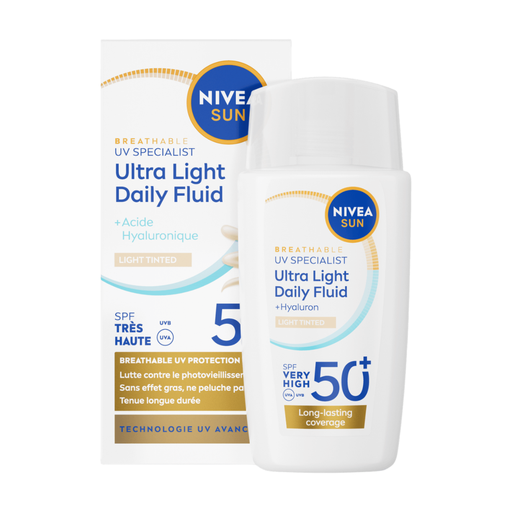
Why it suits this profile: The 40 ml bottle is designed for everyday use and, according to the product description, has a lightweight, non-greasy texture with a subtle tint.
The description mentions quick absorption and no sticky residue. However, check that the light tint suits your skin tone.
SPF 50+, UVA/UVB protection according to the product information, glycerine and hyaluronic acid in the ingredients list, tinted finish.
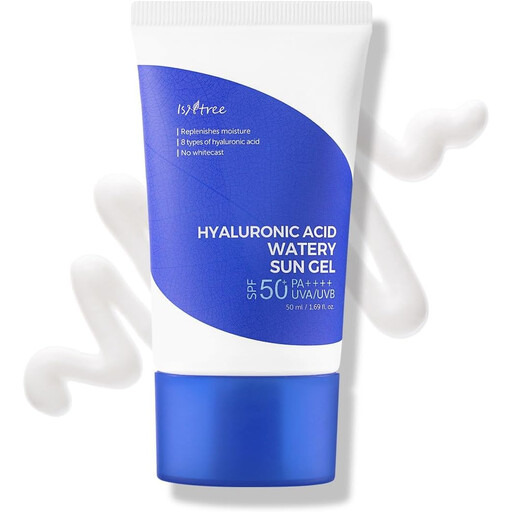
Why it suits this profile: According to the product description, this Korean sunscreen combines SPF 50+ PA++++ with a lightweight gel texture and eight types of hyaluronic acid.
The gel texture is designed to absorb quickly without feeling greasy or sticky. If you have sensitive skin, test a small amount first.
SPF 50+ PA++++, described as alcohol- and fragrance-free, and suitable for use under make-up.
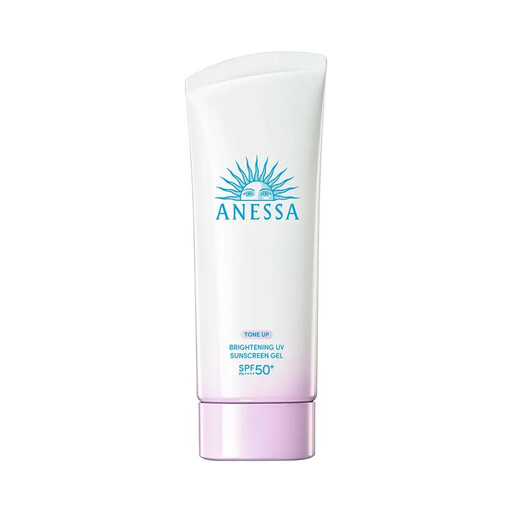
Why it suits this profile: According to the product description, this gel is designed for use around water and when sweating, and can also be used as a make-up primer.
The product information states that it resists water, sweat and friction. Reapply after swimming, drying yourself off or sweating for a prolonged period.
SPF 50+ PA++++, gel texture, lightly colour-correcting lavender-pink tint and, according to the product description, suitable for use as a primer.
We’ve put together a complete, up-to-date list of products that meet these strict selection criteria and current European safety regulations.
Apply a generous amount to your face and neck. A practical guide is around two finger lengths of product, depending on the instructions on the packaging. Applying too little reduces the protection you get in practice.
Yes. Ideally, choose a lightweight fluid, gel or lotion that absorbs quickly. Give your sunscreen under make-up a moment to set before applying foundation. A product described as suitable for layering, such as some NIVEA and Korean formulas, can be a practical choice. Apply carefully to help prevent rolling or pilling.
If you work in an office every day, reapplication is particularly important when you spend longer periods outdoors. In direct sunlight, or when sweating, swimming or drying yourself off, you’ll need to reapply more often. Always check the instructions for the product you choose. An SPF 50 formula will not stay unchanged for the entire day.
