
Livraison le jour même et le lendemain

Qualité garantie

Débloquez vos offres de bienvenue: Livraison GRATUITE | Jusqu'à -80 % | 30 jours d'essai gratuits à JoyPlus
Téléchargez l'application
A good SPF 50 sun cream for the face needs more than a high protection factor. The texture, ingredients, UVA rating and how easy it is to reapply all have just as much influence on whether you will continue using the product every day. A cream that feels too greasy, pills under make-up or leaves a visible white cast often ends up unused at the back of the bathroom cabinet.
As a Joybuy Product Recommendation Officer, I filter product information for practical details. Below, you’ll find what to look for in facial sun cream and which options suit different skin types and situations.
SPF mainly refers to protection against UVB radiation, the type of radiation that can cause redness and sunburn. For daily protection against both UVB and UVA radiation, you should also look for a clear UVA rating. With Korean sun cream, you will often see PA+++ or PA++++. A PA++++ rating is a verifiable product indication of a high UVA protection category within the assessment system used.
In Europe, you can also look for the UVA logo inside a circle on the packaging. Always check the current product packaging and the manufacturer’s information.
A non-greasy sun cream can feel comfortable on oily or combination skin, while dry skin may benefit more from the comfort of a moisturising sun cream. Conversely, a rich cream can look shiny or feel heavy during the day.
That’s why it’s important to look at the complete formula. Ingredients such as glycerin, hyaluronic acid and panthenol are often used in moisturising products. A product containing alcohol, fragrance or essential oils is not automatically unsuitable, but it may feel less comfortable on some sensitive skin types. Check the ingredients list before buying.
A facial sun cream with a lightweight finish is not necessarily water-resistant. For example, the Anua Heartleaf Silky Moisture Suncream explicitly states that the formula is not water-resistant. If you are cycling, walking or spending a day at the beach, look for an official water-resistance claim and reapply more often after swimming, sweating or towel-drying.
SPF 50 and SPF 50+ fall within the high-protection category. The number is only meaningful when you use enough product. For the face and neck, the practical guideline of around two finger lengths is often recommended. Apply the sun cream evenly and don’t forget your ears, hairline and neck.
Apply sun cream as the final step in your morning routine, preferably 15 to 30 minutes before sun exposure. During prolonged exposure, reapplying approximately every two hours is a standard usage recommendation. Swimming, perspiring and towel-drying require an additional application.
Look for a combination of SPF 50+ and PA++++ when comparing Korean sun cream. Products with mineral filters, such as zinc oxide or titanium dioxide, can leave a slight white cast, particularly when applied generously. Chemical UV filters often blend in more transparently, but the experience varies depending on the formula and your skin.
The Haruharu Wonder Black Rice Pure Mineral Sunscreen uses zinc oxide as a mineral filter. The product information states that a slight white cast may initially appear and that massaging the product in thoroughly can help. This is a more specific point to consider than a general promise of “invisible protection”.
If you use sun cream every day, choose a formula that is non-sticky, not heavily fragranced and easy to spread evenly over the skin. A mattifying sun cream containing starch or silica can help reduce shine. A moisturising sun cream with glycerin or rice extract may feel more comfortable on dry skin.
If you tend to react sensitively, test a new product on a small area of skin first. Stop using it if irritation occurs and follow the safety information on the packaging. No product is automatically suitable for everyone.
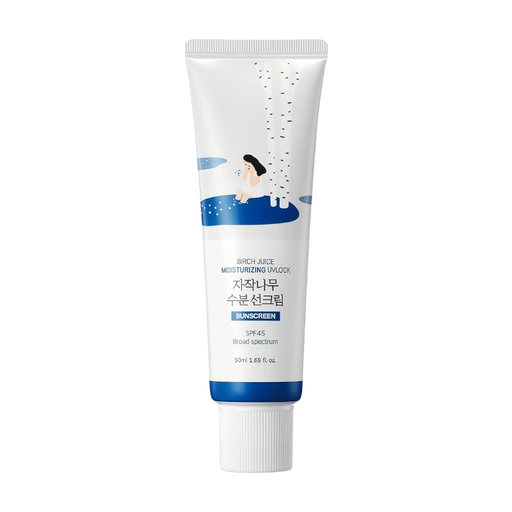
Why it suits this profile: A compact 50 ml facial sun cream with moisturising ingredients, suitable for anyone looking for a simple daily routine.
The ingredients list includes several chemical UV filters and no mineral filter such as zinc oxide, which may help limit a visible white cast.
50 ml capacity; the formula contains glycerine, sodium hyaluronate and hyaluronic acid derivatives; check the SPF and usage information on the packaging.

Why it suits this profile: Ideal for Korean skincare enthusiasts who want to use a lightweight, moisturising formula under make-up.
The product description mentions a lightweight texture without a white cast or sticky feeling. Check the SPF and PA rating on the current packaging.
50 ml; according to the product information, rice extract makes up 30%; the listed variant is fragrance-free and contains SPF50+ PA+++.
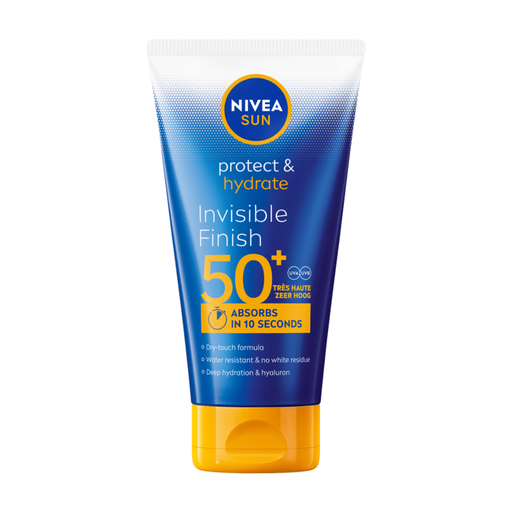
Why it suits this profile: Convenient for anyone looking for a larger pack for regular use on the face and body, for example during outdoor activities.
According to the product description, the formula is water-resistant and designed to absorb quickly without leaving white residue. Check the instructions for reapplication.
150 ml capacity; dry-touch formula according to the product information; contains glycerine and sodium hyaluronate, among other ingredients.
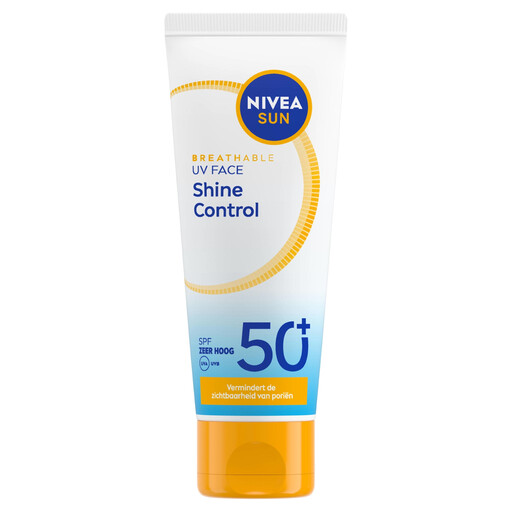
Why it suits this profile: An option for anyone who values a mattifying sun cream and a non-greasy finish during the day.
According to NIVEA’s own research, the formula provides long-lasting mattifying effects; this is a brand claim and not a guarantee for every skin type. The product information also mentions a lightweight, non-greasy finish.
SPF50; PA++++ according to the product information; contains tapioca starch, rice starch and silica; 40 ml capacity.
We have put together a complete, up-to-date list of products that fully meet these strict selection criteria and the applicable European safety regulations.
Use enough product to cover your face, ears and neck evenly. A practical guideline is around two finger lengths for your face and neck combined. A thin layer may provide less protection than the SPF stated on the packaging.
Yes, many lightweight formulas are designed for this. Allow your skincare to absorb briefly, then apply the facial sun cream evenly. When trying a new formula, check that it does not pill when used with your make-up. Reapplication is still necessary during prolonged exposure, even if you are wearing make-up.
Follow the PAO symbol on the packaging, such as 12M, and check the expiry date if one is provided. Store sun cream in a cool place away from direct sunlight. A change in smell, colour or texture may be a reason to stop using the product. Clean the cap and close the packaging securely after use.
