
Vandaag of morgen in huis

Kwaliteit gegarandeerd

Welkomstaanbiedingen ontgrendelen: GRATIS bezorging | Tot 80% korting | Gratis 30 dagen JoyPlus-proefperiode
Download de app
SPF 30 sun oil combines sun protection with a light, glossy finish. This makes it a popular choice for holidays, beach days and outdoor activities. However, not all sun oil sprays are the same. An oil may feel pleasant on your skin, but it can be applied too thinly. A product with bronzer can also be mistaken for a self-tan product, even though the two serve different purposes.
As a Joybuy Product Recommendation Officer, I focus on verifiable details such as SPF, UVA protection, water resistance, volume and directions for use. That way, you’re less likely to choose a product based only on attractive packaging or promises of a beautiful tan.
SPF 30 refers to protection against UVB rays. Also check whether the packaging displays a UVA logo or mentions UVA protection. UVA and UVB rays have different properties, and both matter when protecting your body from the sun.
A higher SPF also doesn’t mean you can stay in the sun indefinitely. Apply plenty of product, avoid the strongest sunshine and reapply regularly.
According to the product information, water-resistant sun oil stays on your skin better for a certain amount of time while you swim or sweat. This doesn’t mean the protection remains fully effective. Reapply after swimming, towel-drying or heavy sweating.
Check whether the packaging makes a water-resistance claim and follow the directions for use. A spray that dries quickly can also be applied too thinly without you realising.
Sun oil with bronzer or an SPF 30 tanning oil can give your skin a visibly glossy look or, according to the brand, support your natural tanning process. This isn’t the same as a self-tan body lotion. Self-tan products typically contain a colour-developing ingredient such as dihydroxyacetone (DHA), and offer no protection from UV rays unless they also contain SPF.
If you want a tan without extra sun exposure, choose a separate self-tan product and don’t use it as sun protection.
Choose SPF 30 if you’re looking for a medium level of UVB protection, and check whether UVA protection is also mentioned. Don’t focus only on the word “bronzing”: a product’s tanning properties don’t determine how much sun protection it provides.
Also consider your skin type, the UV index, your location and how long you’ll be in the sun. The UV index can change quickly in the Netherlands, while conditions are often different on holiday in the Mediterranean.
A sun oil spray is handy for your arms, legs and back, but apply it generously and rub it in carefully. Don’t spray near your face or breathe in the mist. For your face, a product designed for that purpose is often more practical.
A 150 to 200 ml bottle is suitable for several applications, but how long it lasts depends on how much you apply. A thin, glossy layer isn’t a reliable sign that you’ve applied enough for adequate protection.
Water resistance is useful for swimming or sport, but you’ll still need to reapply after contact with water. Check the ingredients list too if you’re sensitive to fragrance, alcohol or certain UV filters. Always refer to the product packaging and ingredients list, as formulas can change.
Claims such as “dermatologically tested”, “biodegradable” or “suitable for all skin types” should be read as information provided by the brand. A formula may have certain properties according to the brand’s own research or product description, but that doesn’t guarantee it will feel the same for everyone.
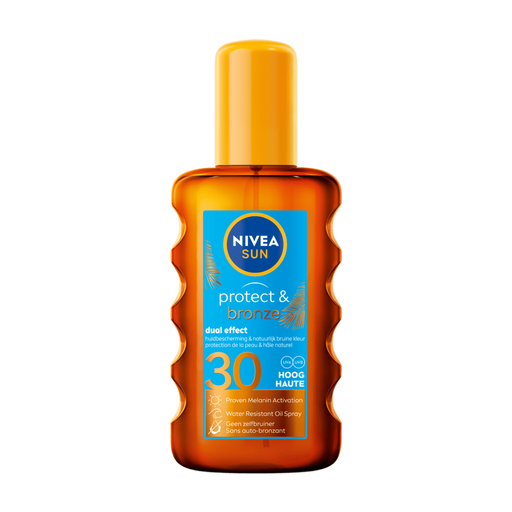
Why it suits this profile: The 200 ml spray is practical for everyday use, holidays and sunny days when you’re looking for a straightforward sun oil with bronzer.
The product description states that it has SPF 30, a water-resistant formula and contains no self-tan. This makes it easier to distinguish from a self-tan body lotion.
SPF 30, a 200 ml spray and pro-melanin extract, according to NIVEA’s product information.
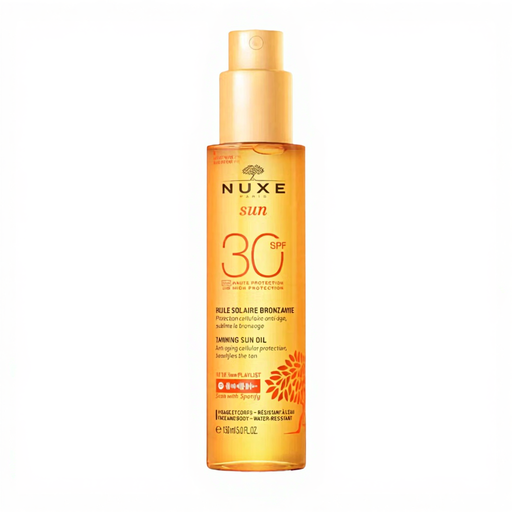
Why it suits this profile: A good choice if you’re looking for a light oil with SPF 30, botanical extracts and a nourishing feel on your skin for days at the beach or by the pool.
The product information explicitly states that it has SPF 30 and is water-resistant. Before buying, check the current packaging and remember to reapply after swimming or towel-drying.
150 ml spray bottle, a light texture and, according to the product description, botanical extracts and UV filters.
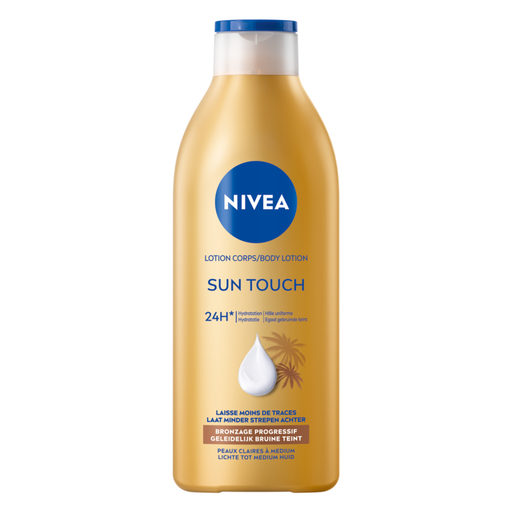
Why it suits this profile: For anyone who wants to build a natural-looking tan without spending longer in the sun, and would rather use a body lotion than sun oil.
The product description states that this is a sun-free tanning product. According to the ingredients list, it contains DHA but has no stated SPF, so use separate sun protection when outdoors.
400 ml, designed to give you an even tan and, according to the product information, up to 72 hours of hydration.
We’ve put together a complete, up-to-date list of products that fully meet these strict selection criteria and the current European safety requirements.
It can be, as long as the product is suitable for your skin and you apply it correctly. Check the SPF, UVA and usage information on the packaging. A separate face sun cream may feel more comfortable, as oil-based products aren’t suitable for everyone’s face.
Reapply after swimming, towel-drying or heavy sweating. You’ll also need to reapply regularly in other conditions, especially if you’re spending a long time in the sun. Water-resistant doesn’t mean you can skip reapplying.
Not necessarily. An SPF 30 tanning oil is primarily a sun-protection product with SPF. A self-tan body lotion contains different ingredients and adds colour without UV exposure, but won’t protect you from the sun unless the packaging explicitly says so.
