
Vandaag of morgen in huis

Kwaliteit gegarandeerd

Welkomstaanbiedingen ontgrendelen: GRATIS bezorging | Tot 80% korting | Gratis 30 dagen JoyPlus-proefperiode
Download de app
An SPF 30 day cream combines daily facial skincare with protection against UV radiation. That sounds straightforward, but formulas can vary considerably. A rich cream may feel comfortable on dry skin, while the same texture can feel heavy on oily skin. A product with SPF 30 may also provide insufficient protection if you apply too little or fail to reapply it.
As a Joybuy Product Recommendation Officer, I assess product information based on verifiable criteria such as SPF, skin type, texture, ingredients and usage instructions. This helps you identify more quickly which facial cream with SPF fits your routine and where marketing claims require additional context.
SPF 30 is a relevant protection level for everyday use, but no product blocks 100% of UV radiation. According to the product information from the brands mentioned, you should apply day cream generously, limit exposure to intense midday sun and reapply after swimming, towelling off or perspiring.
A day cream with SPF is not always sufficient for a long day outdoors. For the beach, cycling, hiking or winter sports, a dedicated facial sunscreen is often more practical, as you will generally apply a more generous amount.
Terms such as anti-aging day cream, anti-wrinkle cream and “fills in wrinkles” describe a product’s positioning, not a guaranteed result for everyone. According to NIVEA’s own research, for example, participants reported changes in elasticity or wrinkles after a specified period. This does not guarantee that every user will experience the same effect.
Pay attention to the formula as well. Ingredients such as hyaluronic acid, glycerin, Q10, niacinamide or vitamin E indicate something about the composition, but do not automatically predict how the product will feel or perform on your skin.
An SPF 30 day cream may still be unsuitable if the texture is too greasy, contains fragrance you prefer to avoid or does not sit well under makeup. Always check:
According to the product descriptions, SPF 30 helps protect against UV-induced skin damage and visible signs of skin ageing. Apply the cream every morning to clean skin, and do not forget your neck and décolleté when they are exposed. Reapplication is important during prolonged sun exposure.
A product with SPF 15 or SPF 25 may be suitable for a short daily routine, but it does not meet the search criteria for an SPF 30 day cream. If SPF 30 is important to you, check that the factor is clearly stated on both the packaging and the product page.
For a day cream for dry skin, glycerin, hyaluronic acid, argan oil, shea butter or squalane are interesting ingredients to compare. A rich texture can feel comforting when the skin feels tight, but it is not automatically ideal for combination skin.
An oily-skin day cream often works best with a lightweight, fast-absorbing or oil-free formula. The Clinique Superdefense range is associated in the product information with oily or combination skin and features an oil-free formula.
For a day cream for sensitive skin, fragrance-free, pH-neutral and dermatologically tested are relevant product features. “Dermatologically tested” does not mean suitable for everyone. Discontinue use if irritation occurs and check the complete ingredients list.
A hyaluronic acid day cream can help the skin feel hydrated. According to the product description, NIVEA Essentials Nourishing contains, among other ingredients, sodium hyaluronate and argan oil. NIVEA Cellular Expert Filler SPF 30 lists hyaluronic acid, folic acid and creatine.
When choosing a day cream for pigmentation, it is important to read claims carefully. Eucerin lists Thiamidol in the product description and links it to the reduction of age spots. This is a brand claim, and results vary from person to person. UV protection remains important to help limit new discolouration caused by sun exposure.
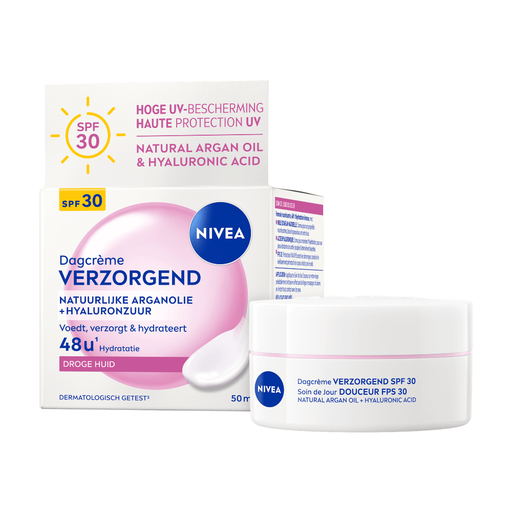
Why This Fits Their Persona: An accessible choice for anyone looking for a moisturising day cream with sun protection for dry skin and a straightforward morning routine.
The product information clearly states SPF 30. The formula contains glycerin, argan oil, shea butter and sodium hyaluronate; however, check whether the fragrance suits your skin.
50 ml; SPF 30; hydrating ingredients; developed for dry skin.
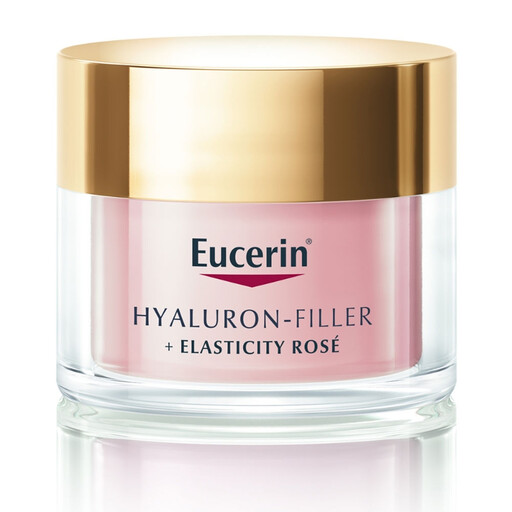
Why This Fits Their Persona: Ideal for anyone seeking a nourishing anti-aging day cream with a subtle rosy tint for a fresher-looking complexion in the morning.
The product information states SPF 30 and warns that a high SPF does not provide complete protection. The rosy tint makes the cosmetic effect more tangible than a general claim about radiance.
50 ml; SPF 30; rosy tint; according to the product information, suitable for all skin types and sensitive skin.
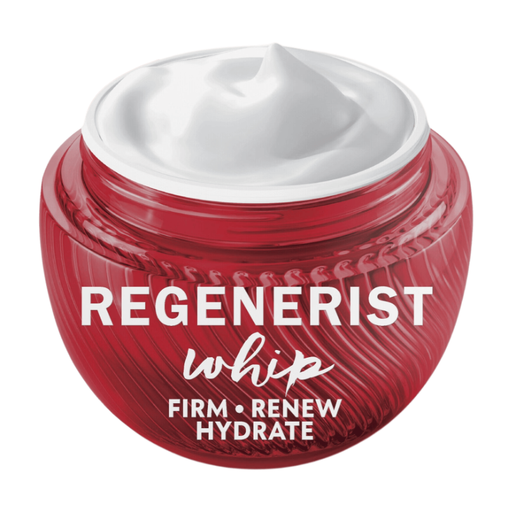
Why This Fits Their Persona: The lightweight texture and matte finish are practical for anyone who wants to minimise shine during the day and wear a cream under makeup.
The product information explicitly mentions oily to combination skin, a lightweight texture and a matte finish. This provides a stronger basis for the choice than the vague term “non-greasy” alone.
50 ml; SPF 30; positioned as oil-free and lightweight; contains niacinamide and sodium hyaluronate according to the ingredients list.
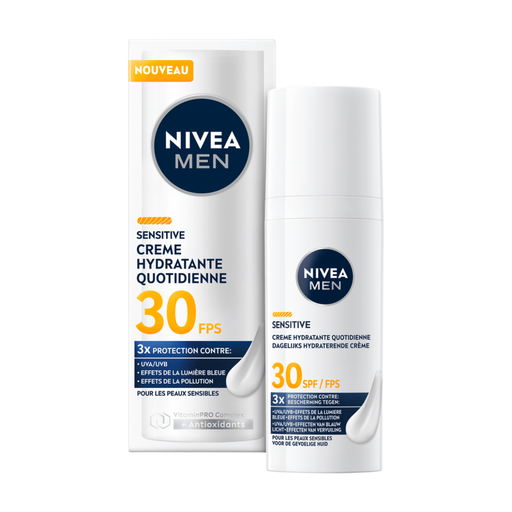
Why This Fits Their Persona: Suitable for men and anyone looking for a fast-absorbing facial cream with SPF 30, for example after shaving or during the daily commute.
The product description specifies a lightweight, non-greasy formula, 24-hour hydration and development for sensitive skin. If you are sensitive to fragrance, the ingredients list remains important, as fragrance is included.
50 ml; SPF 30; fast absorption; panthenol, chamomile extract and glycerin in the formula.
Browse a current selection of facial creams with sun protection and compare SPF, skin type, texture and volume.
On dry skin, you can apply a serum first, followed by a richer moisturising day cream. For oily skin, a smaller amount of a lightweight formula is often more comfortable. When trying new products, it is best to test them first on a small area of skin.
For brief daily exposure, SPF 30 can be a practical choice, provided you apply enough product. When spending extended periods outdoors, in intense sunlight or while perspiring heavily, a separate facial sunscreen and regular reapplication are the wiser choice. No SPF provides complete protection.
Shelf life varies by product. Check the expiry date, batch information and the period-after-opening symbol on the packaging. Store the cream according to the manufacturer’s recommendations, usually in a cool place away from direct sunlight. A change in smell, colour or texture is a reason to stop using the product.
That depends on the texture. Lightweight or fast-absorbing formulas, such as some creams for oily or combination skin, often work better under makeup. Allow the cream to absorb fully and check that it does not pill or build up. Claims about reducing wrinkles are brand claims or research findings under specific conditions, not guaranteed results.
