Who is a single bar suitable for?

An organiser who considers allergens

You want children and parents to be able to check the ingredients. Ask about the school’s policy and keep the information from the current packaging with the product, especially if you’re serving the bar in pieces. The Voedingscentrum recommends asking in advance whether any children have allergies or avoid certain foods.

A seller who needs only a few portions

You’re looking for one bar to make a limited number of tasting or sale portions, rather than enough for a whole class. Compare the stated portion size with the number of pieces you plan to offer: Albert Heijn lists 10 or 12 portions for the 180 g bars in question.

A buyer choosing by flavour

You’re deciding between milk chocolate with speculoos cream and white chocolate with speculoos cream or filling. Make your flavour choice only after checking the allergens and storage instructions for the exact variant.

What should you look for when choosing?

Start with the school’s arrangements and the information you can show when handing out portions. Then work out how many portions you need and which type of chocolate would suit them.

What to consider What to check before buying Who it matters to
Allergens and school policy Ask which products the school allows. Read the current label and make sure the ingredient information remains available with the pieces you offer. If I’m handing out pieces to children, I don’t want parents to have to guess what’s in them. This is the top priority for around 50% of consumers.
Number of portions Compare the stated number and size of portions with the number of visitors you expect. For a small tasting sale, I want to know how many pieces I can offer from one bar without catering for a whole class. Around 30% of consumers prioritise this question about portions.
Chocolate and filling Choose between milk and white chocolate, and check the filling in your chosen variant. Once I know how many portions I’ll be serving, I want to choose a flavour that suits my intended audience. This is the top priority for around 20% of consumers.

Common mistakes when handing out portions

  • Assuming a bar is made up of individually wrapped treats

    The 180 g bars in Albert Heijn’s product information list 10 or 12 portions, but that doesn’t mean they’re individually wrapped. Cutting them up yourself takes time and can result in uneven portions.

    Decide in advance how many times you’ll be handing out portions. If you need an intact package for each serving, compare snack packs rather than looking at bars alone.

  • Checking only the flavour name when it comes to allergens

    The bars discussed contain wheat or cereals containing gluten, milk and soya. Other declarations, including lactose and possible traces of nuts, vary by variant.

    Read the label on the exact pack you’re buying, and ask about allergies and dietary requirements before the fair.

  • Serving cut pieces without the product information

    According to the Netherlands Food and Consumer Product Safety Authority, businesses and suppliers of unpackaged food have obligations regarding allergen information. Which rules apply to a particular school fair depends on how it is organised.

    Ask the organiser what arrangements are in place, and keep the original packaging or a clear display of the ingredients and allergens with the pieces you’re offering.

  • Leaving chocolate in the sun

    Albert Heijn’s product information for the white Lotus Biscoff bar recommends storing it in a cool, dry place at 15–20 °C. A warm stall can make it harder to display and portion.

    Check the storage instructions for your variant and keep the bar out of direct sunlight.

Brands compared

Lotus Biscoff

Albert Heijn lists Lotus Biscoff bars with milk or white chocolate and speculoos cream. Lotus Biscoff speculoos biscuits are a different type of product, not a like-for-like alternative to a chocolate bar in terms of flavour.

  • For both 180 g bars discussed, Albert Heijn lists 12 portions of 15 g.
  • The bars discussed contain wheat or cereals containing gluten, milk and soya, and may contain nuts. Check the other allergen declarations for each variant too.

Delicata

The 180 g Delicata bar listed by Albert Heijn combines white chocolate with speculoos filling.

  • The product information states that it contains 45% speculoos filling and makes 10 portions of 18 g.
  • The bar contains milk, soya and wheat, among other ingredients. The product page also says it may contain egg, barley and various nuts. Check the current label before handing it out.

Joybuy products: biscuits instead of a bar

If you’d like to offer speculaas but don’t necessarily need a chocolate bar, you could also consider a pack of biscuits. The product below is not a single speculoos bar: check how the eight pieces are divided on the packaging before planning how to hand them out.
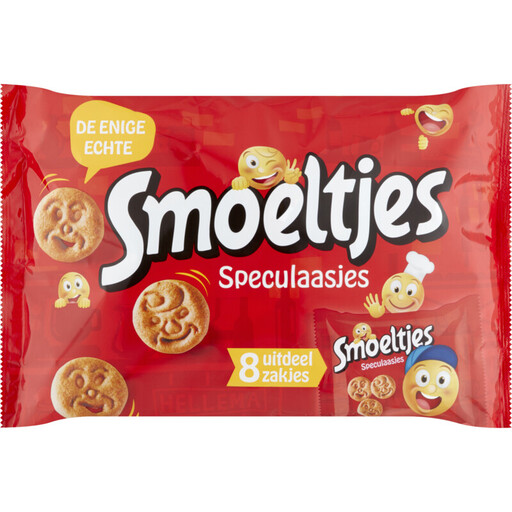
Hellema Smoeltjes Speculaas Cookies, 8 pieces, 200 g

Hellema Smoeltjes Speculaas Cookies, 8 pieces, 200 g

A biscuit option if you don’t need a chocolate bar. Before using it at the school fair, check how the eight pieces are divided, read the current allergen label and confirm the school’s arrangements.

View on Joybuy

Frequently asked questions

Is one 180 g bar enough for a school fair?

One bar may be suitable for a small tasting sale, but don’t assume it will be enough for a whole group. Albert Heijn lists 12 portions of 15 g for the Lotus Biscoff bars discussed and 10 portions of 18 g for the Delicata bar. Compare this with the number of times you plan to hand out portions.

Which allergens should I check in these bars?

For each of the bars discussed, check at least the declarations for wheat or cereals containing gluten, milk and soya. Other declarations vary: the white Lotus Biscoff variant contains lactose, while the Delicata bar may also contain egg, barley and various nuts. Base your choice on the label of the variant you buy.

Can I sell a bar in pieces at a school fair?

First ask the organiser what arrangements apply to selling unpackaged pieces and providing information about them. The Netherlands Food and Consumer Product Safety Authority outlines the allergen information requirements for businesses and suppliers of unpackaged food, but whether they apply to a particular school fair depends on how it is organised. Make sure the ingredient and allergen information is available with the pieces.

How should I store a white speculoos chocolate bar during the fair?

Follow the storage instructions on the packaging you choose and keep it out of direct sunlight. For the white Lotus Biscoff bar discussed, Albert Heijn recommends storing it in a cool, dry place at 15–20 °C. Don’t assume the same temperature applies to another variant without checking.
