
Buying for the family or guests
You’re looking for speculaas to enjoy with coffee or tea on several occasions, so you’ll want to consider the pack size and how to store the biscuits once opened.


Choose a large pack of baker’s speculaas if you want enough for several coffee or tea breaks and can seal the pack properly after opening. For smaller occasions, a more compact pack is a better fit. If you need to eat gluten-free, choose a product labelled as such and check the current pack for other allergens too.
You’re looking for speculaas to enjoy with coffee or tea on several occasions, so you’ll want to consider the pack size and how to store the biscuits once opened.
You might take a few biscuits to work now and then, or prefer not to open a large pack at home. In that case, the pack format and number of biscuits matter more than having plenty in stock.
You need to avoid gluten or another allergen. The ingredients, allergen information and any warnings on the specific pack are what matter; the product name alone isn’t enough.
First, choose the type of speculaas that suits the occasion. Then compare the pack size, nutritional information per 100 g and the label on the specific product.
| What to consider | What to check | Who it matters to |
|---|---|---|
| Stocking up for the week | Check the net weight and storage instructions once opened. | If I’m buying for the family or guests and want to have enough for several coffee breaks, the pack needs to suit how quickly we’ll use it without being left open for too long. This is the top priority for around 42% of consumers. |
| Flavour and occasion | Choose between baker’s speculaas, speculoos and varieties made with ingredients such as butter or a filling; check the ingredients. | I might want a different kind of biscuit with coffee than I would for a dessert or a treat. Around 33% of consumers prioritise the type of speculaas they want. |
| Gluten and other allergens | Read the allergen information and warnings on the current pack; a gluten-free label says nothing about other allergens. | If I need to avoid an allergen, the specific product must meet that requirement. Checking for gluten or other allergens comes first for around 17% of consumers. |
| Smaller occasions | Check the pack size, the number of biscuits and whether the pack suits how you plan to use it. | If I only eat biscuits occasionally or want to take some with me, I don’t automatically want to open a large pack. A more compact pack is the top priority for around 8% of consumers. |
According to its product page, Jumbo’s gluten-free speculaas contains egg and may also contain almonds, hazelnuts, milk, sesame and walnuts.
Check the chosen pack for every allergen you need to avoid, including any relevant warnings.
A variety made with butter, almonds or a filling has different ingredients and may suit a different occasion from a standard biscuit to keep in the tin.
First decide which type you want, then compare the ingredients and nutritional information per 100 g of similar products.
Once you open a large pack, how you store it matters. Albert Heijn and Jumbo advise keeping their baker’s speculaas in a sealed pack.
Choose a pack size that suits how much you’ll use and follow the storage instructions on the pack.
Speculoos in a range of pack formats, including snack packs and larger packs.
Offers, among other products, a 600 g pack of AH Bakkers speculaas for your cupboard.
Offers both regular 600 g baker’s speculaas and a separate gluten-free variety.
ALDI’s brand of 600 g baker’s speculaas.
Lidl lists Sondey Speculoos biscuits as a speculoos variety.
These products offer a range of options for your weekly shop: baker’s speculaas for stocking up, an almond variety and smaller packs of speculaas or speculoos. When choosing, check the size and label of the specific pack.
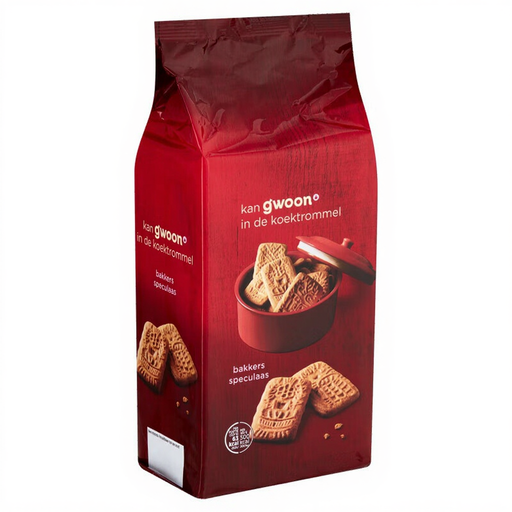 Image unavailable
A pack of baker’s speculaas for anyone looking to stock up with their weekly shop.
Pack size: 600 g. If you have allergies, check the wheat information and other details on the current label.
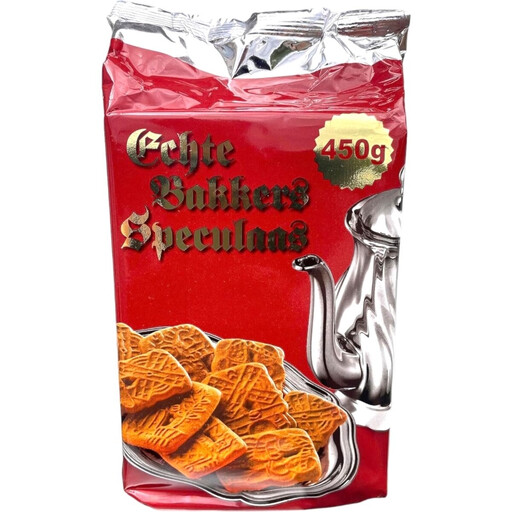 Image unavailable
Baker’s speculaas for anyone looking for a larger pack that’s smaller than the 600 g options mentioned.
Pack size: 450 g. The product information lists wheat and possible traces of nuts; check the current label.
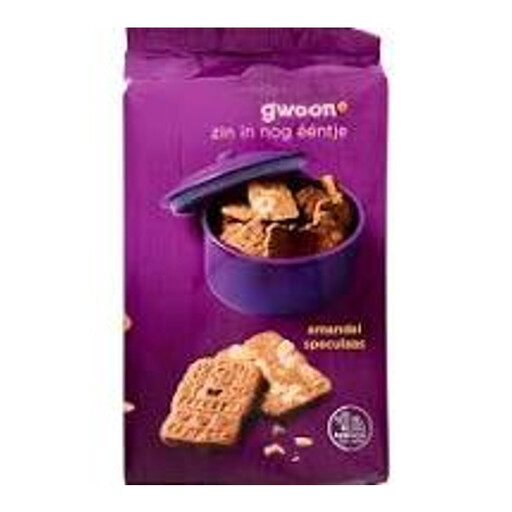 Image unavailable
An almond variety for anyone looking for something other than just regular baker’s speculaas in their weekly shop.
Pack size: 400 g. The ingredients list and allergen information in the product details are not fully consistent; check both on the physical pack before choosing this variety.
 Image unavailable
A smaller pack of speculoos for anyone looking for a biscuit to enjoy with coffee or tea rather than a large pack of baker’s speculaas.
Pack size: 250 g; Joybuy’s product information lists around 32 biscuits. Lotus Bakeries describes Biscoff as crunchy and caramelised. If you have allergies, check the label for wheat and soya.
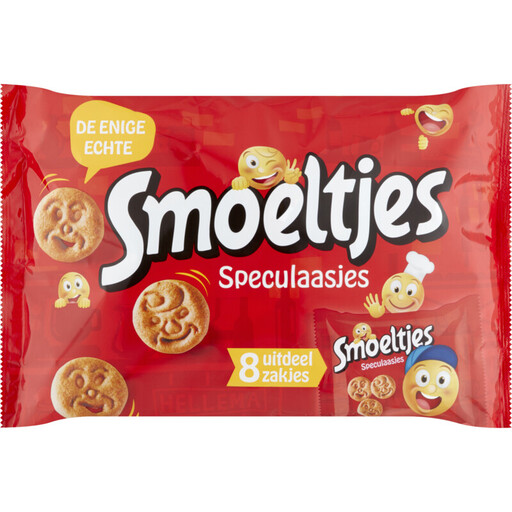 Image unavailable
A smaller pack of speculaas biscuits for anyone who doesn’t need a large pack to last through several coffee breaks.
The pack lists 8 biscuits and 200 g. The product information lists wheat, milk and egg, and possible traces of nuts, among other allergens; check the current label.
Compare similar biscuits per 100 g, looking at sugars, saturated fat, fibre and salt, for example. According to the Netherlands Nutrition Centre, manufacturers set their own serving sizes. Nutri-Score is intended for comparing products of the same type and, on its own, doesn’t tell you whether a biscuit is a good choice for you.
The regular baker’s speculaas mentioned from Albert Heijn and Jumbo isn’t suitable: both product pages list wheat or gluten. Jumbo also has a separate gluten-free speculaas variety which, according to Jumbo, carries the Crossed Grain quality mark. Check the current label for other allergens too.
Before buying or eating the product, check the information on the specific pack. If the information is unclear or contradictory, don’t rely solely on the online description. Albert Heijn warns that product information can change; the Netherlands Food and Consumer Product Safety Authority states that allergens must be listed on the labels of pre-packed foods.
No. A gluten-free label doesn’t mean a biscuit is free from egg, milk, nuts or other allergens. For each allergy, read the ingredients, allergen information and any relevant warnings on the pack you choose.