
Coffee breaks with colleagues or visitors
If you regularly put biscuits out for others, look for a pack with enough portions for more than one coffee break. Also check whether you can reseal the pack securely after opening.


If you usually drink coffee on your own while out and about, a smaller pack is likely to suit you better than a large sharing pack. For regular coffee breaks with others, the number of portions and how well you can reseal the biscuits after opening matter more than the pack weight alone. If you have allergies or specific dietary requirements, always check the current label on the product you choose.
If you regularly put biscuits out for others, look for a pack with enough portions for more than one coffee break. Also check whether you can reseal the pack securely after opening.
If you usually have a biscuit with your coffee on your own, a smaller pack can help avoid having too many left over. Jumbo lists around 32 biscuits in a 250 g pack of Lotus Biscoff.
If you need to consider allergens or dietary requirements, compare the current ingredients and warnings on each pack. A vegan label does not replace these checks.
First, decide whether the biscuits are mainly for you or for a group. Then compare the number of biscuits, the information on the label and how well you can store them after opening.
| What to consider | What to check when buying | Who it matters to |
|---|---|---|
| Enough to share | Compare the pack weight with the stated number of portions or biscuits; the same number does not mean the same thing for every product. | If colleagues or visitors regularly join me, I want to know whether one pack will last for several coffee breaks. Having enough to share is the main priority for around 33% of consumers. |
| A handy amount | Check how many biscuits the pack contains and whether it suits how many you take with you and eat yourself. | When I have coffee on the go, I don’t want to carry a large bag with lots left over. Around 25% of consumers prioritise a quantity for individual use. |
| Allergens and dietary requirements | Read the current ingredients list, allergen information and any dietary claims on the specific pack. | If I need to consider ingredients or allergens, a clear, verifiable label matters more than the pack size. This is the main priority for around 25% of consumers. |
| Storage after opening | Check whether you can reseal the biscuits securely and read the storage advice on the pack. | If I don’t eat many, I want to stop the rest of a large bag from losing its quality. Keeping biscuits crisp and using them up is the main concern for around 17% of consumers. |
Weight and the number of individual biscuits are different measures. ALDI lists 48 biscuits in a 600 g pack of Biscotto Bakers’ speculaas, but around 71 in a 500 g pack of Koekkie speculoos biscuits. These are also different types of biscuit.
For a shared coffee break, check both the stated number of biscuits or portions and the type of biscuit you want to serve.
If you can’t seal the contents securely, any biscuits left over may lose their quality.
The Netherlands Nutrition Centre recommends storing biscuits in a cool, dry, dark place in a tightly sealed container. Choose a smaller pack if it will take you a while to use everything up.
A product described as vegan may still contain allergens. For example, Jumbo lists wheat and soya in Lotus Biscoff 250 g.
Before buying and eating the biscuits, check the current allergen information on that specific pack, even if you’ve bought the product before.
A speculoos option for a smaller coffee break: Jumbo lists around 32 biscuits in the 250 g pack.
AH Bakers’ speculaas comes in a 600 g pack; Albert Heijn lists 48 portions.
Jumbo Bakers’ Speculaas is available in a 600 g pack, with around 48 portions according to Jumbo.
Sondey is the brand of speculoos biscuits featured on the Lidl product page in question.
Two separate ALDI products to compare by quantity: Biscotto Bakers’ speculaas 600 g and Koekkie speculoos biscuits 500 g.
These two packs suit different coffee breaks: a 250 g pack of speculoos mainly for enjoying on your own, and 450 g of bakers’ speculaas to share with others too. Compare the quantity you need and check the label before choosing.
 Image unavailable
A smaller pack for anyone who mainly has a biscuit with their coffee on their own. Jumbo lists around 32 biscuits in this 250 g pack; that may not be enough for a larger gathering. According to Jumbo, the product contains wheat and soya. Check the current label if allergens are relevant to you or your guests.
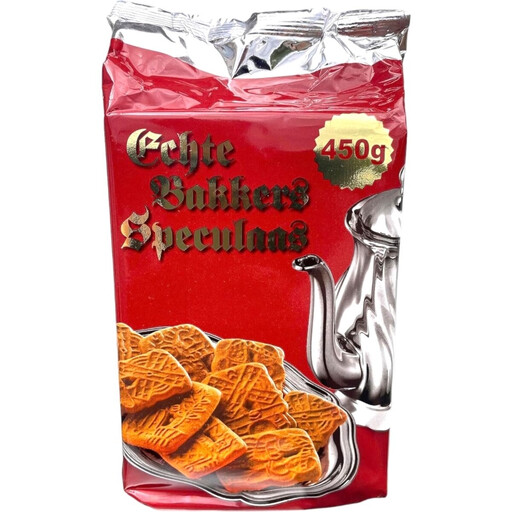 Image unavailable
This 450 g pack of bakers’ speculaas is an option if you’d like to share biscuits with your coffee. Check the pack to see how many biscuits you’ll have for your group, and read the current ingredients and allergen information before eating.
A 600 g pack is a good fit when several people regularly share the biscuits and you can use them up after opening. Albert Heijn and Jumbo each list 48 portions for their 600 g packs of bakers’ speculaas; ALDI lists 48 biscuits in its 600 g pack of Biscotto Bakers’ speculaas. If you only have biscuits on your own now and then, a smaller pack may be more practical.
Store them in a cool, dry, dark place in a tightly sealed container, as recommended by the Netherlands Nutrition Centre. Also follow the storage advice on the pack, and check any leftover biscuits for changes in smell or texture.
Yes. Check the current label if anyone in your group has an allergy or intolerance. The Netherlands Food and Consumer Product Safety Authority explains that allergen information must appear on the label of pre-packed foods. Ingredients and warnings vary from one product to another.
No. Jumbo describes Lotus Biscoff 250 g as suitable for vegans, but lists wheat and soya for the same product. So even when a product is labelled vegan, check the allergen information on the pack.