What should you look for?
First, measure the space, including the specified ventilation clearance. Then compare the baking tray with the size of your biscuits and check which oven setting suits your recipe.
| What to consider |
What should you check? |
Who is this important for? |
| Safe placement and power connection |
Check the manual for clearance and surface requirements, make sure a suitable socket is within reach, and agree on which appliances can be used at the same time. |
I want to use the oven without obstructing heat ventilation or overlooking the shared power supply; around 26% of consumers prioritise safe placement and connection. |
| Oven setting and recipe |
Check that the oven has the setting your recipe calls for, that you can adjust the temperature and that you can keep an eye on the baking process. |
When following a recipe, I want to be able to set the recommended oven mode and temperature; around 26% of consumers prioritise these recipe settings. |
| Worktop space |
Measure the available space and compare it with the external dimensions and placement instructions for the specific model. |
With a shared worktop, I want to know in advance how much space the oven will take up while in use; around 21% of consumers mainly choose based on the space available. |
| Baking tray and number of batches |
Check the dimensions of the tray supplied and compare them with the size of your biscuits; leave the spacing specified in the recipe between them. |
I want to know how many biscuits will fit on the tray and how many batches I’ll need to bake; around 16% of consumers prioritise usable baking space. |
| Cleaning and energy use |
Check which parts can be removed and what cleaning methods the manual allows. For ovens with an applicable energy label, compare consumption in kWh per cycle using the setting you’ll use. |
After baking, I want to leave the oven clean and be able to compare energy use on a like-for-like basis; around 11% of consumers mainly consider maintenance and energy information. |
Ovens at Joybuy
This selection includes freestanding and built-in ovens to compare for baking speculaas. For each model, check the space available, the baking tray and the settings your recipe calls for.
 No image available
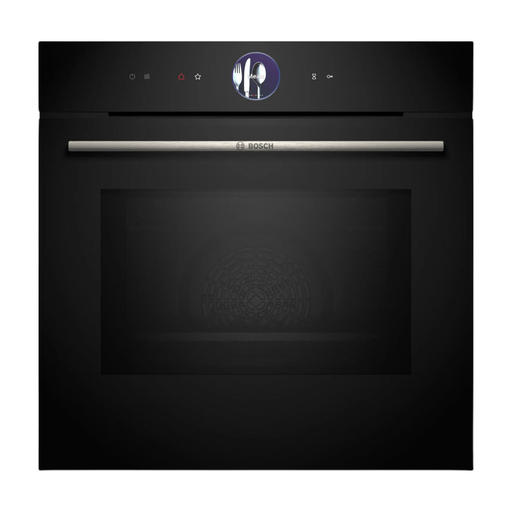
Bosch HMG7361B1 Double Oven, 71 litres
A built-in oven to compare if your shared kitchen has a suitable housing.
The product name lists 3D fan-assisted cooking, pyrolytic self-cleaning and Home Connect. Check the housing and installation requirements for this model.
View at Joybuy
 No image available
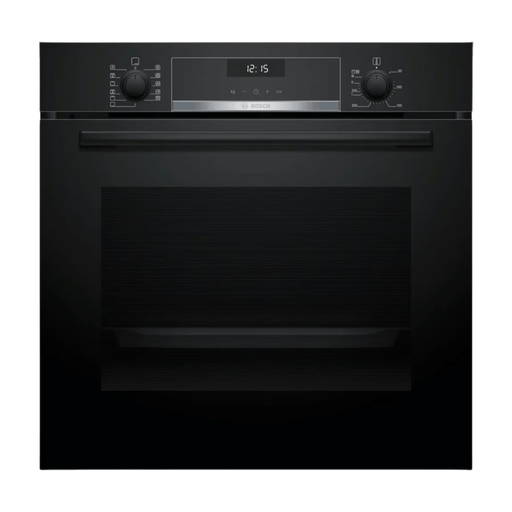
Bosch HBG537EB4 Serie 6, 60 cm, 71 litres
A built-in oven to compare if you have a suitable housing and want to follow a recipe using the fan setting.
The product name lists Air Fry, EcoClean Direct, A+ energy class and a black finish. Check the housing and installation requirements for this model.
View at Joybuy
 No image available
Wiggo WMO-E456(W), 45 litres, 2000 W
A freestanding model to compare if you have a suitable permanent spot on the worktop.
The product name lists a 45-litre capacity, 2000 W and a white finish. Check the external dimensions and the specified ventilation clearance.
View at Joybuy
 No image available
Rommelsbacher BGS 1400 mini oven
A freestanding mini oven to compare if you’re not looking for a built-in model.
Before use, check the space required and the ventilation instructions for this model.
View at Joybuy
 No image available
Wiggo WMO-E353(X), 35 litres, 1800 W, stainless steel
A freestanding oven to compare if you’re looking for an electric oven with top and bottom heat.
The product name lists a 35-litre capacity and 1800 W. According to the product information, leave at least 10 cm of clearance around it and 30 cm above; the baking tray and rack can be washed by hand.
View at Joybuy
Frequently asked questions
Should you use the fan setting or top and bottom heat for speculaas biscuits?
Follow the setting and temperature in your chosen recipe; there isn’t one standard setting for all speculaas. For speculaas biscuits, Koopmans recommends 170 °C in a conventional electric oven and 150 °C in a fan oven.
Can you use a freestanding oven inside a cupboard or right next to other items while baking?
Don’t assume that’s safe: heat needs room to escape. The Netherlands Fire Service advises keeping heat vents clear; follow the manual for the exact model’s clearance, surface and placement requirements.
Can you plug the oven and other kitchen appliances into the same extension lead?
The Netherlands Fire Service warns against plugging too many appliances into one extension lead and recommends connecting high-power appliances directly to a socket wherever possible. Check the power connection required for your chosen oven. In a shared kitchen, agree which appliances can be used at the same time.
Do compact, portable ovens have the same energy label as built-in ovens?
Not necessarily: according to Energielabel.nl, small or portable ovens don’t have an oven energy label. For ovens with an applicable label, compare consumption in kWh per cycle using the setting you’ll use; the label rating alone won’t tell you how much energy one batch uses.
Is the statutory guarantee in the Netherlands always exactly two years?
No. ACM ConsuWijzer explains that there’s no fixed two-year period for the statutory guarantee. What you can expect in terms of a product’s lifespan depends on factors including the product, its price and normal use. Any manufacturer’s guarantee is separate.


