
Runners keen to try familiar snacks
A biscuit can add variety on a long run. Try your chosen portion and when you drink, and see how you get on with eating while running. Don’t leave it until race day to try something new.


Speculaas can be a familiar snack before or after a training session, or something different to try on an easy long run. If you’re aiming for a high carbohydrate intake per hour during a marathon, it’s best not to rely on biscuits alone. Check the carbohydrates per portion, factor your eating and drinking plan into your decision, and practise it before race day.
A biscuit can add variety on a long run. Try your chosen portion and when you drink, and see how you get on with eating while running. Don’t leave it until race day to try something new.
During a long effort, the key is finding a practical way to take in enough carbohydrates. Speculaas is more likely to be a possible addition than the obvious foundation for your entire fuelling plan.
Speculaas biscuits don’t all contain the same ingredients. If wheat, nuts or other allergens matter to your choice, check the packaging of the exact variety. The word ‘digestive’ is no substitute for checking.
When: If you’d like to try a familiar flavour in a measured portion before or after a training session, or on an easy long run you’ve practised beforehand.
The trade-off: You may need to eat a lot of biscuits to meet a high carbohydrate target per hour. You’ll need to test separately whether you can manage that amount while running.
When: If you’re planning a higher carbohydrate intake per hour for a marathon. For efforts lasting more than 2.5 hours, World Athletics recommends an intake of up to 90 g per hour, using options including drinks and more concentrated products.
The trade-off: You’ll still need a personal plan that you’ve practised beforehand. World Athletics says it should take possible gastrointestinal discomfort into account.
| What to consider | What to check before buying | Who it matters to |
|---|---|---|
| Carbohydrates per portion | Check how many carbohydrates the exact variety contains per 100 g and per your chosen portion. Work out how much you’d need to take with you to meet your own hourly target. | I want to take enough carbohydrates for a long effort without relying on biscuits and guesswork. For around 40% of shoppers, finding a manageable amount to take is the priority. |
| Eating while running | Try your chosen portion and drink combination during similar training sessions. Think about how you’ll carry and eat the biscuits, too. | A familiar snack sounds appealing, but I want to know whether it’s comfortable to eat and digest on the go. For around 30% of shoppers, practicality is the main consideration. |
| Ingredients and allergens | Read the up-to-date ingredients and allergen information for the exact variety. Don’t infer what’s in it from terms such as ‘almond’, ‘wholemeal’ or ‘digestive’. | I need to know what my chosen biscuit contains before adding it to my fuelling plan. For around 30% of shoppers, checking the label is what makes the difference. |
A product name or an ingredient can’t tell you how your stomach and gut will respond when you’re running. That’s why World Athletics stresses the importance of practising your fuelling plan beforehand.
Check the nutritional information for the exact variety, then try the same portion with the same drink combination during training.
According to the Netherlands Nutrition Centre, an average 7 g speculaas biscuit contains around 4.6 g of carbohydrates. For a target of 60 to 90 g per hour, that works out at roughly 13 to 20 of these biscuits per hour; branded varieties may differ.
Calculate your plan using the nutritional information for the biscuit you’ve actually chosen, and practise combining solid food with drinks beforehand.
The product information for G'woon Amandel Speculaas lists wheat, almond, milk and egg, among other ingredients. LU Time Out Speculaas lists wheat, oats and soya, among other ingredients. So the name ‘speculaas’ alone isn’t enough to help you check for allergens.
Check the packaging of the exact variety when you buy it, especially if you need to avoid an ingredient or allergen.
Lotus Bakeries describes Biscoff as a crunchy biscuit to enjoy with coffee, as a snack or as an ingredient. It’s a speculoos option to compare with traditional speculaas.
Albert Heijn lists both Bakkers speculaas and Bakkersspeculaas. Compare these varieties with other biscuits for portion size and nutritional information.
Albert Heijn lists Céréal Speculaas as a branded alternative to regular speculaas.
These biscuits are options to compare as a regular snack around marathon training: speculaas, a speculoos variety and almond speculaas. Before adding your chosen variety to a fuelling plan you’ve practised, check the packaging to work out the portion size and carbohydrate content.
 No image available
An option if you’d like to decide in advance how many biscuits to take as a regular snack.
The product name states that the pack contains 8 pieces and weighs 200 g. Check the packaging for the carbohydrates in your chosen portion, then try it with a drink during training.
 No image available
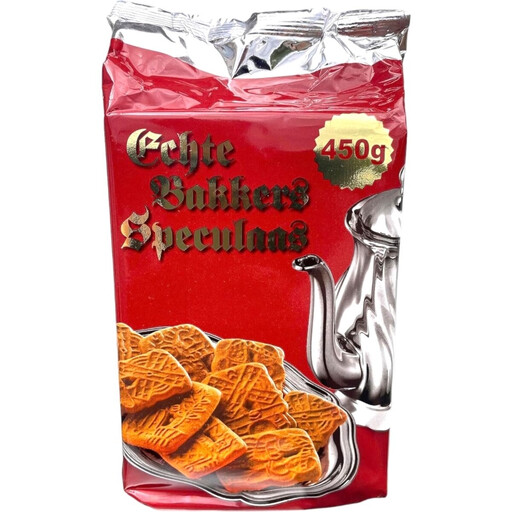
A traditional speculaas variety if you’d like to measure out your own portion for a training snack.
The pack contains 450 g. Use the nutritional information per 100 g to work out the carbohydrates in your own portion, and check the current allergen information, too.
 No image available
A speculoos option to compare with traditional speculaas if you’re looking for a regular biscuit snack.
The pack contains 250 g. Check the current label for ingredients and carbohydrates per portion, and try your chosen amount during training first.
 No image available
An almond variety to consider if flavour and ingredients matter when choosing a regular training snack.
The product information states that it contains 7% almonds and lists wheat, milk and egg, with possible traces of peanuts and other nuts. Check the current label if you have allergies, and work out the carbohydrates in your chosen portion.
Based on the Netherlands Nutrition Centre’s figure of 4.6 g of carbohydrates in an average 7 g speculaas biscuit, that works out at roughly 13 to 20 biscuits. This isn’t a portion recommendation for a marathon: use the nutritional information for your variety and test what you can eat while running.
You can’t tell from the name or the addition of almond. Choose based on the ingredients, and practise with the exact variety, portion and drink combination during training. World Athletics says individual gastrointestinal tolerance is part of a race plan you’ve practised.
Don’t assume a performance claim is proven just because it appears on a product. The Netherlands Food and Consumer Product Safety Authority outlines the legal requirements for nutrition and health claims. Check the exact wording and conditions before taking a claim into account when making your choice.
Check the current packaging of the exact variety you plan to eat. Albert Heijn says product information, including ingredients, nutritional values and allergens, can change, so don’t rely solely on a product page you viewed earlier.