
Host or carer with a shared coffee table
Looking for enough biscuits for several coffee drinkers, and a pack that can go into the biscuit tin once opened. A large pack is practical if it suits how often you have coffee.


For a coffee table where several people regularly share the same biscuit tin, a large 375–450 g pack of speculaas biscuits is practical if you can store the biscuits as directed on the label once opened. Choose pre-portioned packs instead if easy serving and less time with the pack open are more important. Whichever you choose, check the current label, especially if ingredients or allergens are a consideration.
Looking for enough biscuits for several coffee drinkers, and a pack that can go into the biscuit tin once opened. A large pack is practical if it suits how often you have coffee.
Wanting to compare the nutritional information for different types of speculaas, for example sugar, saturated fat, salt, fibre and portion size. If you have specific dietary questions, the packaging alone is not enough to determine what is suitable.
Needs the ingredients list and allergen information for the exact pack being served. This matters because recipes and warnings about possible traces can vary between products.
First decide how many biscuits you want to share and how you’ll store an opened pack. Then compare the portioning, nutritional information and ingredients on the packs you’re considering for your coffee table.
| What to consider | What to check when buying | Who it matters to |
|---|---|---|
| Quantity to share | Compare the net weight and storage instructions for after opening. | If several people regularly join me, I want enough biscuits in the tin without leaving an opened pack for too long. For around 33% of consumers, having enough in the pack for the group is the top priority. |
| Nutritional information | Compare sugar, saturated fat, salt and fibre per 100 g; check the portion size too. | When I compare types of speculaas, I want to know how their ingredients and nutritional values differ. For around 33% of consumers, composition is the top purchasing priority. |
| Ingredients and allergens | Read the ingredients, listed allergens and any warnings about traces on the current pack. | If a guest needs to avoid an ingredient, I want to be able to read the label on the exact pack before serving. For around 17% of consumers, this check is the most important consideration. |
| Portions and storage | Check whether the biscuits are pre-portioned and how the pack should be stored once opened. | For smaller coffee breaks, I want to be able to serve biscuits easily without opening a large pack each time. Around 17% of consumers prioritise portioning and storage. |
The size of the pack says nothing about the biscuits’ composition. Product information from Albert Heijn and Jumbo shows that the types of speculaas examined have different sugar, saturated fat and salt values per 100 g.
Compare the nutritional information per 100 g, then choose a pack size that suits how often you have coffee.
A grain claim doesn’t tell you how the other nutritional values compare. Lotus Bakeries lists 4.7 g of fibre per 100 g for its six-grain Biscoff variant, but also 35.5 g of sugar per 100 g.
As well as fibre, check sugar, saturated fat, salt and the portion size on the same pack.
Plain and filled speculaas can contain different ingredients. Information about possible traces can also vary between packs.
Check the ingredients and allergens on the current pack before serving, particularly if a guest has a known allergy.
A large pack may not be the best choice for a coffee table where biscuits are only eaten occasionally if it can’t be stored as directed once opened.
Choose a size to suit how much you expect to use and follow the storage instructions on the pack.
Lotus Bakeries describes Biscoff as speculoos to enjoy with coffee and lists pack sizes including 250 g, 3 × 125 g and 20 × 2 biscuits.
A listing for AH Bakkersspeculaas describes a 400 g pack with 33 portions of 12 g.
Jumbo describes Echte Bakkers Speculaas at 450 g and Speculaasbrokken at 375 g as two different large packs.
An Albert Heijn product listing described Céréal Speculaas as containing 6.4 g of fibre and 0.1 g of salt per 100 g.
ALDI describes a 2-pack of filled speculaas, weighing 2 × 250 g, with almonds and almond paste.
These biscuits are worth considering when comparing packs for your coffee table. The listed weights range from 200 g to 300 g; use the number of guests and coffee breaks to decide whether that’s enough for your biscuit tin.
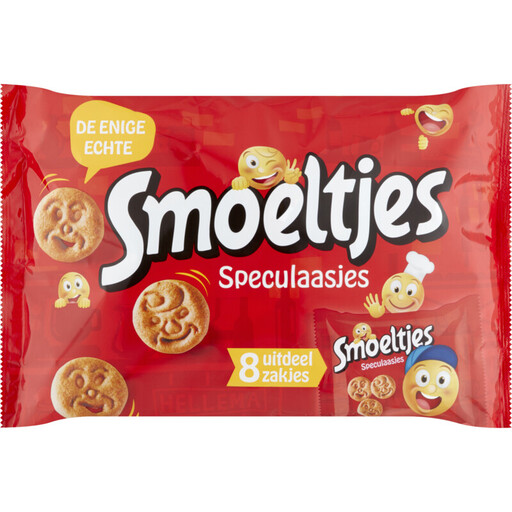 Image unavailable
The number of biscuits listed can help you plan for a smaller coffee break.
Pack contents: 8 biscuits, 200 g. Check the ingredients and allergens on the pack before serving the biscuits to guests.
 Image unavailable
A pack of speculoos to serve with coffee if 250 g suits your plans.
Pack contents: 250 g. Check the portions, nutritional information and allergens on the label of the pack you choose.
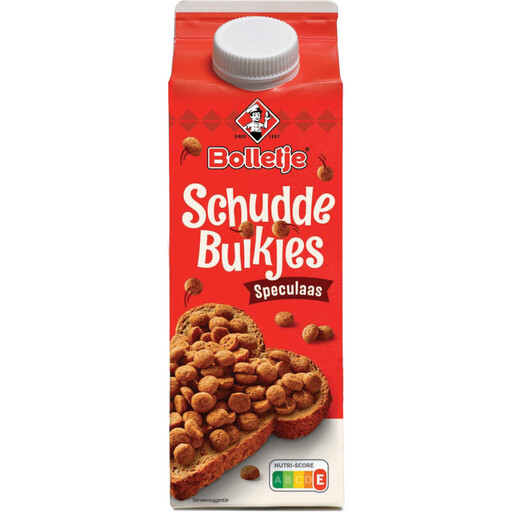 Image unavailable
Consider this pack if you want to share speculaas and 300 g is right for the number of guests.
Pack contents: 300 g. Check the pack to see how much you want to serve and which ingredients and allergens are listed.
A family-size pack mainly determines how many biscuits you buy at once, not how speculaas fits into someone’s diet. The Netherlands Nutrition Centre highlights nutrient-rich foods for older people, so consider a biscuit with coffee in the context of their overall diet.
Compare sugar, saturated fat, salt and fibre per 100 g, and check the stated portion size too. That way, you first compare the same quantity of product, then see how much each pack’s portion weighs.
Allergen information is shown on the pack label. The Netherlands Food and Consumer Product Safety Authority states that this information must appear on the label of pre-packed food. Also check the exact product for any warnings about traces.
Follow the storage advice on the packaging. Product listings from Albert Heijn and Jumbo recommend storing the biscuits in a cool, dry place or in a well-sealed pack after opening. Check which instructions apply to your pack.
Not all supermarkets provide information in the same way. Lidl directs customers to the packaging for ingredients, allergens and nutritional values, so check those details on the pack when choosing or receiving a product.