What should you look for when choosing?
First, decide whether you want two speakers that can be positioned separately. Then choose between built-in or separate amplification, and check that the source, available space and any additional components suit your set-up.
| What to consider |
What should you check? |
Who is this important for? |
| Stereo image |
Check whether you get two speakers, whether two units can be paired, and where you can position them in relation to your listening spot. |
I want to position the left and right speakers separately from a fixed listening spot so I can follow the instruments in a recording. Around 36% of consumers say stereo image comes first. |
| Placement |
Measure two potential spots and consult the manual for the recommended distance from the wall and speaker orientation. |
If my room has little free space, I want to know in advance whether two speakers will fit in the available spots. Around 29% of consumers give placement the highest priority. |
| Connections and control |
Compare the output on your music source with the inputs on the exact model. For Wi-Fi speakers, check how to use two units as a stereo pair. |
If I want to connect my existing source without extra steps, I first check the inputs and controls it needs. Around 21% of consumers prioritise source compatibility and ease of use. |
| Complete set-up |
Check whether you’re buying one speaker or a pair, and whether you need an amplifier, adapters, cables or speaker stands. |
I want to know in advance which components I need to use the complete set-up. Around 14% of consumers focus mainly on whether the system is complete. |
Joybuy products for different set-ups
Below, you’ll find compact Bluetooth speakers, passive bookshelf speaker pairs and individual wireless speakers. Check whether you need a pair for each model, and which amplifier and connections will work with your source.
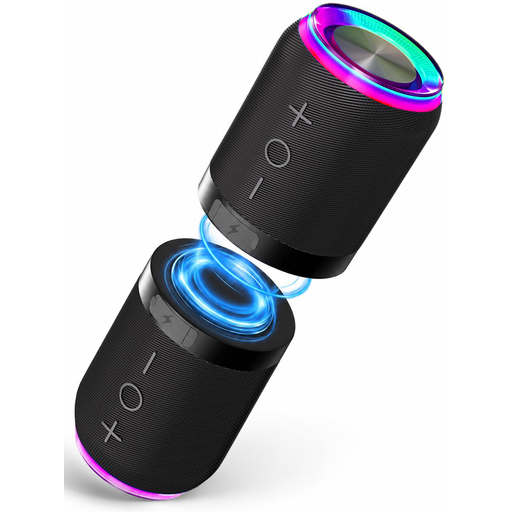 Image unavailable
Bluetooth speaker set with magnetic attachment, set of 2
A set of two for anyone looking for Bluetooth speakers that can be positioned separately.
Bluetooth, AUX and TF card playback; IPX6; magnetic attachment.
View at Joybuy
 Image unavailable
HiVi-Swans DIY3.1 passive bookshelf speakers, pair
A passive pair for anyone looking to position two speakers around a fixed listening spot.
6.5-inch driver. A separate amplifier is required.
View at Joybuy
 Image unavailable
HiVi-Swans D3.1MKII passive bookshelf speakers, pair
A passive pair for separate left and right placement; remember to allow for the amplifier you’ll need.
6.5-inch driver.
View at Joybuy
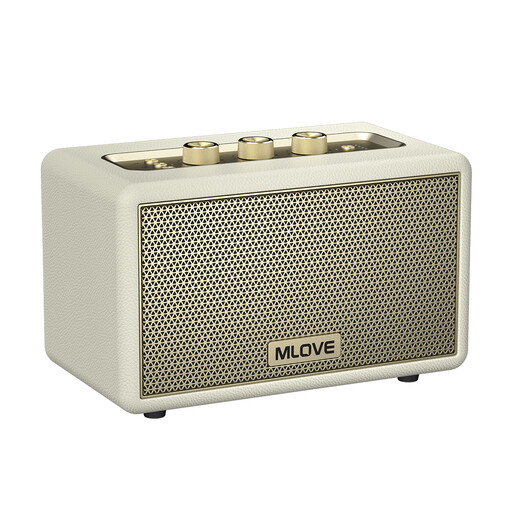 Image unavailable
mlove A200 portable Bluetooth speaker, white
An individual portable speaker for anyone looking for Bluetooth playback; two A200 speakers are needed for TWS stereo pairing.
Bluetooth 5.3; stated playback time is 24 hours.
View at Joybuy
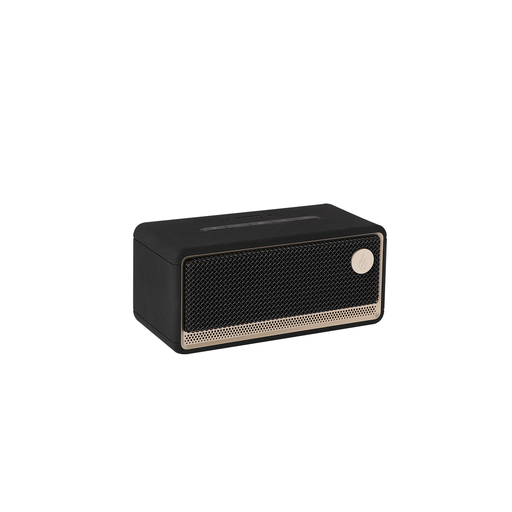 Image unavailable
Edifier ES300 Wi-Fi and Bluetooth speaker
An individual wireless speaker for anyone looking for Wi-Fi or Bluetooth playback; the title doesn’t describe a stereo pair that can be positioned separately.
Stated output: 60 W; Wi-Fi, Bluetooth, AirPlay 2, LDAC, USB and AUX; stated battery life: 12 hours.
View at Joybuy
Frequently asked questions
How should I start positioning two speakers?
Start by placing the speakers in similar positions in relation to your listening spot, using an equilateral listening triangle as a starting point. Adjust the distance from the wall and the speaker direction in line with the manual for your chosen model. KEF Netherlands doesn’t give a universal measurement for every room or speaker.
Can I connect my CD player directly to a Sonos Era 100?
You can connect it via the line-in using a separate Sonos Line-In Adapter or Combo Adapter. Also check which output your CD player has and which cable you’ll need.
Do I need an amplifier for passive speakers?
Yes, passive speakers need external amplification. Check the requirements for the exact model and make sure your existing amplifier is suitable; KEF specifies an amplifier requirement of 10–150 W for the passive Q1 Meta.
What do the cooling-off period and statutory guarantee mean when buying online in the Netherlands?
When you buy online from a business, you’ll usually have a 14-day cooling-off period from the date of delivery, subject to statutory exceptions. ACM ConsuWijzer explains that a product must meet what you could reasonably expect, and that you should contact the seller if there’s a fault. This doesn’t mean every speaker comes with a fixed statutory two-year guarantee.
Which EU product rules apply to a wireless speaker?
The European Radio Equipment Directive applies to radio equipment and sets requirements including safety and electromagnetic compatibility. According to the European Union, CE marking is required when the relevant EU rules say it is; the mark isn’t an independent sound test of a specific unit.


