
Quiet listener at home
You listen at a low volume and want to follow the singing without unnecessarily turning up the bass or treble. Compare the tone settings using a recording you know well, from your usual listening position.


Start with your listening position and try a familiar opera recording at the volume you actually want to listen at. Tone controls or a loudness setting can help you compare, but they can’t prove how natural voices will sound in your room. Choose an active stereo pair if you want two speakers without a separate amplifier, a compact streaming speaker if app control is your priority, or a passive pair if you already have a suitable amplifier. Always check that your music source is compatible.
You listen at a low volume and want to follow the singing without unnecessarily turning up the bass or treble. Compare the tone settings using a recording you know well, from your usual listening position.
You have room for two speakers and want to judge how voices and the orchestra sound from your usual seat. Compare an active pair with a passive pair and amplifier.
Your choice also depends on your music source. An existing CD player, phone and streaming service each have different connection and set-up requirements.
| What to consider | What should you check? | Who is this important for? |
|---|---|---|
| Vocals and tonal balance | Listen to a familiar passage at your usual low volume and compare the tone settings. | If you want to follow quiet singing without constantly adjusting the recording, put clarity and tonal balance first; around 33% of consumers say this is their main concern. |
| Stereo and placement | Check whether your room has space for two speakers and whether the product includes one speaker or a pair. | If you want to judge voices and the orchestra from your usual seat, start by considering your room and speaker placement; around 27% of consumers give stereo placement top priority. |
| Connecting your source | Compare the output from your CD player, computer or other source with the inputs on the exact model. | If you want to keep using your existing CD player or another music source, check the connections and whether you need an adaptor first; around 20% of consumers prioritise source compatibility. |
| Complete set-up | Check how many speakers are included and whether you need an amplifier, cables or an adaptor. | If you want to know in advance what your complete set-up will require, compare the whole system rather than just the speaker; around 20% of consumers say this is their main buying concern. |
Sonos says its loudness setting can boost certain frequencies, including bass, at low volumes. According to the manufacturer, the Edifier R1280DB has bass and treble controls. Neither feature is a substitute for listening to a recording you know well.
A single speaker is not the same as two separately positioned speakers. Sonos says you can pair two Era 100 speakers for a wider soundstage; the Edifier R1280DB is a set of speakers connected by a cable.
Check how many speakers you’ll receive and whether your chosen set-up will fit in your room.
The KEF Q1 Meta is a passive speaker and requires a suitable amplifier. A passive pair won’t automatically have the connections or amplification of a complete active system.
Check amplifier compatibility and the cables you’ll need before choosing your complete signal chain.
Sonos specifies a separate line-in adaptor for the Era 100. So Bluetooth doesn’t mean a CD player will connect directly without the right connection.
Compare your source’s output with the inputs on the exact model, and check whether you need an adaptor.
The Era 100 is a compact, app-controlled speaker for listening over Wi-Fi or Bluetooth.
The R1280DB is an active bookshelf speaker set with wired inputs and Bluetooth.
The LSX II LT is an active stereo option; the Q1 Meta is a passive speaker that requires an amplifier.
The SONIK 1 is a compact passive stereo pair designed for placement on a shelf, stand or wall.
This selection includes Bluetooth and Wi-Fi speakers, computer speakers and a passive bookshelf pair. For each model, check that the source, amplification and set-up are suitable for listening to opera at a low volume.
 No image available
An option if you want to play opera from a compatible Bluetooth source. To get the stereo sound mentioned, you can pair two Squishmallows speakers.
The product description lists USB-C charging and battery life of up to 8 hours.
 No image available
This pair suits anyone looking for two passive bookshelf speakers who wants to provide the amplification separately.
The product name specifies a pair of 6.5-inch passive speakers; you’ll need a suitable amplifier.
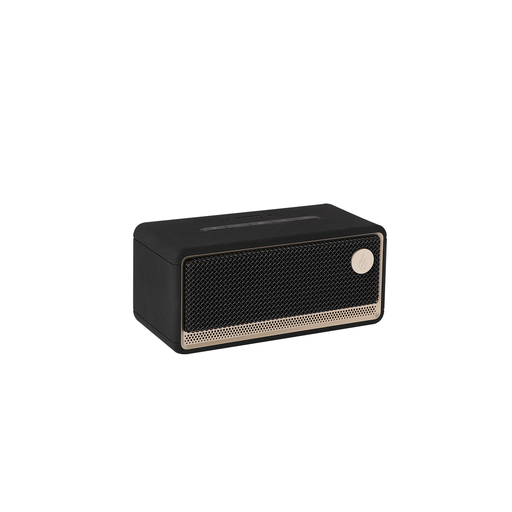 No image available
An option if you want to use a Wi-Fi or Bluetooth source. Check that the controls and connections are compatible with your music source.
The product name lists AirPlay 2, LDAC, USB and AUX.
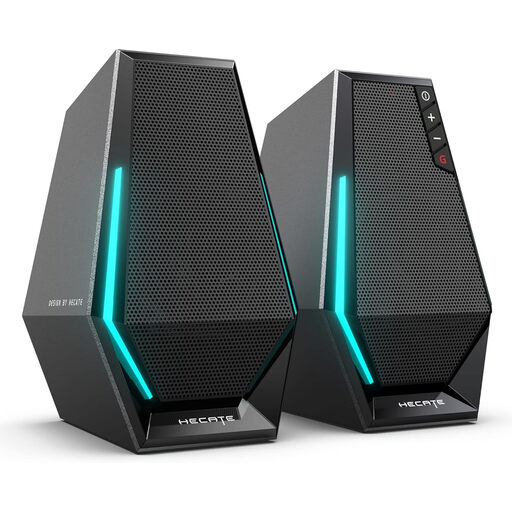 No image available
An option for playing music from a compatible computer or Bluetooth source. The description lists stereo sound and on-speaker volume control.
The listed connections are USB, AUX and Bluetooth. Game, Music and Movie modes are also mentioned.
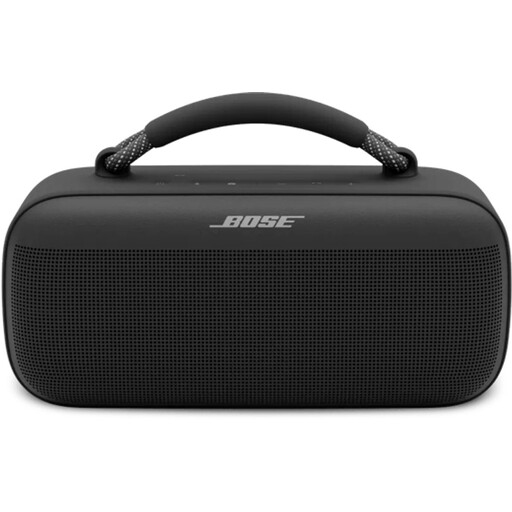 No image available
An option if you want to listen from a Bluetooth source and app control matters to you. The product description mentions an equaliser in the Bose app.
The product specifications state that pairing for stereo use is not possible.
That way, you can judge how your opera recording sounds from your listening position. Sonos describes loudness as a setting that boosts certain frequencies, including bass, at low volumes. ISO 226:2023 concerns the perception of pure tones under specified test conditions; it is not a test of these speakers playing opera.
No. Sonos says you must first set up the Era 100 over Wi-Fi using the app. You can then use Bluetooth.
Compare your CD player’s output with the inputs on the exact speaker system. Sonos specifies a separate line-in adaptor for the Era 100; Edifier lists RCA/AUX and optical inputs, among others, for the R1280DB.
For a standard online purchase, ACM ConsuWijzer generally states that you have a 14-day cooling-off period after delivery, with some exceptions. If a product doesn’t perform as you could reasonably expect under normal use, ACM ConsuWijzer says the seller is responsible for providing a solution. This is not a fixed warranty period for a specific speaker model.
Yes. A passive speaker such as the KEF Q1 Meta needs a suitable amplifier. Also check which connections and cables you’ll need to connect your music source to the amplifier.